Indian equity markets snap 5-day losing streak; Sensex gains over 400 points, Nifty crosses 23,500; IT leads
Sep 15, 2026
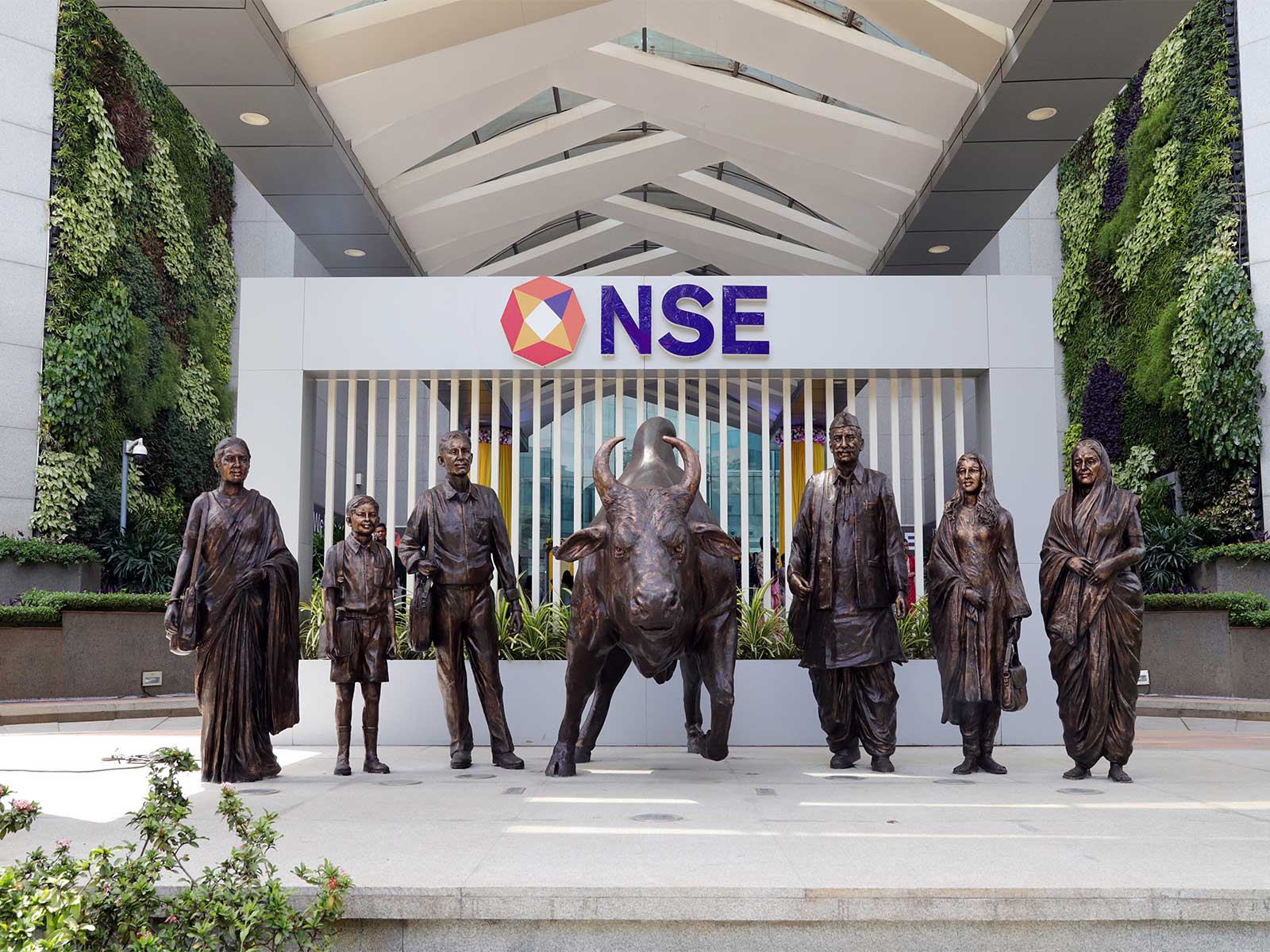
Mumbai (Maharashtra) [India], September 15 : Indian equity markets rebounded sharply on Tuesday, snapping a five-day losing streak, with the benchmark Sensex gaining over 400 points in early trade and the Nifty crossing the 23,500 mark, led by a strong rally in information technology stocks.
Both benchmark indices opened with a gap-up. The Nifty opened at 23,576.15 against its previous close of 23,398.10, while the Sensex opened at 75,369.63 compared to its previous close of 74,781.76.
The Sensex was trading at around 75,010.74, up 228.98 points or 0.31 per cent, while the Nifty was at 23,457.95, gaining 59.85 points or 0.26 per cent.
The broader market indices also traded in positive territory, while sectoral indices witnessed a mixed trend. Nifty IT emerged as the top-performing sector, rising more than 4 per cent in early trade. Metal, pharma, PSU banks, realty, healthcare, consumer durables and cement indices, however, traded in the red.
On the NSE, HCL Tech, TCS, Tech Mahindra, Infosys, TMPV, Wipro, HDFC Bank and ITC were among the major gainers. BEL, Grasim, Larsen & Toubro, Power Grid, Titan, NTPC, ICICI Bank and Cipla were among the stocks trading lower.
Similarly, on the BSE, HCL Tech, TCS, Tech Mahindra, Infosys, ITC and Hindustan Unilever were among the gainers, while BEL, NTPC, Power Grid, Titan, SBI, IndiGo and Larsen & Toubro traded in negative territory.
The recovery in domestic equities came despite elevated crude oil prices and bond yields, which have continued to weigh on global markets.
“Crude has had a dramatic twenty-four hours. Brent opened the week above USD 108 and came within a whisker of USD 110 before reversing sharply to settle at USD 105.68, with WTI settling at USD 101.39 after nearly touching USD 105. It has edged higher again this morning, with Brent above USD 105 and WTI near USD 102,” said Anindya Banerjee, Head of Commodity and Currency Research, Kotak Securities.
He said the sharp reversal in crude prices was not triggered by developments in West Asia but by an announcement that Russia and Ukraine had agreed to suspend strikes against each other's energy infrastructure.
However, he cautioned that the situation in West Asia had deteriorated further, with disruptions around critical energy supply routes adding to market uncertainty.
“Against that, the situation in West Asia has deteriorated further. Saudi Arabia's East-West pipeline remains shut after drones launched from Iraq struck a pumping station last Thursday,” he said.
Banerjee noted that the pipeline is Saudi Arabia's key alternative route around the Strait of Hormuz and its continued closure could potentially remove a significant amount of oil supply from global markets.
He further highlighted the growing risks around the Strait of Hormuz and the Red Sea, saying that the number of commodity ships transiting Hormuz had fallen to single digits over the weekend.
On crude prices, Banerjee maintained a constructive outlook. “Our view on crude remains constructive. The major support is USD 100 to USD 102, and as long as Brent holds above USD 100 the bias stays upward, with resistance at USD 110, then USD 115 and USD 120,” he said.
He explained that higher oil prices could lift inflation expectations and bond yields, increasing the opportunity cost of holding non-yielding assets such as gold.
Meanwhile, market and banking expert Ajay Bagga said global markets were facing pressure from multiple factors.
“The global markets are being buffetted by a triple whammy of rising oil prices, rising bond yields and questions on the AI momentum in the face of dire warnings from Big Tech leaders on AI threats to humanity,” Bagga said.
He noted that domestic equities had reopened on Tuesday after remaining closed on Monday for Ganesh Chaturthi and were entering the session amid heightened global uncertainty.
“Rupee has been sliding over the past week, pressured by the same trio hitting every oil importer: costlier crude, Fed rate hike looming and rising US yields pulling foreign portfolio money back to Treasuries,” he said.
Market analyst Vipin Dixena said the opening recovery was encouraging but advised caution given the challenging external environment.
“I would remain cautious because the external environment is still challenging. Brent crude is above USD 107 a barrel, the US 10-year yield has moved above 5 per cent, and geopolitical tensions remain elevated,” he said.
Dixena said the Nifty was testing the 23,500-23,600 zone, which remained the first important hurdle.
“A sustained move above 23,600 could trigger a stronger technical recovery towards 23,800, while 23,200-23,000 remains the key support zone. Until Nifty decisively reclaims 23,600, I would treat today's strength as a recovery attempt rather than a confirmed trend reversal,” he added.
Vinit Bolinjkar, Head of Research at Ventura, said global headwinds, elevated crude prices, volatile US rate expectations and periodic risk-off flows were keeping foreign institutional investor positioning tentative.
However, he said resilient domestic macro fundamentals, robust GST collections and steady earnings growth continued to underpin the medium-term positive outlook for Indian equities.
“We expect markets to remain range-bound in the near term, with indices likely to trade volatile around global cues, but any sustained FII re-entry alongside continued DII buying could act as a key trigger for the next leg higher in Nifty and Sensex,” Bolinjkar said.
At the time of reporting, Brent crude was trading at around USD 107.02 per barrel, while WTI crude was around USD 102.93 per barrel.