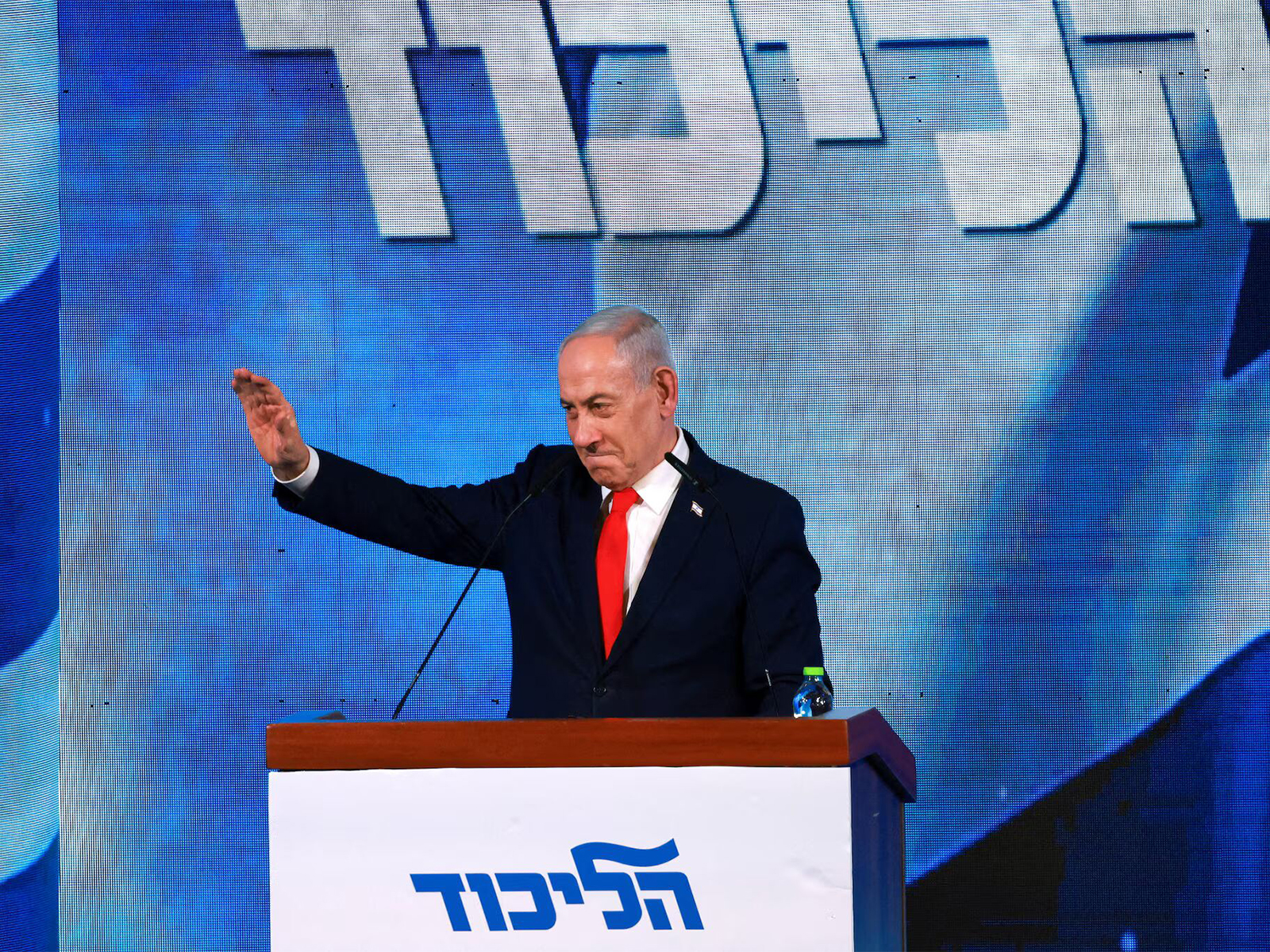
Israel elections: Netanyahu says open to broad national government, rules out coalition dependent on Arab parties
Nov 02, 2026
Jerusalem [Israel], November 3 : Israeli Prime Minister Benjamin Netanyahu on Monday (local time) said he was open to forming a broad national government but ruled out an administration dependent on Arab-led parties, amid continuing political uncertainty following the Knesset elections.
In a post on X, Netanyahu said the public in Israel did not want a government relying on Ra'am and the Joint List, which he accused of supporting terrorism and rejecting the existence of the Jewish state.
“The public in Israel does not want a government that depends on Ra'am and the Joint List—parties that support terrorism and reject the existence of the Jewish state,” Netanyahu said.
He said his Likud party had emerged as the largest party and claimed that he had received a mandate from the Jewish public to lead the next government.
“From the very first day, our hand has been extended to form a broad national government. A clear majority in the Jewish public chose the Likud as the largest party and me, as prime minister, to lead the next government,” he added.
Netanyahu said he aspired to form a broad government with his existing political partners and any other party willing to join without supporting terrorism.
“We aspire to form a broad government with our partners and with any party that wishes to do so and does not support terrorism. I am open to holding discussions on the matter,” he said.
His remarks come as opposition parties continue efforts to form an alternative government, with Yisrael Beytenu leader Avigdor Liberman ruling out joining a coalition led by Netanyahu.
According to The Times of Israel, Liberman said his party would recommend Yashar leader Gadi Eisenkot to President Isaac Herzog to form the next government and support Opposition Leader Yair Lapid for the post of Knesset Speaker.
Liberman also criticised Eisenkot's election campaign, saying the opposition bloc had secured 48 mandates, significantly below its expectations.
“We failed – 48 mandates is far lower than what we expected,” Liberman said, according to the publication.
He accused Eisenkot of running an “egotistical” campaign and prioritising his party's position over the broader opposition alliance. Liberman also ruled out joining a unity government with Netanyahu, saying he would not serve under the incumbent Prime Minister under any circumstances.
Meanwhile, former Prime Minister Naftali Bennett's B'Yachad faction has backed Eisenkot's bid to form the next government.
The political deadlock follows an election in which the opposition bloc secured 67 seats against 53 for the incumbent coalition in the 120-member Knesset. However, the opposition faces challenges in forming a government without relying on Arab-led parties.
President Isaac Herzog has urged political leaders to show flexibility and find solutions to prevent another election. He is scheduled to receive the official election results on November 4 before beginning consultations with representatives of political factions.
The newly elected Knesset is scheduled to be sworn in on November 10.