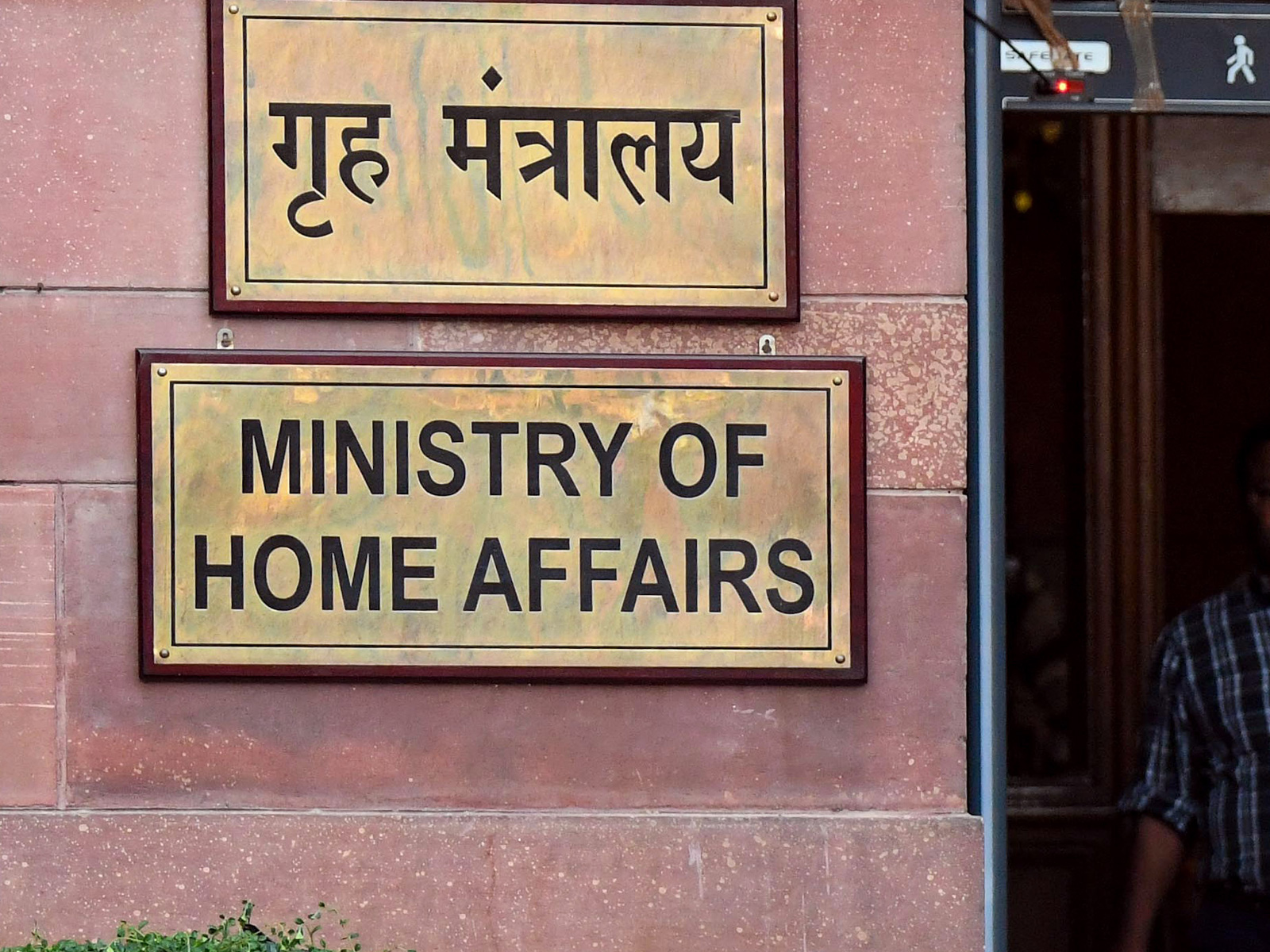
MHA proposes recruitment rules for CEO, additional CEO posts at I4C; seeks stakeholder feedback till August 14
Jul 15, 2026
By Rajnish Singh
New Delhi [India], July 15 : The Ministry of Home Affairs (MHA) has proposed framing of recruitment rules for the posts of Chief Executive Officer (CEO) and Additional Chief Executive Officer in the Indian Cyber Crime Coordination Centre (I4C), aimed at strengthening India's cybercrime response framework.
The ministry intends to frame recruitment rules for one CEO post at Pay Matrix Level-15 (an Additional Secretary rank ) and three Additional CEO posts at Level-14 (a senior-level position such as Joint Secretary in the Central government) in the Senior Administrative Grade (SAG).
The ministry has invited comments from stakeholders on the proposed rules by August 14, after which the recruitment rules will be finalised. The proposed posts will function under the Indian Cyber Crime Coordination Centre (I4C), which operates under the Cyber and Information Security Division of the MHA. These posts will not fall under the purview of the Union Public Service Commission (UPSC) and the appointments will be made on a deputation basis under the Non-Central Staffing Scheme pattern.
The selection for these posts will be carried out with the approval of the Appointments Committee of the Cabinet (ACC), chaired by Prime Minister Narendra Modi, through a Search-cum-Selection Committee headed by the Union Home Secretary.
On July 14, the MHA circulated an official memorandum regarding the move to all the stakeholders seeking their suggestions. In the memorandum, all the stakeholders are asked to submit their comments to the MHA.
"The undersigned is directed to state that the Ministry of Home Affairs intends to frame the Recruitment Rules for the post of Chief Executive Officer (CEO) and Additional Chief Executive Officer (Addl. CEO) at the Level of Senior Administrative Grade (SAG) in Indian Cyber Crime Coordination Centre (14C) under Cyber and Information Security (CIS) division of Ministry of Home Affairs. These posts do not fall under the purview of the Union Public Service Commission and will be filled on a deputation basis on the 'Non-Central Staffing Scheme' pattern, with the approval of the Appointments Committee of the Cabinet, through Search-cum-Selection Committee under the Chairmanship of the Secretary in the Ministry of Home Affairs," reads the memorandum.
"It is requested that comments of all the stakeholders, if any, on the proposed Recruitment Rules may be forwarded to the Under Secretary (Cyber Crime), Cyber and Information Security Division, Ministry of Home Affairs, by August 14, 2026. The Recruitment Rules for the post of Chief Executive Officer and Additional Chief Executive Officer would be finalised after considering the comments so received."
As per the proposal, there will initially be one CEO post in 2026, although the number may vary depending on workload. The CEO post has been classified as a General Central service, group 'A', gazetted, non-ministerial position carrying Pay Matrix Level-15. Similarly, three Additional CEO posts have been proposed for 2026, also subject to variation based on operational requirements. These will also be group 'A', gazetted, non-Ministerial posts in Pay Matrix Level-14.
The ministry has proposed that both posts be filled exclusively through deputation. Direct recruitment, promotion, probation and selection provisions have not been prescribed for these appointments.
For the CEO post, officers from the All India Services, organised group 'A' services or other Central or state government departments, Union Territories, autonomous or statutory organisations, public sector undertakings, universities and recognised research institutions will be eligible. Applicants must either be holding an analogous post regularly or have completed at least three years of regular service in Level-14 of the Pay Matrix or an equivalent grade.
The essential educational qualification for the CEO post is a bachelor's degree from a recognised university or institute, along with a minimum of five years of experience in cyber security, cybercrime investigation, cyber forensics, Information and Communication Technology (ICT), or internal security.
The ministry has also listed 'desirable qualifications', including a postgraduate degree or postgraduate diploma in Computer Applications, Law, Cyber Law, Cyber Forensics, Computer Science or Information Technology from a recognised institution.
For the Additional CEO posts, eligibility has been widened to include officers holding analogous posts or those with two years' regular service in Level-13A or three years' regular service in Level-13 of the Pay Matrix. Candidates for the Additional CEO posts must possess a bachelor's degree from a recognised institution and at least 10 years' experience in establishment, administration, procurement, finance, vigilance or legal matters, including a minimum of three years' experience in cyber security, cybercrime investigation, cyber forensics, ICT or internal security. The same desirable qualifications relating to postgraduate studies in computer applications, cyber law, cyber forensics, computer science and information technology have also been prescribed for the Additional CEO positions.
The proposed rules further state that the period of deputation, including any previous deputation in another ex-cadre post immediately preceding the appointment, will ordinarily not exceed five years. The maximum age limit for appointment on deputation, including short-term contract, has been fixed at 55 years as of the closing date for receipt of applications.
The memorandum also specifies that no Departmental Promotion Committee will be constituted for these posts and consultation with the Union Public Service Commission will not be required.