"Most consequential tech intervention of last 25 years": Assam CM says 'UPI led to productivity gains' for MSMEs
Aug 26, 2026
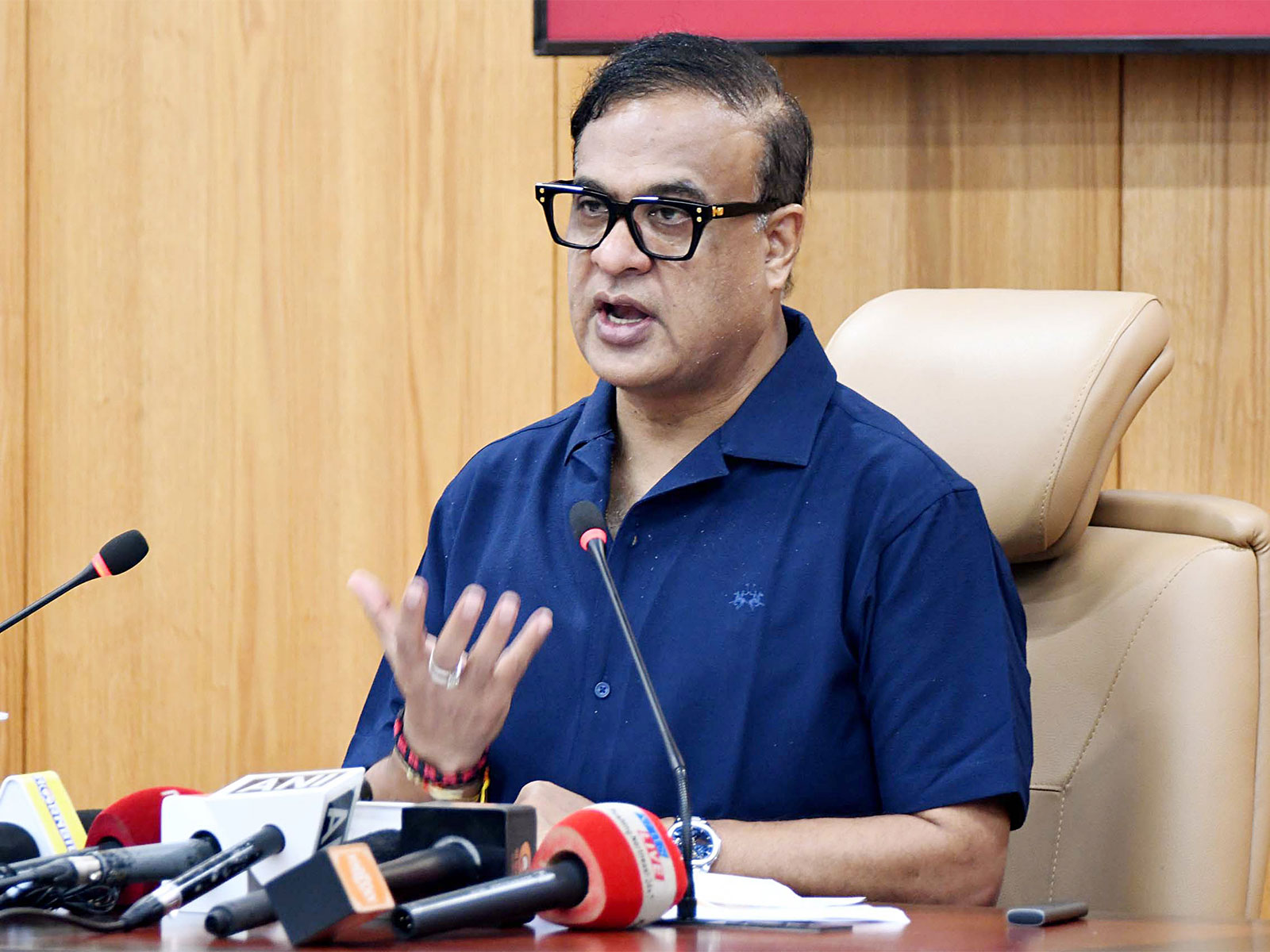
Guwahati (Assam) [India], August 26 : Assam Chief Minister Himanta Biswa Sarma highlighted the Unified Payments Interface (UPI) productivity gains across the country's micro and small enterprise ecosystem, eliminating hassle and saving time for retailers.
Sharing an X post as the UPI completed 10 years since its launch on Tuesday, the Chief Minister termed it as "the most consequential governance and technology interventions of the last quarter century" for India.
He stated, "A lot has been spoken and written about #10YearsOfUPI. Yet, there is one dimension that deserves far greater commentary, research and empirical evidence: the productivity gains across India's micro and small enterprise ecosystem."
"Think of our street vendors, neighbourhood retailers, rickshaw drivers and millions of other small entrepreneurs. UPI has reduced transaction time, eliminated the hassle of tendering change and made record-keeping significantly easier. Even as a consumer, I increasingly find retailers insisting on UPI simply because it saves them the time and hassle of tendering change. These minutes saved across billions of transactions add up. They represent real productivity gains for businesses where time is an invaluable resource," Sarma added.
Further, he hailed Prime Minister Narendra Modi's approach to build digital public infrastructure on a large scale.
He said, "For me, UPI is undoubtedly one of India's most consequential governance + technology interventions of the last quarter century. In terms of productivity gains, its impact perhaps surpasses-or at the very least rivals - the telecom reforms of NDA 1."
"None of this would have been possible without Hon'ble Prime Minister Narendra Modi Ji's single-minded commitment and whole-of-government approach to building India's digital public infrastructure at population scale," he added.
Assam CM further called upon academia and research institutions to study the productivity gains and help businesses build upon them.
He said, "But the next question deserves greater attention: how can small enterprises translate these productivity gains into business growth? Most micro businesses cannot afford sophisticated ERP systems. Yet UPI has already given them something immensely valuable, a digital trail of their transactions, along with time saved from payments and record-keeping."
"Can we build upon this to help them better understand their businesses, make informed decisions, access formal credit and eventually scale? I hope our academia and research institutions examine this more deeply. Quantifying UPI's impact not merely in transactions and value, but in man-hours saved, productivity gained and enterprises strengthened, could reveal another remarkable dimension of India's digital transformation," the X post read.
UPI was launched on August 25, 2016, by the National Payments Corporation of India (NPCI) under the regulatory oversight of the Reserve Bank of India (RBI). A pilot-basis launch was held in April 2016 with 21 member banks. It was rolled out to the public in August as participating banks made their UPI-enabled mobile applications available on the Google Play Store.
The BHIM application was launched in December 2016.
According to the Union Finance Ministry, the annual transaction volume expanded from just 1.78 crore transactions in FY 2016-17 to over 24,162 crore transactions in FY 2025-26, representing an almost 13,000-fold surge in transaction volume. Also, transaction value rose sharply from Rs 0.07 lakh crore in FY 2016-17 to about Rs 314 lakh crore in FY 2025-26, translating into a more than 4,000-fold increase in transaction value.
UPI is also accepted in 11 countries, with Greece and the Maldives being the latest to adopt India's real-time payment platform.