Project Cheetah: India's landmark wildlife restoration initiative shows strong progress and promising future
May 19, 2026
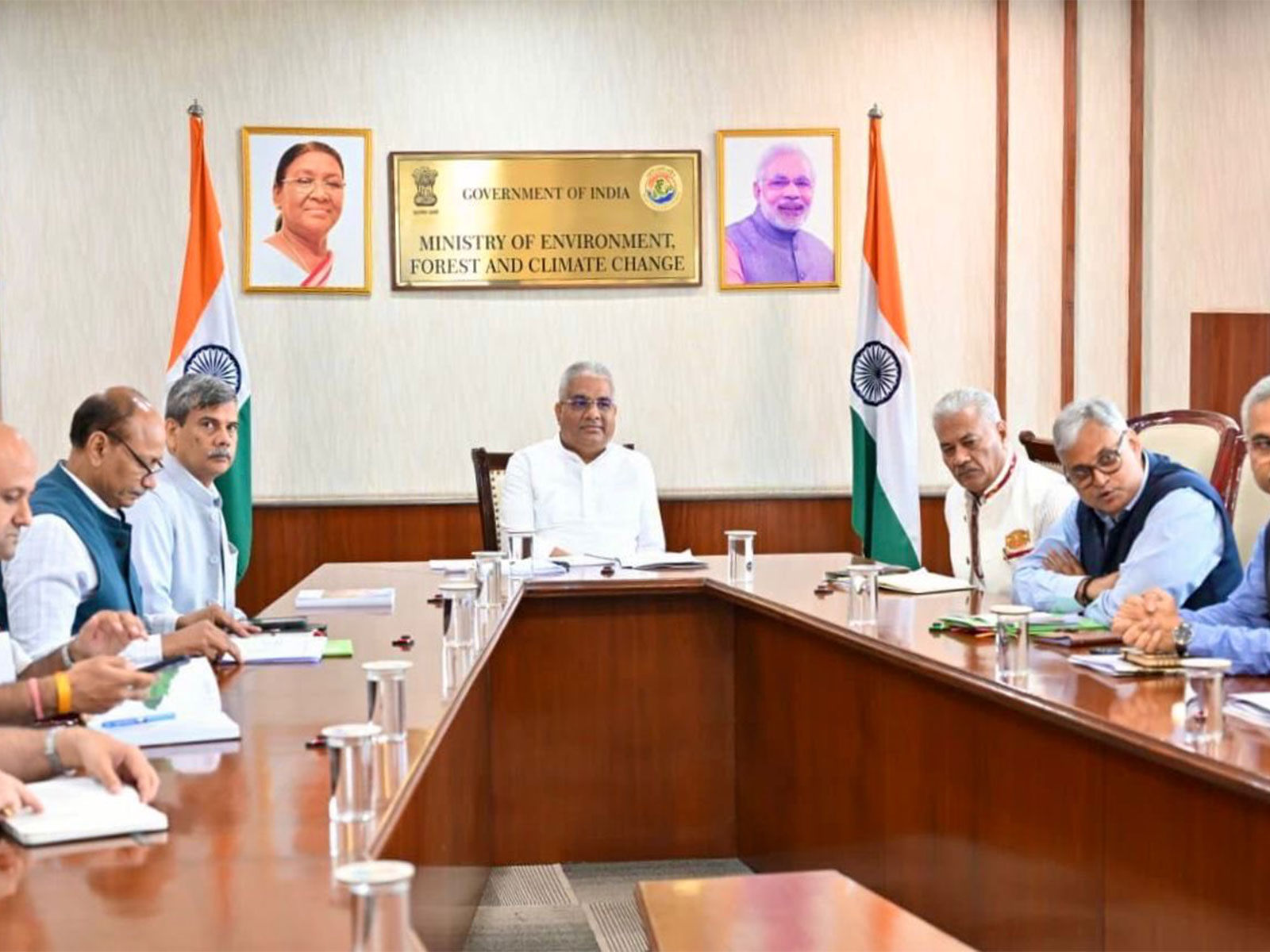
New Delhi [India], May 19 : A high-level review meeting of Project Cheetah was held today under the chairpersonship of the Minister of Environment, Forest and Climate Change, Bhupender Yadav, to assess the progress of the programme and deliberate on the future course of action.
The meeting was attended by senior officials of the MoEFCC, project experts, and senior field officers associated with wildlife conservation in the country.
Project Cheetah is a pioneering initiative aimed at reintroducing the cheetah in India after its extinction in the country. The programme was initiated through the translocation of a founder population of 20 cheetahs from Namibia and South Africa, which was further supplemented by 9 cheetahs from Botswana, through coordinated international cooperation and scientific planning.
The project has recorded encouraging outcomes despite the inherent challenges associated with wildlife translocation. The current population stands at 53 cheetahs, of which 33 are Indian-born, according to the Ministry of Environment.
This reflects significant growth driven by successful acclimatisation and reproduction in Indian conditions. Survival rates of introduced individuals and cubs have been found to be in line with, and in certain cases better than, global benchmarks, demonstrating the effectiveness of scientific management and monitoring protocols.
The implementation strategy adopts a landscape-based approach for long-term sustainability. Kuno National Park has been developed as the primary site for the establishment of the population, while Gandhisagar Wildlife Sanctuary has been prepared as an additional habitat to support further expansion.
These sites are part of a larger interconnected landscape across central India to facilitate dispersal and genetic exchange. Preparatory work is also underway to expand the project to new areas, including the Banni grasslands in Gujarat, where habitat readiness and prey augmentation measures have reached satisfactory levels.
Scientific monitoring indicates that cheetahs are adapting well to Indian conditions, with stable ranging behaviour, effective prey utilisation, and no significant physiological stress observed across different management settings.
The next phase of the project will focus on consolidation and expansion through additional translocations, development of new sites such as Nauradehi Wildlife Sanctuary in Madhya Pradesh, and strengthening of a metapopulation framework across identified landscapes. Sustained sourcing of cheetahs from African countries is envisaged to maintain genetic diversity and support population growth.
Project Cheetah continues to make steady progress and stands as a globally significant conservation initiative.