Quick commerce in India doubled annually over last 2 years, to touch USD 65-70 bn by 2030: Report
Apr 24, 2026
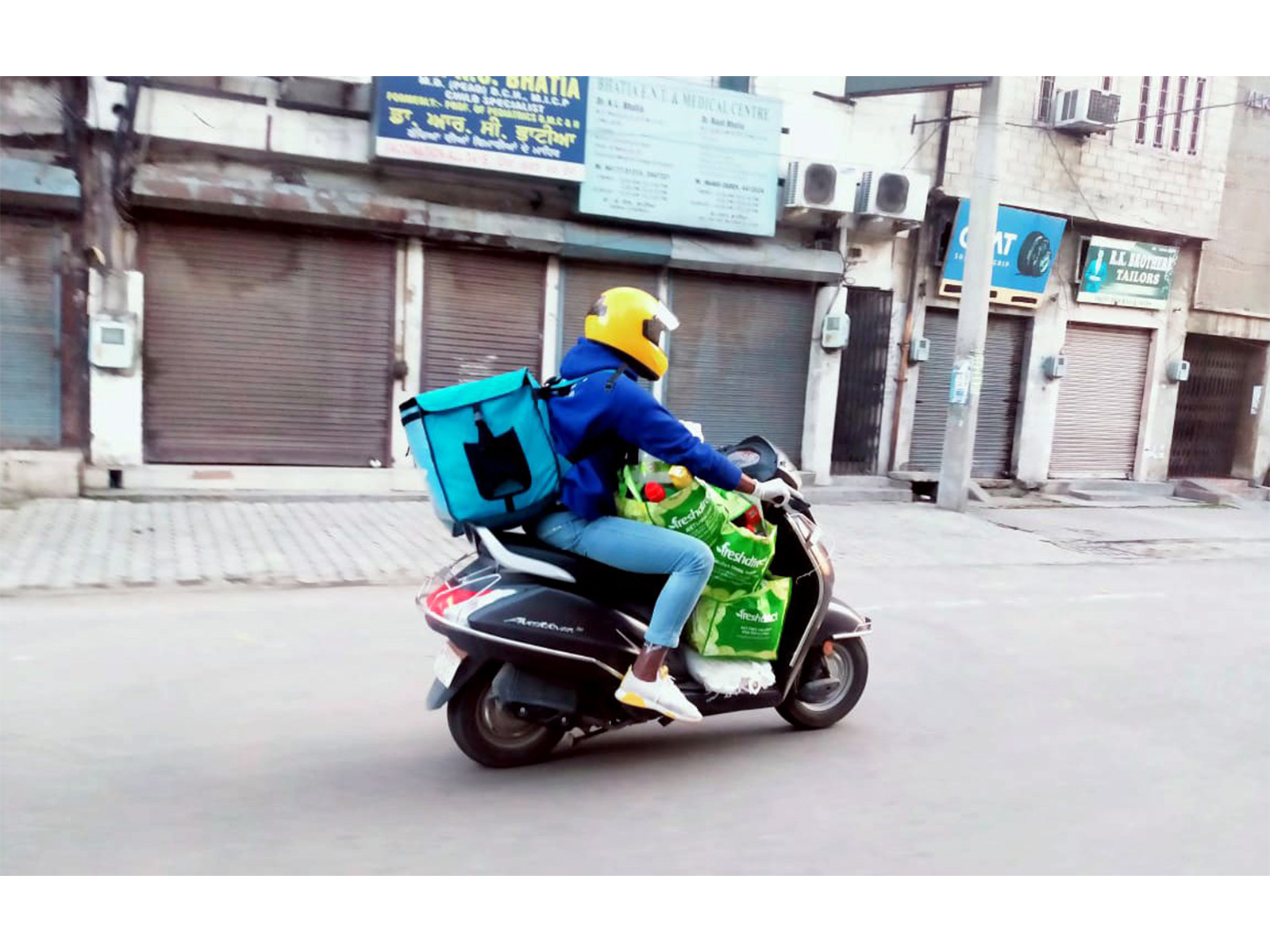
New Delhi [India], April 24 : The quick commerce (Q-commerce) segment in India has doubled annually over the past two years and is projected to reach USD 65-70 billion by 2030, according to a report by Flipkart and Bain & Company.
The report highlighted that India has emerged at the forefront of Q-commerce globally, with the segment scaling to USD 10-11 billion in gross merchandise value (GMV).
This growth has been supported by structural factors such as high population density, low manpower and real estate costs, and relatively low online grocery penetration.
It stated, "Q-commerce (delivery in less than 30 minutes), India has emerged at the forefront of Q-commerce globally".
Since its launch in 2020, the report stated that the e-grocery penetration has increased fivefold and now accounts for around 1.5 per cent of the overall grocery market. In metro cities, which are the core markets for Q-commerce, the share of e-grocery has reached 6-7 per cent.
The report noted that Q-commerce is expected to contribute 45-50 per cent of incremental e-retail GMV over the next five years, underlining its growing importance in the digital retail ecosystem.
It further explained that Q-commerce serves a dual role in the market. It acts as a convenience channel for household essentials, which account for 85-90 per cent of GMV, where speed is a key factor. At the same time, it is also emerging as a fulfilment channel for discretionary categories, where quick delivery enhances customer experience and builds trust.
Key players in the segment are focusing on expanding non-grocery categories and strengthening their micro-fulfilment infrastructure. The number of micro-fulfilment centres has rapidly grown to over 7,000 centres, with nearly two-thirds of new additions concentrated in the top 10 cities.
The report added that scale and demand density have improved profitability in the segment. However, it cautioned that customer adoption and profitability beyond metro and Tier 1 cities are yet to be proven.
Q-commerce platforms are largely driven by need-based purchases, with shorter user sessions of under five minutes compared to over ten minutes in traditional e-retail. They also show higher conversion rates, more search-led transactions, fewer product views per order, and lower reliance on cash-on-delivery.
Additionally, the segment is characterised by "top-up" shopping behaviour, leading to lower average order values and smaller pack sizes.