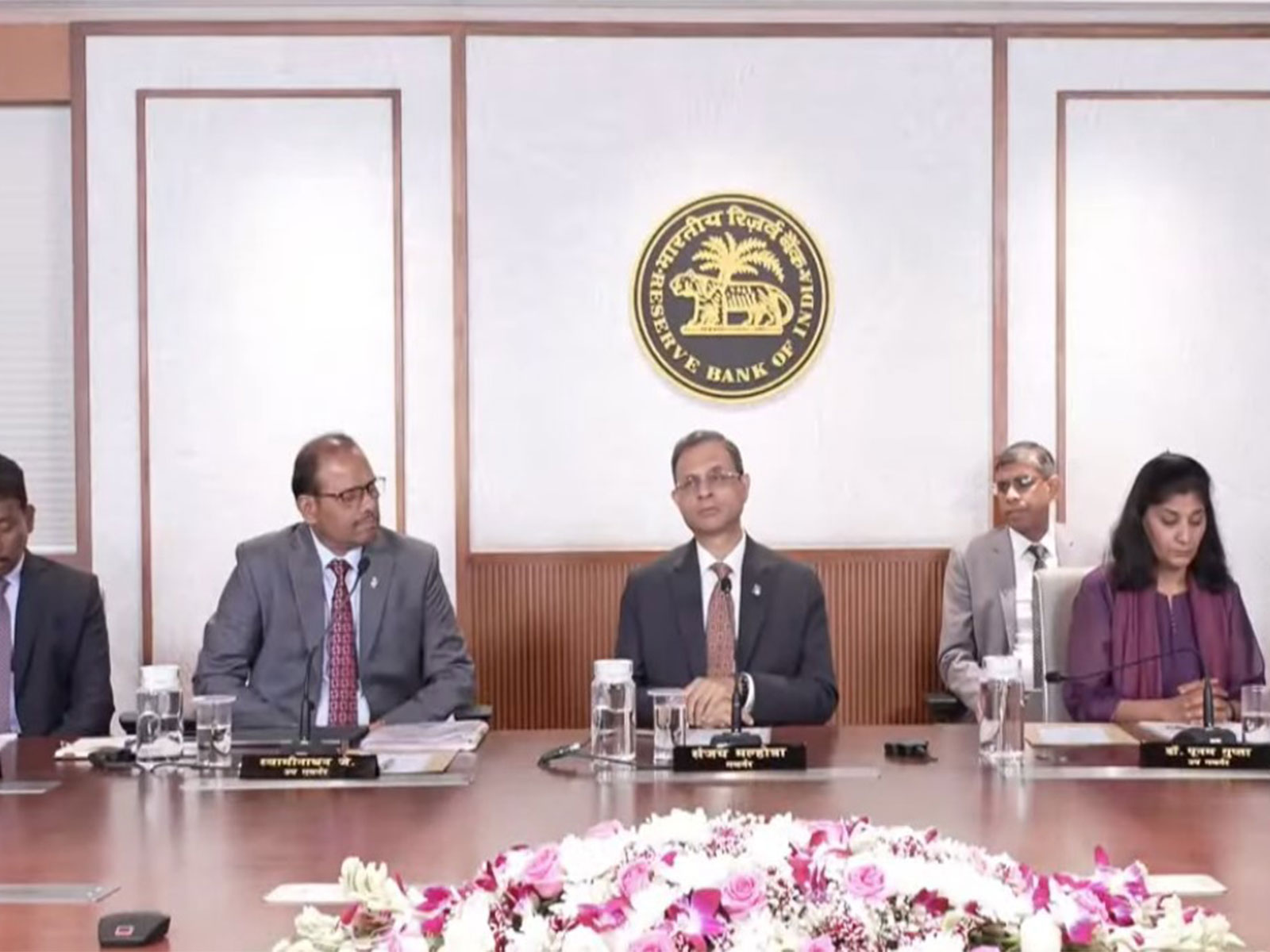
RBI considered 50 bps rate hike, rules out near-term cut; FCNR(B) liquidity to drain naturally
Oct 07, 2026
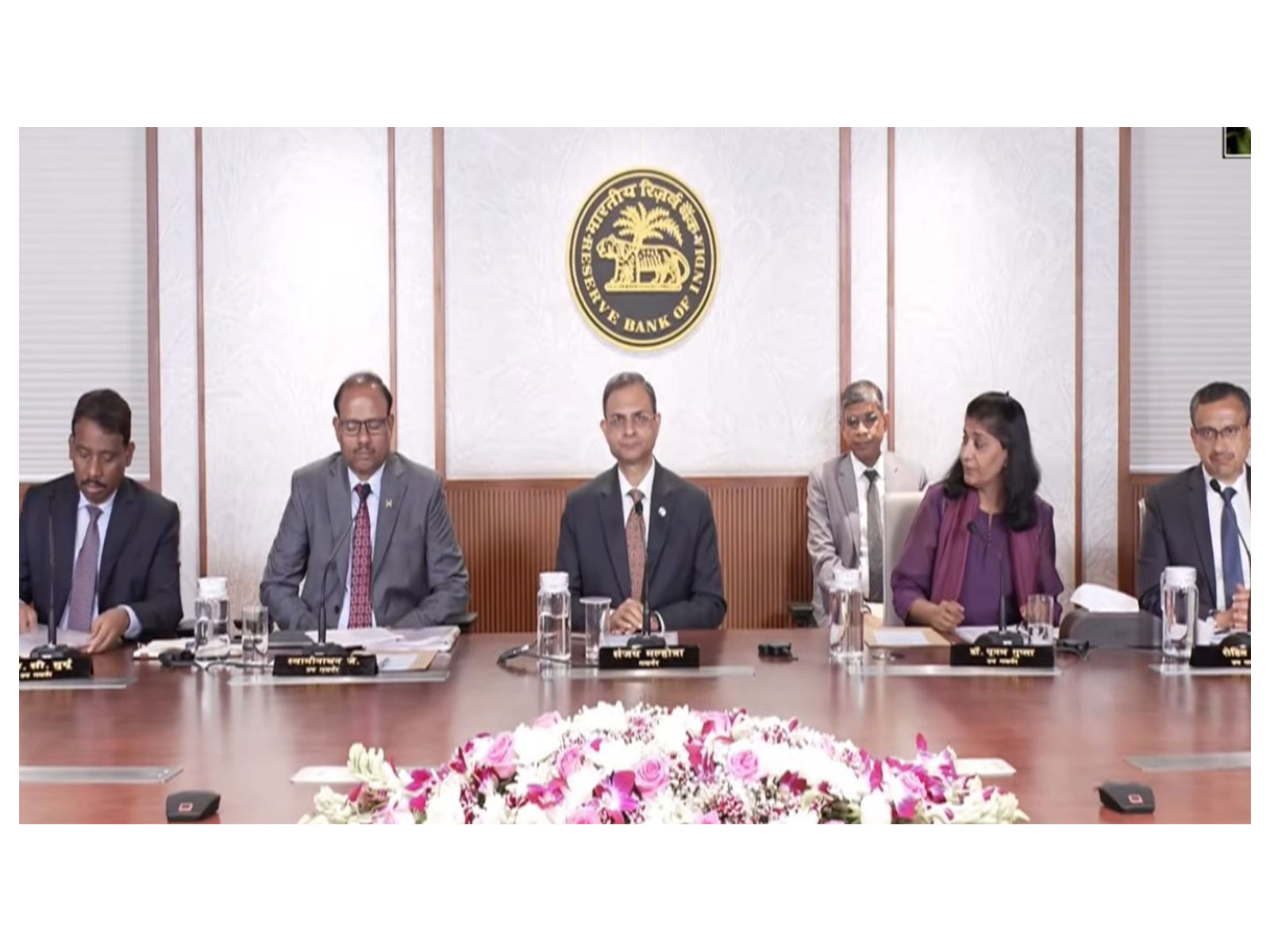
Mumbai (Maharashtra) [India], October 7 : The Reserve Bank of India (RBI) considered a 50 basis points (bps) hike in the policy repo rate before opting for a 25 bps increase, while RBI Governor Sanjay Malhotra ruled out any rate cut in the near term.
The central bank on Wednesday raised the repo rate by 25 bps to 5.50 per cent and shifted its policy stance, signalling that the next move could either be another rate hike or a pause depending on evolving growth and inflation dynamics.
During the post-policy conference in Mumbai, the Governor stated that the Monetary Policy Committee (MPC) had considered a 50 bps hike, and the central bank discusses all possibilities before arriving at a decision.
“We discuss all possibilities and thereafter take a view as to what will be the appropriate monetary policy decision,” he said.
The Governor also made clear that the RBI does not see a rate cut as an option in the immediate future.
“We have clarified by changing the stance that there is no rate cut in the near term. What we are contemplating is either a pause or a rate hike,” Malhotra said.
He added that the extent of any further rate increase would depend on the evolving macroeconomic environment.
“How deep the rate hike or shallow the rate hike will be will depend on the evolving macroeconomic conditions and the growth-inflation dynamics,” he said.
The comments come as the RBI expects inflation to remain elevated, with headline CPI inflation projected to average almost 5.8 per cent over the next three quarters. The central bank has also raised its FY27 real GDP growth projection to 7.1 per cent, indicating that resilient economic activity gives the MPC room to focus on inflation risks.
Malhotra said the RBI would not rely solely on headline inflation while determining the future course of monetary policy. He said underlying inflation, core inflation and diffusion indices would also be assessed to determine whether price pressures are becoming broad-based and persistent.
The Governor's comments also highlighted the role of FCNR(B) deposits in the banking system's current liquidity surplus.
Malhotra said banks are already deploying the FCNR(B) deposits, with high credit growth providing evidence of their use. However, he cautioned that banks would need time to deploy the large pool of funds rather than using them immediately.
“We are already seeing a use of the FCNR(B) deposits, as evidenced by the high growth rate,” he said. “But of course, the amount is so large, we do not want them also, you know, at the same time to use them overnight. They need to do their due diligence properly and take their time to use these deposits.”
The large inflows have contributed to surplus liquidity in the banking system, but the RBI Governor said the situation is not expected to persist for an extended period.
“It's not very long that we expect these surplus liquidity conditions to last,” Malhotra said.
He said a large amount of liquidity could be absorbed during the current financial year through a combination of natural and RBI-led mechanisms.
“Within this financial year itself, I expect a large amount of this liquidity, without giving numbers, three, four lakh crore rupees, you know, generally in any of the CIC leakage that happens,” he said.
The RBI's latest guidance therefore presents a dual message for the banking system: monetary policy has shifted towards tightening, while banks continue to have a substantial liquidity cushion from FCNR(B) inflows.
The liquidity cushion could also influence the pace at which banks transmit the repo-rate hike to deposit rates, particularly as some large lenders have indicated that they do not immediately plan to raise deposit rates because of the surplus FCNR(B) funds.
The RBI's next MPC meeting is scheduled for December 2-4, with the minutes of the October meeting due to be released on October 21.