A decade after Brexit, EU and UK strike sweeping trade, youth mobility, and security deals to end "decade of drift"
Nov 21, 2026
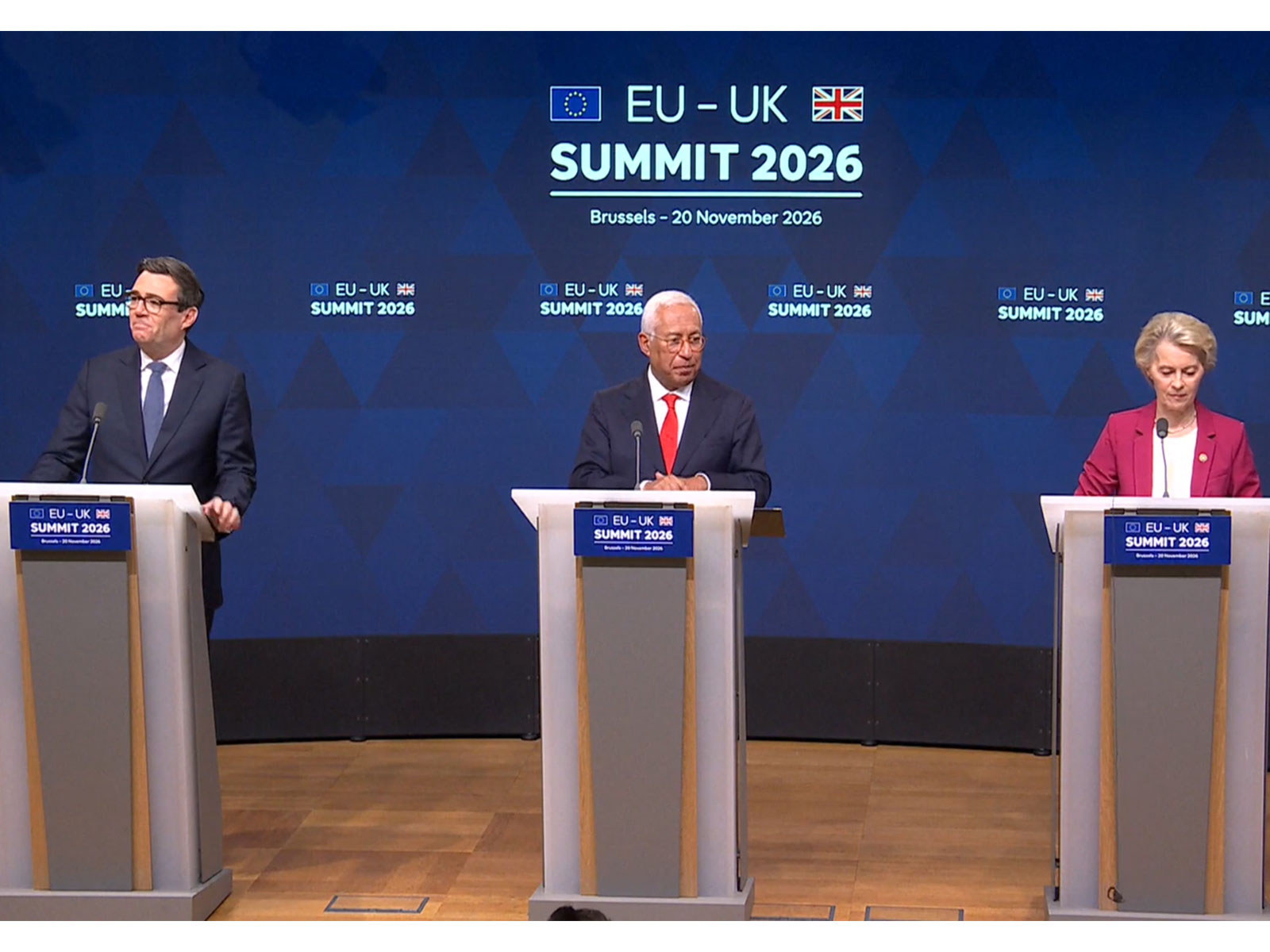
Brussels [Belgium], November 21 : Ten years after Britain voted to leave the European Union, Prime Minister Andy Burnham, European Council President António Costa, and European Commission President Ursula von der Leyen unveiled a sweeping post-Brexit reset in Brussels on Friday, striking major agreements on trade, youth mobility, irregular migration, and defence to end what Burnham called "a decade of drift and division."
"We're 10 years on from Brexit, but I think we can all confidently say: this is a good day for Britain, and this is a good day for Europe," Burnham told a joint press conference following the second EU-UK Summit. "The agreement that we've reached together is a win-win, and it is in tune with public opinion in the UK... People can see the status quo isn't working; it's not good enough for Britain."
Burnham announced that the UK Treasury estimates the deal will add up to 0.5% to British GDP, a GBP 17 billion economic boost, and confirmed that the Chief Whip will introduce legislation in the British Parliament next week to implement the package.
"We will not waste any time whatsoever in getting on with implementation, rebuilding the bridges that were broken all of those years ago," he said, adding: "So 'hope'—hope is the word, and it starts now."
Costa emphasised that the post-Brexit reset grew naturally out of shared security imperatives following Russia's invasion of Ukraine, noting that "in a more confrontational world, like-minded and reliable partners have both the responsibility and the duty to work together." Commending Britain's leadership in the "Coalition of the Willing" alongside the EU and the E5 nations, Costa pledged continued political, financial, and military backing for Kyiv "until a just and lasting peace is achieved," while stressing that "there can be no strong defence without a stronger economy."
Addressing Britain’s ongoing domestic debate over its long-term European ties a decade after the 2016 referendum, Costa recalled the European Council’s original response, "We regret, but we respect", and said Brussels remains open to "the closest possible relationship" while maintaining its core red lines, including "the indivisibility of the four freedoms of the Single Market" and "the balance of rights and obligations." Still, he framed the alignment in pragmatic terms: "You measure distance in miles and we in kilometres. And we may drive on opposite sides of the road. But the most important is that we are heading in the same direction. And that is what matters."
Von der Leyen hailed the summit’s deliverables as turning geographic and cultural closeness into "common strength and common prosperity," placing young people at the heart of the renewed partnership. "From next year on, the United Kingdom will once again take part in Erasmus+. In other words, we will see Erasmus+ British students in the European Union, and I can only say this is wonderful because we missed them so much," she said.
Speaking directly to young Britons under 31, amid a domestic report highlighting one million young people not in education, employment, or training, Burnham said Brexit and the pandemic had narrowed their horizons.
"This deal is for you. This deal really is about lifting your life chances," he said, promising "a new freedom" to live, work, and study across all 27 EU member states. Von der Leyen added that the newly concluded Youth Experience Scheme represents "a very emotional moment because these are the young people that will shape our future."
On trade and the cost of living, Burnham pointed to warnings from major British supermarkets and the National Farmers' Union, noting that UK agricultural exports to the EU have fallen by over 30% in the decade since Brexit and that exporting a single shipment of salmon can cost up to GBP 1,400. "And it will bring costs for business down; it will bring the cost of food down," he said. Von der Leyen called the new food and agriculture pact "a two-way street" that delivers "easier trade and lower costs" for businesses and "more choice and more affordable food" for consumers, while linking carbon markets to "cut emissions" and "generate investments in cleaner industries."
Both leaders also highlighted joint action to stop irregular Channel crossings, with von der Leyen saying a new structured dialogue on migration "will prevent dangerous crossings and save lives," and Burnham stating that expanded data sharing will help "disrupt the gangs who are making those dangerous crossings."
According to the joint leaders' statement released after the summit, Brussels and London concluded negotiations on a Common Sanitary and Phytosanitary (SPS) Area, targeted to take effect on March 1, 2028, to eliminate most border certificates and checks on animal and plant products moving between Great Britain, Northern Ireland, and the EU. The two sides also finalised an agreement to link their Emissions Trading Systems (ETS) from 2028 to exempt goods from carbon border adjustments, extended the Trade and Cooperation Agreement's energy title through March 2028, committed to concluding talks in 2027 on UK entry into the EU internal electricity market, and launched both a Digital Partnership covering artificial intelligence and quantum technologies and a Dialogue on Economic Security to protect critical supply chains, electric vehicles, and steel industries against global overcapacity.
Alongside the UK’s 2027 return to Erasmus+, whose funding call opened on November 18, the two sides pledged to conclude negotiations within six months on a reciprocal student tuition fee agreement. The concluded Youth Experience Scheme (YES) will allow up to 100,000 young people from each side to reside for up to three years to work, study, volunteer, or travel, targeting applications no later than 2028 and rollout no later than January 2030.
The summit also established a Structured Dialogue on migration building on the European Commission’s June 2026 Channel Action Plan, granted the UK observer status in the European Migration Network, and deepened operational ties with Frontex and the EU Asylum Agency alongside a Europol liaison officers arrangement and automated vehicle registration data sharing.
In defence and foreign policy, leaders finalised a Framework Participation Agreement enabling UK involvement in EU civilian Common Security and Defence Policy missions, committed to deeper military mobility and coordinated action against Russia’s "shadow fleet" and hybrid threats, reaffirmed unwavering support for Ukraine’s sovereignty, backed a two-state solution and unimpeded humanitarian aid in Gaza alongside Hamas’s disarmament, and condemned Iranian and Houthi attacks on regional shipping lanes.