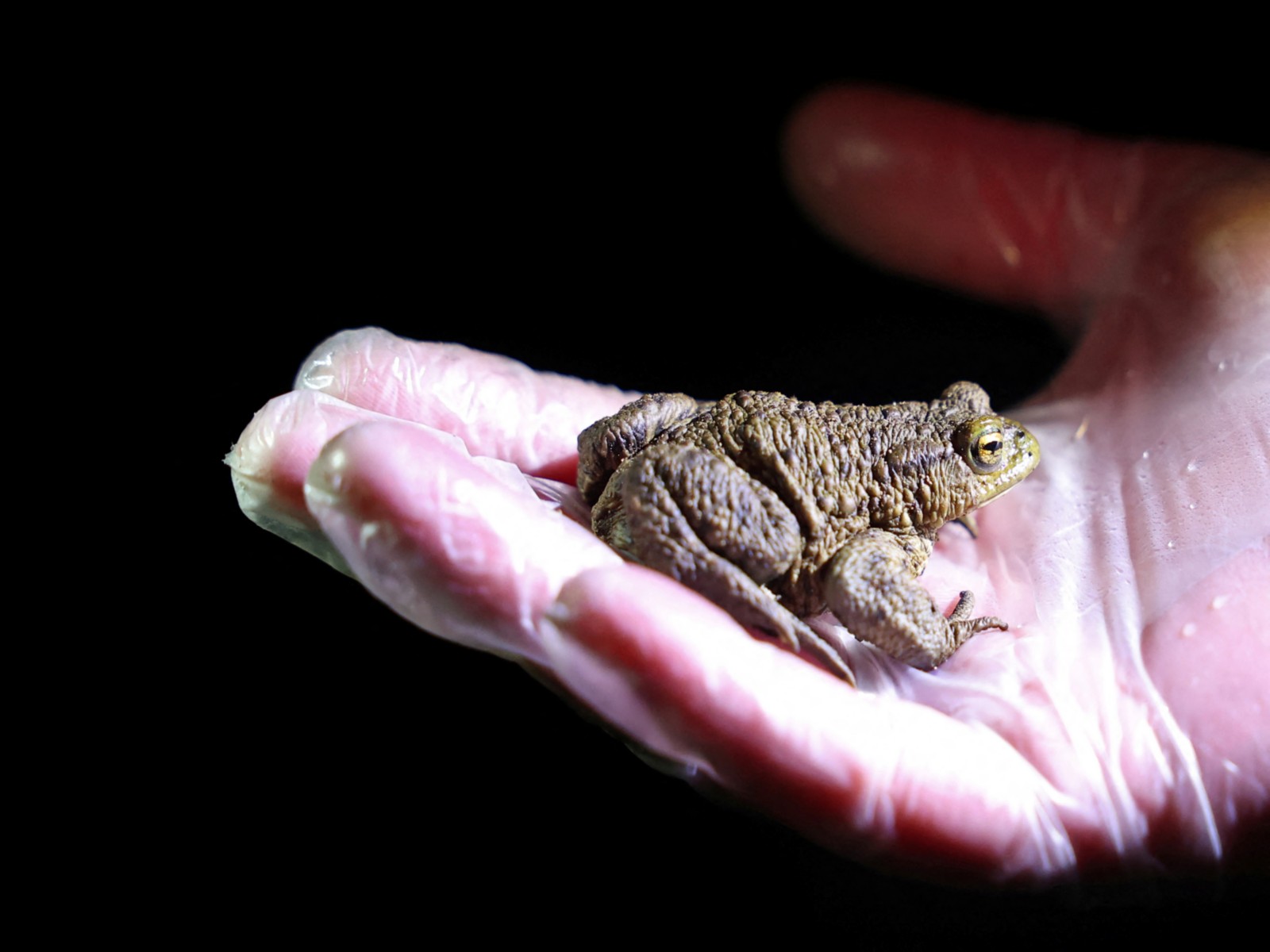
Darjeeling's Himalayan frog population genetically isolated, faces hunting pressure: Study
Oct 03, 2026
Varanasi (Uttar Pradesh) [India], October 3 : The Marbled Cascade Frog (Amolops marmoratus), found in the Darjeeling and Kalimpong regions of the Himalaya Biodiversity Hotspot, faces a dual threat from genetic isolation and traditional hunting, according to a new study.
Locally known as ‘Sisne Paha’ or ‘Sisne Paa’, the frog has been harvested by local communities for generations for food and traditional medicine. A study involving 12 scientists from the University of Calcutta, Banaras Hindu University, the Zoological Survey of India, Darjeeling Government College and Tamralipta Mahavidyalaya has conducted a detailed DNA analysis of the species for the first time.
The findings, published in the international journal BMC Genomics, showed that the population in the Darjeeling region is genetically isolated and has significantly lower genetic diversity compared to populations elsewhere in Asia.
The research team collected samples from 57 locations across the Darjeeling Hill region. Surveys were conducted in waterfalls, fast-flowing streams and rocky rivulets at altitudes ranging from 200 to 2,400 metres. The team studied 60 frogs morphologically, while DNA from 35 specimens was analysed. The Zoological Survey of India (ZSI), Kolkata, confirmed the species' identity.
The researchers used two standard genes, 16S rRNA and COI, for the genetic analysis. Comparisons with DNA sequences from across the world showed that the Darjeeling population had the lowest genetic diversity, while populations in Myanmar, Southeast Asia and China showed relatively higher diversity.
Genetic distance was highest between the Darjeeling and Chinese populations, while the lowest was observed between the Myanmar and Southeast Asian populations, indicating that the Darjeeling population is genetically distinct and isolated from populations in other regions.
Scientists also estimated the divergence time of the species using DNA data. The analysis suggested that the common ancestor of the species in Asia lived approximately 17.4 million years ago. The South Asian, or Darjeeling, lineage diverged around 11.2 million years ago, while the current Darjeeling lineage spread across the region approximately 0.94 million years ago.
The researchers said the divergence occurred after the period when a stable Himalayan ecosystem had developed, suggesting that the species began diverging when resources were abundant in the Himalayan region.
According to the study, geographical isolation, limited gene flow and historical population events are the primary reasons for the low genetic diversity of the Darjeeling population.
The researchers also identified local frog consumption as a modern pressure that could further reduce genetic diversity. Catching frogs perched on rocks and bushes at night during the monsoon season is a common practice in the Darjeeling Hills.
Two major frog species are primarily consumed in the region -- Amolops marmoratus and Nanorana liebigii. Among these, Amolops marmoratus is more widely distributed and therefore faces greater local harvesting pressure.
Dr Rakesh Tamang of the Department of Zoology at the University of Calcutta, who led the research, said, "This is the first study combining morphological and genetic analysis of this species from the Darjeeling Hill Region. The population is distinct and exhibits low diversity; this factor cannot be overlooked when formulating conservation policies."
According to Dr Kumaresh Mandal, the population originated from a small group through a founder effect and subsequently expanded rapidly. Consequently, Darjeeling samples appear on a distinct branch of the phylogenetic tree, with short branches indicating limited diversity.
He stressed that protecting these genetically unique Himalayan populations, their stream habitats and their long-term evolutionary potential is essential for safeguarding the ecological stability of the Eastern Himalayas.
BHU gene scientist Prof Gyaneshwer Chaubey said, "Very little work has been done so far on the diversity of frogs in the Himalayas; the Eastern Himalayas lag behind the Western Ghats in this regard. Populations with low genetic diversity are more vulnerable to climate change, disease, and inbreeding."
"Conservation efforts will remain incomplete without raising awareness among local communities," he added.
For the first time, COI gene sequences have been generated from Darjeeling specimens of the species as part of the research. The researchers said these sequences could prove useful for future barcoding and environmental DNA (eDNA) monitoring.
The team suggested curbing unregulated hunting, raising awareness among local communities and protecting frog habitats, particularly streams at low to medium altitudes.
Frogs serve as indicators of water quality and ecological health, and their decline can signal stress on the wider mountain aquatic ecosystem.