Delhi HC enhances compensation for 74-year-old accident victim, says age cannot erase economic value of homemaker’s work
Oct 14, 2026
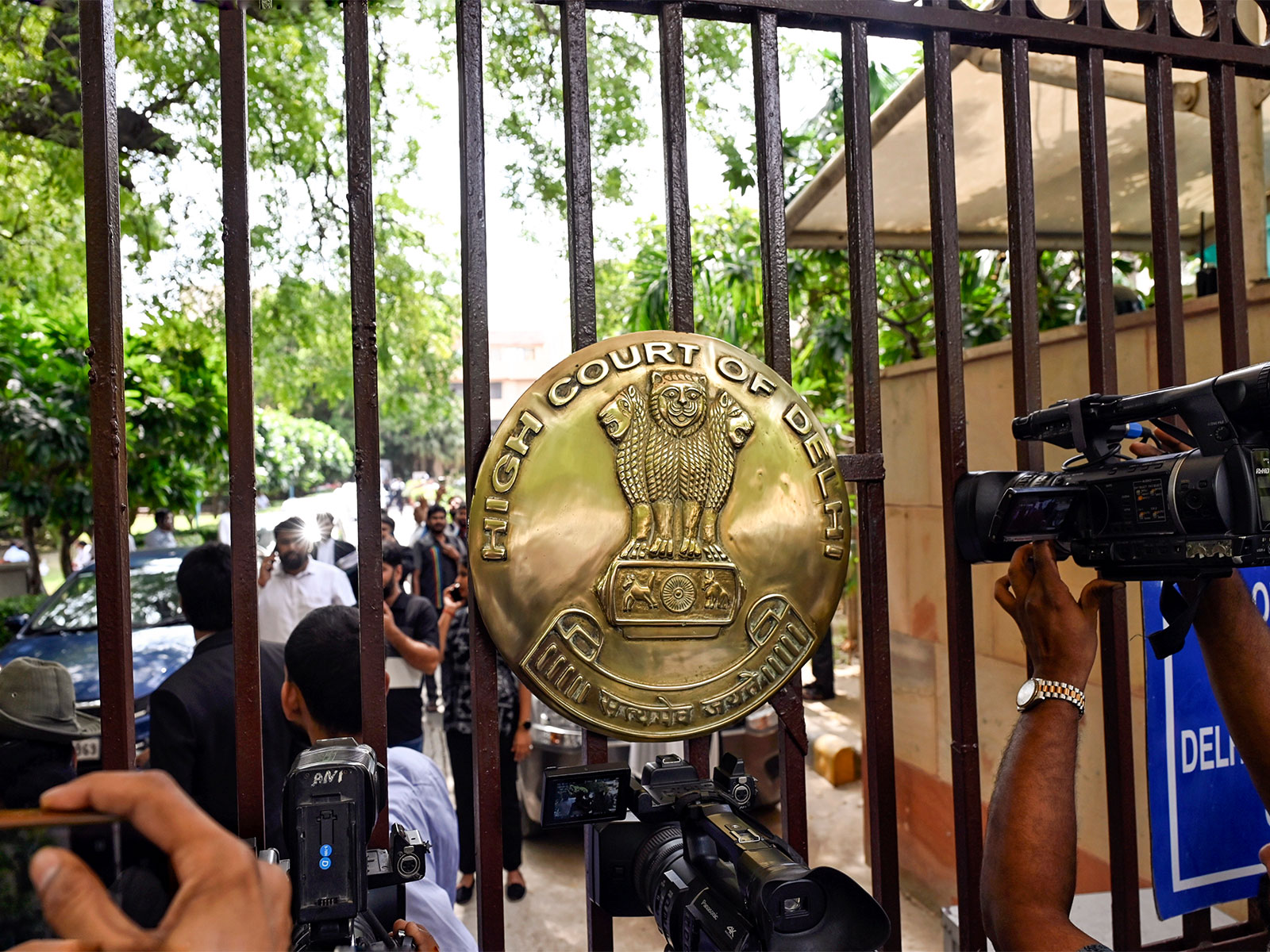
New Delhi [India], October 14 : The Delhi High Court has held that advanced age cannot be a ground to presume that an elderly person has stopped contributing economically to the family, emphasising that unpaid household work and caregiving services rendered by older women must be recognised while determining compensation in motor accident cases.
Justice Anish Dayal observed that compensation cannot be assessed on stereotypes or assumptions that a person ceases to contribute to the household merely because of age. The absence of monetary remuneration for domestic work cannot be allowed to benefit the person responsible for the accident or reduce the compensation payable to the victim.
The court made the observations while enhancing the compensation payable to Ganga Devi, who was 74 years old when a bus accident in February 2019 crushed her legs, resulting in the amputation of her left leg below the knee and all the toes of her right foot.
The High Court increased the compensation awarded to her by the Motor Accident Claims Tribunal (MACT) from Rs 14.42 lakh to Rs 20.79 lakh, an enhancement of Rs 6.37 lakh, along with interest at 7.5 per cent per annum from the date of filing of the claim petition.
The court also awarded an additional Rs 1.30 lakh towards the cost of a further artificial limb and Rs 75,000 towards its maintenance, subject to the conditions specified in the judgment.
“The absence of a monetary consideration cannot operate to the advantage of the tortfeasor or diminish the compensation otherwise payable to the injured claimant,” Justice Dayal observed.
The court rejected the approach of assessing an elderly homemaker as merely a dependent family member on account of her age. It noted that women above 70 years continue to perform household duties and provide care to grandchildren and other family members, contributions that often remain unrecognised because they do not generate a direct income.
The judgment also highlighted the concept of “ageism”, referring to prejudice and discrimination based on age, and stressed that such assumptions must not influence the assessment of compensation.
The court said no age limit had been prescribed by the Supreme Court while recognising the economic value of unpaid care and domestic work for determining compensation. Introducing an age-based restriction would be contrary to the beneficial purpose of the Motor Vehicles Act and the requirement to award just and reasonable compensation.
Ganga Devi was a homemaker and had never been formally employed. The MACT had declined to award compensation for loss of income or future earnings, reasoning that she was 74 years old, past the retirement age, and there was insufficient evidence to establish that she was performing household chores or looking after her grandchildren.
The High Court found that this approach failed to adequately recognise the economic value of her contribution to the family.
Taking into account her role as a homemaker in a joint family and her involvement in looking after her grandchildren, the court assessed her notional monthly income at Rs 16,962, corresponding to the minimum wages prescribed for a skilled worker in Delhi at the time of the accident.
It held that the value of a homemaker’s services cannot be denied merely because the work is unpaid or because the person has crossed a particular age.
The court also noted that older persons are not merely recipients of care from younger family members but often provide substantial assistance themselves. Such contributions, including childcare and household management, have an identifiable economic value because families would otherwise have to incur expenses to obtain similar services.
The court noted that Ganga Devi had suffered 74 per cent permanent physical disability in relation to both lower limbs. However, it clarified that physical disability and functional disability cannot automatically be treated as identical.
Assessing the impact of her injuries on her ability to perform household activities and provide services to her family, the court fixed her functional disability at 50 per cent.
It held that the assessment had to take into account her age, the nature of the work she performed before the accident and the extent to which her injuries restricted her ability to continue those activities.
The court also rejected the argument that a claimant above 70 years of age could not be awarded compensation for future loss by applying the multiplier method.
It held that the absence of a separate category for persons above 70 years in the multiplier table could not mean that their future losses were incapable of calculation. Applying a multiplier of five, the court awarded ₹5,08,860 towards loss of future income.
It additionally awarded Rs 50,886 towards loss of income for three months, considering the prolonged treatment and repeated hospitalisations that prevented her from performing her usual household activities.
The High Court increased the compensation towards attendant charges from Rs 50,000 to Rs 5 lakh, observing that the absence of evidence of a formally paid attendant did not, by itself, disentitle an injured person from compensation.
It noted that assistance could be provided by family members without any payment being made to them, but such gratuitous assistance could not be disregarded while determining just compensation.
At the same time, the court distinguished Ganga Devi’s case from one involving 100 per cent functional disability and a requirement for round-the-clock assistance. It noted that the artificial limb could enable her to undertake some daily activities independently, while her age and permanent disability would nevertheless increase her need for assistance.
The court also increased compensation for pain and suffering from Rs 75,000 to Rs 1 lakh, considering the nature of her injuries, the amputations and the impact of the accident at her advanced age.
The court said the assumption of a life expectancy of 70 years, used in earlier judgments concerning artificial limbs, could not be treated as an absolute limit for a claimant who had already crossed that age.
Referring to Supreme Court decisions recognising the need for replacement of prosthetic limbs, the court observed that a claimant’s actual requirements must be considered rather than excluding them from compensation merely because they have crossed the assumed life expectancy.
It awarded Rs 1.30 lakh towards one further artificial limb and Rs 75,000 towards maintenance. The amount for the artificial limb is to be kept in an interest-bearing fixed deposit and released upon production of the required purchase invoice and proof of payment to a reputed vendor. Any unutilised amount, along with accrued interest, is to be refunded to the insurance company upon an appropriate application.
The enhanced compensation of Rs 6,37,307, along with interest at 7.5 per cent per annum from the date of filing of the claim petition, has been directed to be deposited before the MACT within four weeks.
The court further directed that Rs 1,37,307 be released to Ganga Devi within two weeks thereafter, while the remaining enhanced amount and accrued interest are to be placed in fixed deposits with staggered maturities.