Displeased by spotty obedience, Xi continues culling party leaders
Nov 03, 2026
Hong Kong, November 3 : There has been no slackening in Chairman Xi Jinping’s fixation on cleaning up the ruling Chinese Communist Party (CCP) from threats within and without. At the latest Fifth Plenary Session of the 20th Central Committee, held in Beijing from 26-29 October 2026, a record number of officials were expelled from China’s all-powerful party.
In all, 33 party members had their expulsions publicised at this annual gathering of the CCP’s ruling body. In fact, this was a record number for the CCP in the post-Mao Zedong era.
However, these cases were generally already known, with the plenum simply providing the opportunity to make the relevant announcements.
Back in 2022, the Central Committee had nominated 205 full and 171 alternate members – totalling 376 members. However, this latest meeting in Beijing attracted only 279 officials, with most absenteeism due to their having been purged. This is a remarkable 26 per cent dropout rate, and the number of empty seats must have had a chilling effect upon those remaining.
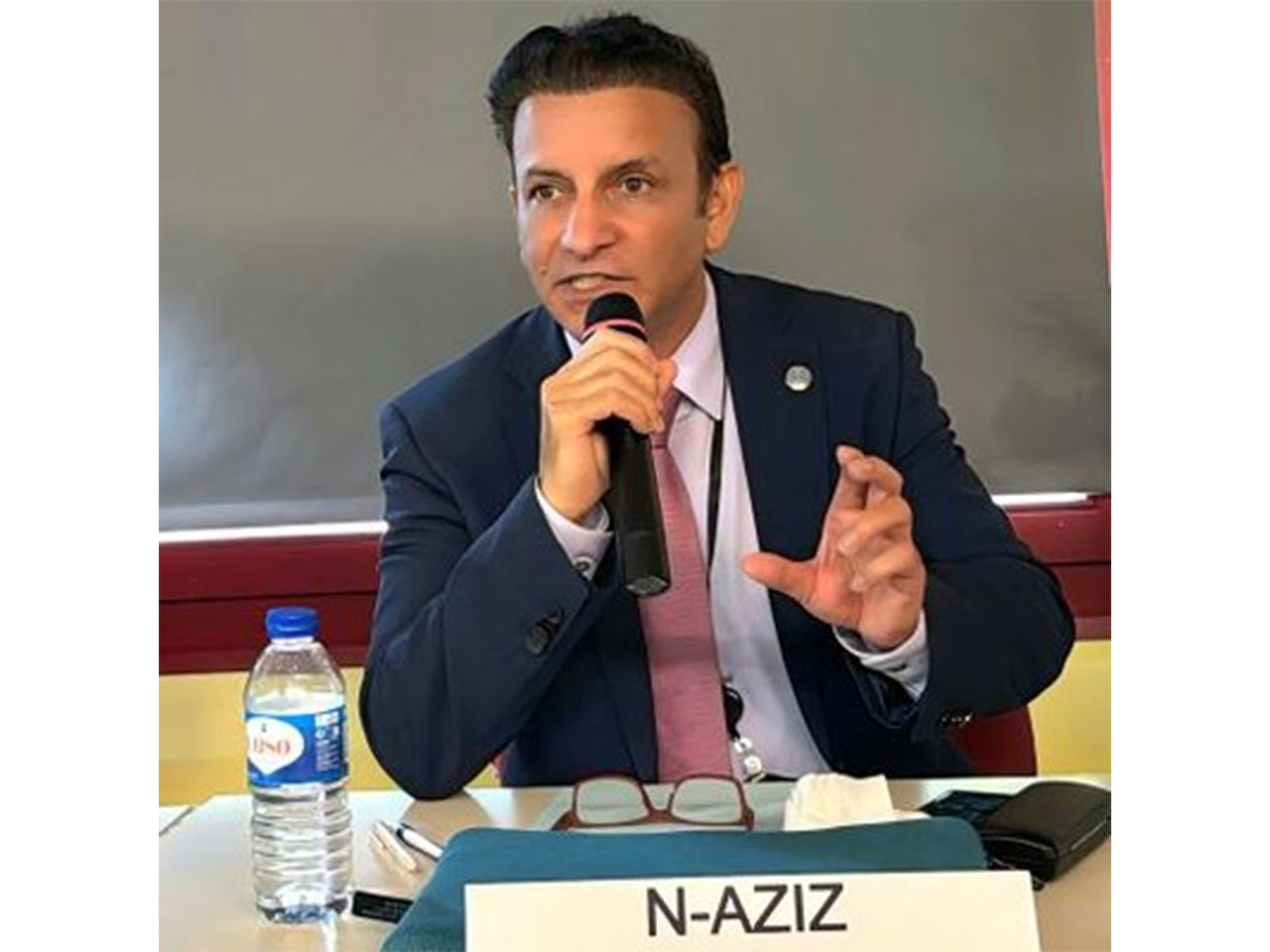
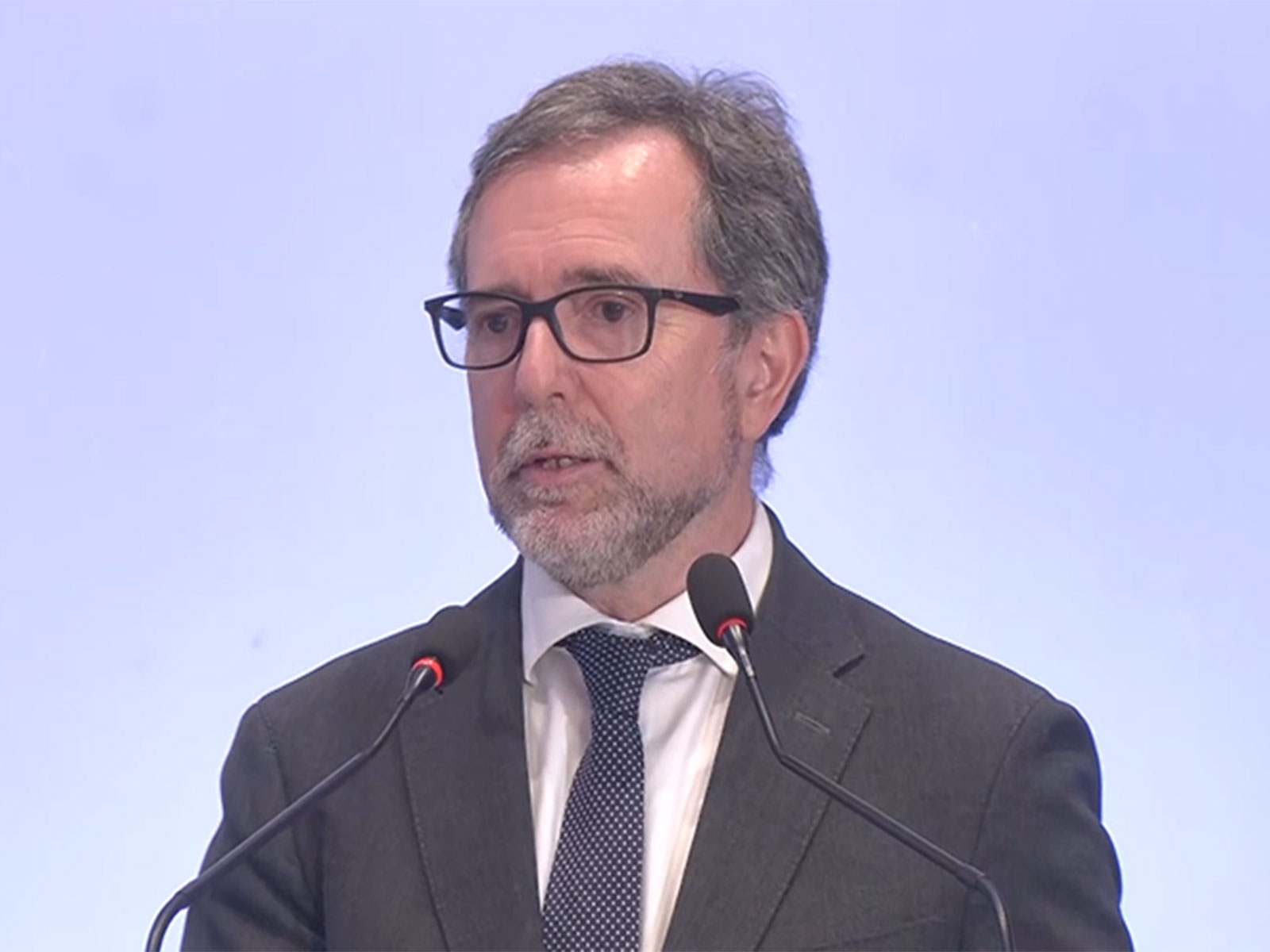
Neil Thomas, Senior Fellow at the Asia Society Policy Institute, remarked: “Plenums provide important ‘proof-of-life’ evidence about Central Committee members. Attendance generally indicates good political standing. Unexplained absence raises questions about a cadre’s status, although it is not definitive proof of a purge.” He added, “More empty seats underscore the plenum’s focus on Xi’s vision of strict internal discipline.”
So, who got the cut at this year’s event? Ma Xingrui, the former party secretary of Xinjiang Province, was one of them. Very prominent too was General Zhang Youxia, who was formerly in charge of the People’s Liberation Army (PLA) and second only to Xi in the Central Military Commission (CMC).
In all, 16 PLA top brass who are Central Committee members became victims of Xi’s purges in the most recent plenum. These include the following: Liu Qingsong (former political commissar of the Eastern Theater Command); Huang Ming (former commander of the Northern Theater Command); and Wang Haijiang (former commander of the Western Theater Command). These were absent from last year’s Fourth Plenum too.
Others have been missing for a long time, including Wu Yanan, former commander of the Southern Theater Command, and political commissar Wang Wenquan. Stunningly, of 44 uniformed officers elected as full Central Committee members in 2022, only Zhang Shengmin (Vice Chairman of the CMC) and Dong Jun (Minister of National Defense) remain in their seats.
Heads of defense industry enterprises were also deleted from the CCP membership book at October’s plenum. These included Jin Zhuanglong and Lei Fanpei, who both served as deputy directors of the Office of the Central Commission for Integrated Military and Civilian Development. This body is responsible for coordinating China’s military-industrial system.
Thomas of the Asia Society Policy Institute pointed out, “One interesting wrinkle is that the plenum confirmed the expulsion of 24 full Central Committee members, but only announced the promotion of ten alternates to full membership. Why weren’t 14 more alternates promoted to fill these vacancies? Hard to say. Too many had political problems?” the academic pondered.
Thomas also observed this about Zhang Shengmin, who was promoted to the top decision- making body known as the Politburo. “Xi Jinping’s long-time PLA anti-corruption czar just became the first person promoted to the Politburo outside of a party congress since 1994.
Zhang Shengmin, Xi’s only deputy on the CMC, was elevated to the CCP’s top 22-man group at the Fifth Plenum.”
The CMC is an interesting bellwether of the health – or sickness – of the CCP. Xi has decimated China’s top military body, reducing it from seven men down to just himself and Zhang. The latter, appropriately enough, is in charge of anti-corruption measures rather than because he is any great PLA strategist.
Thomas also noted: “Some alternates in line for promotion got skipped: Fu Wenhua (PLA Army); Cong Liang (State Council Development Research Center); Ji Lin (without a role for some time); Zhu Wenxiang (PLA Armed Police); and Zhu Hexin (once tipped to lead the People’s Bank of China). Does not bode well; most already suspected of being in trouble.”
The theme of October’s plenum was, appropriately enough, party governance. However, even 14 years after coming to power, it seems the CCP is still difficult to govern, at least as far as Xi is concerned. This is likely because Xi is rooting out not only corruption, but also potential competitors in sweeping power plays.
Xi presides over an enormous country, over a giant political party of 101 million members, and it seems he is perennially disappointed by its members. This could be due to two factors– his expectations of fealty are unrealistic, or the party is corrupt to the core. Of course, both factors could be true at the same time too.
In January this year, Xi lamented that some cadres “constantly proclaim political loyalty,” and “comply outwardly while defying inwardly and doing as they please”. While Xi can keep a hawk-like eye on those close to him in Beijing, it seems his influence is not pervasive enough beyond that for his liking. He wants everyone in the party to obey him fully, but that would presumably require omnipotence. One reason this can never happen is that communist ideology does not change the hearts of all its adherents. Many are willing to use socialism merely to advance themselves, and it is just untrue that all join the party because they hold ideologically pure beliefs.
The number of officials disciplined for “formalism”, what we would refer to as box-ticking, and “bureaucratism”, or passing the buck, increased from 46,000 in 2023 to 118,000 last year. Furthermore, for the first eight months in 2026, the figure was 16% higher than the same period last year. Likewise, the authorities opened an astonishing 1.01 million corruption cases last year, compared to just 155,000 in 2012. China must hire an army of investigators to cope with this amount of cases!
Thomas also wrote in a report for the Asia Society, “Xi sees corruption as the ‘greatest threat’ to the party’s survival and a danger to China’s economic development, making tougher discipline essential to both political security and economic progress. This is the logic of ‘self- revolution’, his vision of a one-party state correcting its own deficiencies before they threaten its survival.”
This year already, Xi told CCP members that the battle against corruption is a “never-ending journey” and that “sick trees” must be uprooted. Interestingly, a communique released after the Fifth Plenum had finished declared, “The party tolerates no corruption, as it has no special interests of its own besides the interests of the working class and the greatest possible majority of the people.”
However, the scale of detentions belies the truth that many party members are more interested in lining their own pockets than anything else. The communique also stated quite bluntly: “It was unanimously agreed that the Central Committee with Comrade Xi Jinping at its core demonstrated tremendous political courage and a strong sense of responsibility in confronting the grave situation marked by weak, hollow and watered-down party leadership, lax, superficial and ineffective self-supervision and self-governance, as well as some startling problems within the party.”
It continued: “As a result, the problem of lax and weak self-supervision and self-governance has been addressed at the root, unhealthy tendencies that had long gone unchecked have been curbed; deep-seated problems that had plagued the party for years have been remedied, and serious dangers hidden within the party, the state and the military have been removed. The party has thus grown stronger through revolutionary tempering. The endeavours to advance full and rigorous governance over the party in the new era have broken new ground in the self-reform of our century-old party and brought about historic achievements and transformations in the cause of the party and the country. The party and the people have thus seized the historic initiative in building a great party and a great country.”
However, it is likely that ongoing purges will prove that this problem remains as deep-seated as ever. Indeed, the party launched a round of inspections by central investigation teams in April this year, where they visited 36 central state institutions, including core political, legal and government ministries. The results, revealed at a meeting the week before the plenum, were that Xi called for “stern rectification” of problems that were uncovered. The report added that the authorities should “strictly fulfil the political responsibility for managing and governing the party, implement all tasks of full and rigorous self-governance of the party with higher standards and more concrete measures, maintain a high-pressure stance against corruption, strictly adhere to a rigorous tone through to the end, and build politically sound agencies with a clean and healthy atmosphere”.
To address any lingering criticism of his pogrom, Xi emphasised at the plenum the need to “further raise awareness of the importance and urgency of relentlessly advancing the party’s full and rigorous self-governance”. The event also cemented Xi Jinping Thought on Party Building as the CCP’s long-term governing blueprint.
The communique noted in flowery language: “During this course, the party has found two answers to the question of how to escape the historical cycle of rise and fall: the people’s oversight over government and the party’s self-reform. These are the unique discoveries of the Communist Party of China, and will forever stand out in the history of Marxist parties.”
The Fifth Plenum also prepared a foundation for the 21st Party Congress that will occur in the latter half of next year. Thomas remarked: “A party congress next year is Xi’s opportunity to refresh the ranks, but his challenge is finding people who can meet his high standards. Still a year of promoting and purging to go!”
It is at this five-yearly congress that Xi is expected to be appointed to a fourth term in charge of China. If this occurs as expected, it will make Xi the country’s longest-serving leader since Mao.
Regarding any leadership contest, Thomas remarked, “Xi remains politically dominant and is likely to win a fourth term. He controls senior appointments and the machinery of coercion, persuasion and surveillance, leaving other leaders little room to resist. His difficulties getting officials to do their jobs do not mean that someone else is about to get his.”
This 21st Party Congress will replenish the hollowed-out Central Committee, but the concern is whether there are enough suitable candidates to fill the gaping holes. Between now and then, hundreds of officials will be intensively screened.
Xi needs to rebuild the CMC at next year’s congress too. Analysts are speculating which different candidates might be favoured, and names being bandied about include: Zhu Chuansheng (acting head of the Joint Staff Department); Chen Demin (acting head of the Political Work Department); Chen Chi (Director of the Logistics Support Department); Dong Jun (Minister of National Defense); Guan Jun (Deputy Director of the Equipment Development Department); Han Shengyan (Commander of the Central Theater); Yang Zhibin (Commander of the Eastern Theater); Wang Gang (Commander of the PLA Air Force); and Zhang Shuguang (Secretary of the CMC Discipline Inspection Commission).
No end seems in sight for Xi’s all-powerful reign. Thomas believes, “A fourth term would not prevent Xi from beginning to groom a successor, but an appointment signalling such a choice, as his own elevation to CMC vice chairman did at the Fifth Plenum in October 2010, seems unlikely. Delaying the choice preserves Xi’s immediate authority but risks leaving his policies without a powerful custodian. Anointing a successor empowers a subordinate whose authority will grow and whose decisions he cannot fully predict or control.”