FATF removes Bulgaria, Côte d'Ivoire, DR Congo, Monaco from Grey List; approves scam compounds report
Nov 02, 2026
Paris [France], November 2 : The Financial Action Task Force (FATF) has removed Bulgaria, Côte d'Ivoire, the Democratic Republic of the Congo (DR Congo) and Monaco from its Grey List after the four jurisdictions completed action plans and introduced reforms to strengthen their anti-money laundering and counter-terrorist financing (AML/CFT) regimes.
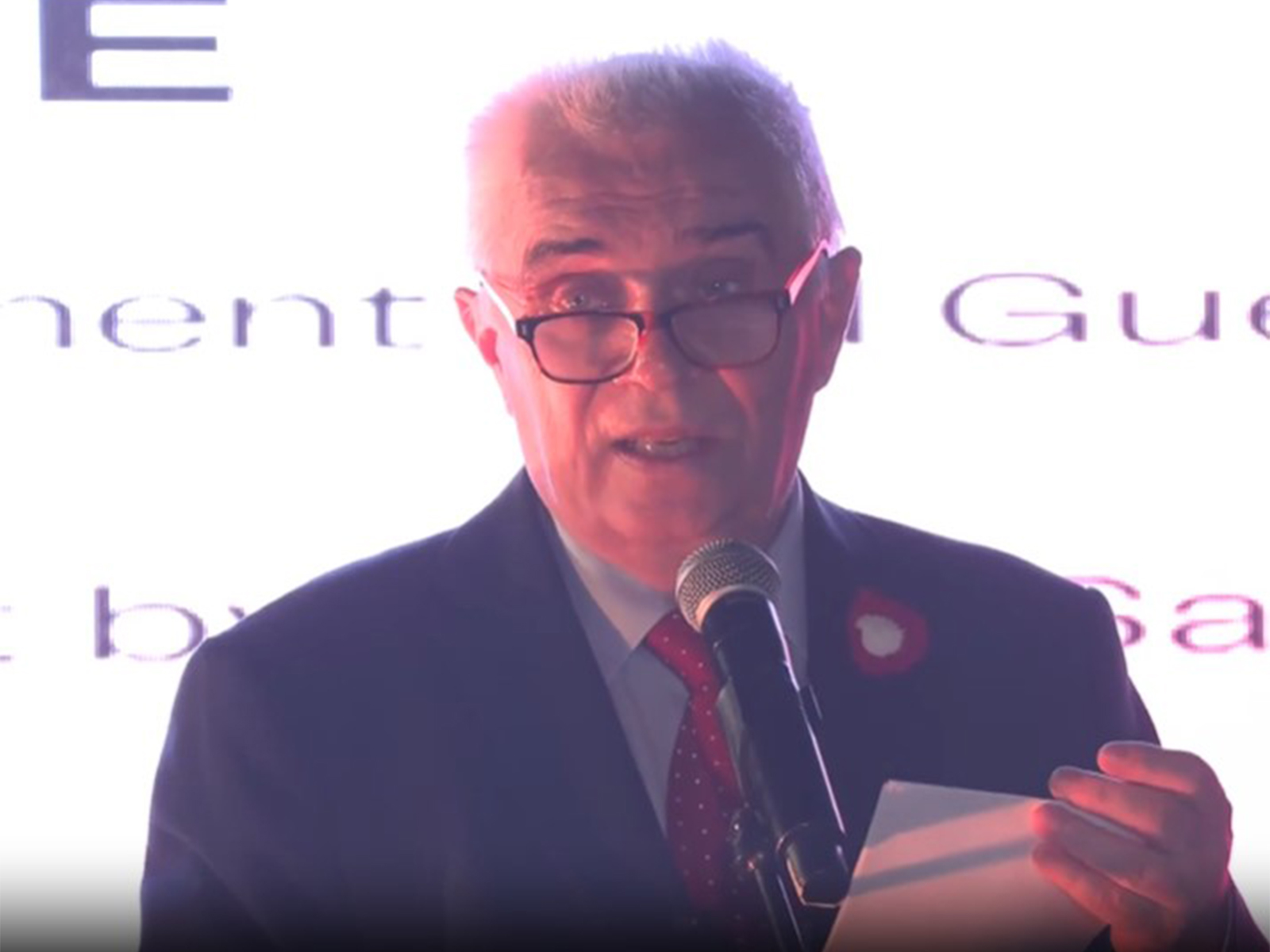
FATF President Giles Thomson announced the decisions while addressing a press conference on October 30, following the Plenary meeting held from October 28 to 30 under the United Kingdom's Presidency.
The Plenary also approved a major report on scam compounds, agreed to accelerate its review of virtual asset standards and adopted mutual evaluation reports of Mexico and the United States, which will be published in December.
Highlighting the priorities of the UK Presidency, Thomson said the FATF was focusing on tackling the global fraud epidemic, strengthening the risk-based approach to fighting financial crime and enhancing information sharing.
"Firstly, tackling the global fraud epidemic, of which I fear the worst is still yet to come, due to growing digitalisation, technological developments and better connected payment systems," he said.
On scam compounds, Thomson said the FATF had approved a major report to help countries tackle one of the fastest-growing forms of organised crime globally.
"With fraud estimated to cost around 500 billion US dollars globally each year, and representing almost half of all crime in some countries. It is right that the FATF, through this report, is helping countries to cut off one of the biggest parts of the fraud supply chain," he said.
He said annual losses from scam compounds were estimated to run into tens of billions of dollars, while around 70 per cent of scam victims did not report the crime.
"Beyond the financial cost, scam compounds claim victims on both sides of the screen – those being defrauded, and those coerced into perpetrating the scam," Thomson said, adding that victims had been reported in more than 100 jurisdictions.
The report, which draws on more than 100 case studies, examines scam compound activities across Africa, Europe, Central America, and Southeast and Eastern Asia.
Highlighting the speed of financial fraud, Thomson cited Thailand's experience, where illicit funds could move from a victim's account to an exit point from the financial system in just three to five minutes, while victims took an average of 20 hours to realise they had been scammed.
"That stark gap shows the challenge we face. Fraud now moves at extraordinary speed, and our response must keep pace," he said.
He also warned that artificial intelligence was enabling convincing impersonation attacks, while instant payment systems and virtual assets were helping criminals move funds within minutes and conceal their proceeds. The report is scheduled to be published the following week.
On virtual assets, Thomson said the Plenary had agreed to accelerate its work through a new targeted review and follow-up processes to address gaps in implementing FATF standards on virtual assets and virtual asset service providers.
The review will focus on jurisdictions with materially important virtual asset sectors, with results scheduled for publication in June and October.
The FATF also concluded a project examining challenges faced by lower-capacity countries in combating illicit finance. Thomson said 84 per cent of assessed anti-money laundering and counter-terrorist financing outcomes across the world's least developed countries were rated as having low effectiveness.
The Plenary agreed on measures to strengthen support for these countries through a proportionate, risk-based approach, while maintaining FATF standards.
On its listing processes, Thomson said the FATF had strengthened its statement on Myanmar, urging the country to address extensive fraud and scam activities originating there and warning of escalated action if progress remained inadequate.
On Iran, the FATF highlighted deficiencies in its legal framework relating to the criminalisation of terrorist financing and targeted financial sanctions.
"The FATF has reiterated its call on its members and urges all jurisdictions to apply effective countermeasures on Iran," he said.
Regarding the Grey List, Thomson expressed significant concern over Vietnam's pace of progress and urged the country to swiftly implement its overdue action plan.
Explaining the removal of Bulgaria, Côte d'Ivoire, DR Congo and Monaco, he said Bulgaria had improved corporate transparency and money laundering investigations, Monaco had increased the seizure of property suspected to derive from criminal activities, Côte d'Ivoire had strengthened international cooperation, and DR Congo had bolstered its ability to identify and investigate terrorist financing.
"I do want to stress, though, that being removed from the grey list is not the end of the road for these countries," Thomson said, adding that they would continue working with their FATF-Style Regional Bodies ahead of their next evaluations.
The Plenary also adopted mutual evaluation reports of Mexico and the United States, which will be published in December following a final quality and consistency review.
Thomson thanked representatives from more than 200 jurisdictions who participated in the meetings.
"As criminals exploit gaps between borders, sectors and systems, our strength comes from closing those gaps through cooperation," he said.