From Barriers to Architecture: How Security Design Is Reshaping India's Urban Homes
May 08, 2026
NewsVoir
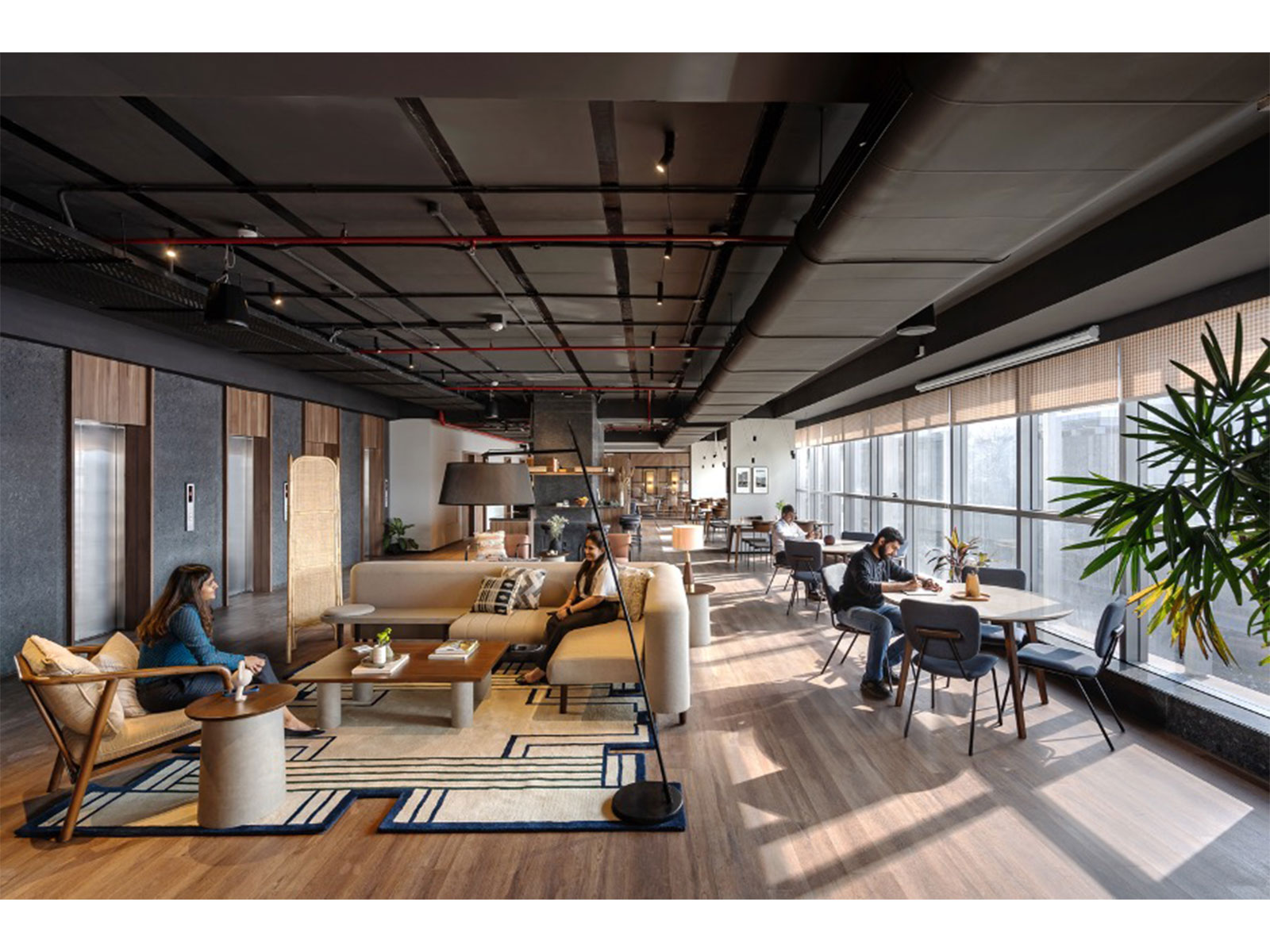
Bengaluru (Karnataka) [India], May 8: India's residential real estate market is currently navigating a structural transformation that is as much about psychology as it is about engineering. As cities like Bengaluru, Hyderabad, Pune, and Mumbai continue to expand, the definition of a "secure home" is being rewritten. Whether in high-density multi-storey apartments or sprawling independent villas, security is no longer an afterthought. It is being integrated at the initial drawing board, a shift that is fundamentally changing how the industry perceives doors, windows, balconies, and facades. This evolution marks the convergence of two previously competing forces: uncompromising safety and Biophilic Design.
The Voices of Change: National Summits and Professional Discourse
This is not a quiet shift; it is a loud conversation occurring at the highest levels of the profession. Over the last 24 months, national platforms such as the Indian Housing Summits and the 2025 CPTED (Crime Prevention Through Environmental Design) Conference, as well as various institutional webinars hosted by architectural bodies, have featured leading designers and urban planners advocating for a "New Urban Envelope."
At these forums, the consensus has been clear: the "Iron Cage" era of Indian architecture is over. Speakers have highlighted that traditional MS (Mild Steel) grills are no longer just an aesthetic eyesore; they are an architectural failure that severs the connection between the resident and the natural environment. These thought leaders are advocating for a transition toward "Passive Security," which involves solutions that protect the home without compromising the biophilic benefits of light and air.
The Economic and Biological Value of "Breathable" Homes
Biophilic design, the deliberate integration of natural light, fresh air, and outdoor connectivity, has moved from a luxury "ask" to a mainstream requirement. According to the JLL Residential Dynamics Report (Q4 2025), apartments and independent homes priced above ₹1 Crore now command a dominant 63% share of total annual sales in India's top seven cities.
This premium segment is driven by a quest for wellness. Research consistently demonstrates that sustained access to natural light and fresh air can reduce urban stress levels by up to 20%. For residents who spend the majority of their time indoors, these elements are essential to the quality of life. Projects that successfully prioritize "breathability" now command a 10-15% price premium, as buyers reject the visual heaviness of traditional bars in favour of seamless indoor-outdoor connectivity.
Universal Security: From High-Rises to Independent Villas
While the architectural form may vary, the need for advanced security is universal. In high-rise complexes, residents face the challenge of shared corridors and proximity to strangers. Conversely, independent houses and villas deal with "perimeter isolation," where entry points are often hidden from public view.
The National Crime Records Bureau (NCRB) 2024/25 report highlights a 7.2% rise in property-related crimes in metropolitan hubs, with a startling 34% of burglars entering through the front door. This is often due to the physical vulnerability of standard wooden doors or basic locks to "forced entry" techniques like prying. Today's security must be proactive rather than reactive. This has created a critical need for active security barriers, which are engineered systems like high-tensile mesh that protect entry points in both villas and apartments without turning the home into a windowless bunker.
Today's security must be proactive rather than reactive. This has created a critical need for active security barriers -engineered systems like high-tensile mesh that protect entry points in both villas and apartments without turning the home into a windowless bunker.
Engineering an Absolute Sanctuary: The TENTUFF™ Innovation
Introduced to the Indian market in 2016 by SSA INDIA, a subsidiary of Security Solutions Australia, TENTUFF™ provides a new concept in home security. Central to this is the proprietary Poly Tensile® mesh, a high-tensile woven stainless-steel wire designed for strength with a "seamless view" appearance.
This mesh is combined with an engineered aluminium frame using a one-of-a-kind mechanical fastening system. This construction allows for 24/7 natural ventilation and uninterrupted views while ensuring the mesh cannot be kicked or pulled out of its frame.
The Mechanics of 3-Point Security
The TENTUFF™ range is engineered specifically for India's tropical climate, offering protection against intrusion, insects, The core of this protection is the 3-point locking system:
- Simultaneous Activation: Turning the internal snib activates three super-strong locking tongues at the top, center, and bottom of the door.
- Crowbar Resistance: This creates a fail-proof, uniform grip across the frame to withstand prying and attack.
- Integrated Safety: The design includes a crowbar striker plate, a high-quality lock body, and concealed tamper-proof fixings for absolute security.
Solving the "Security-Ventilation Paradox"
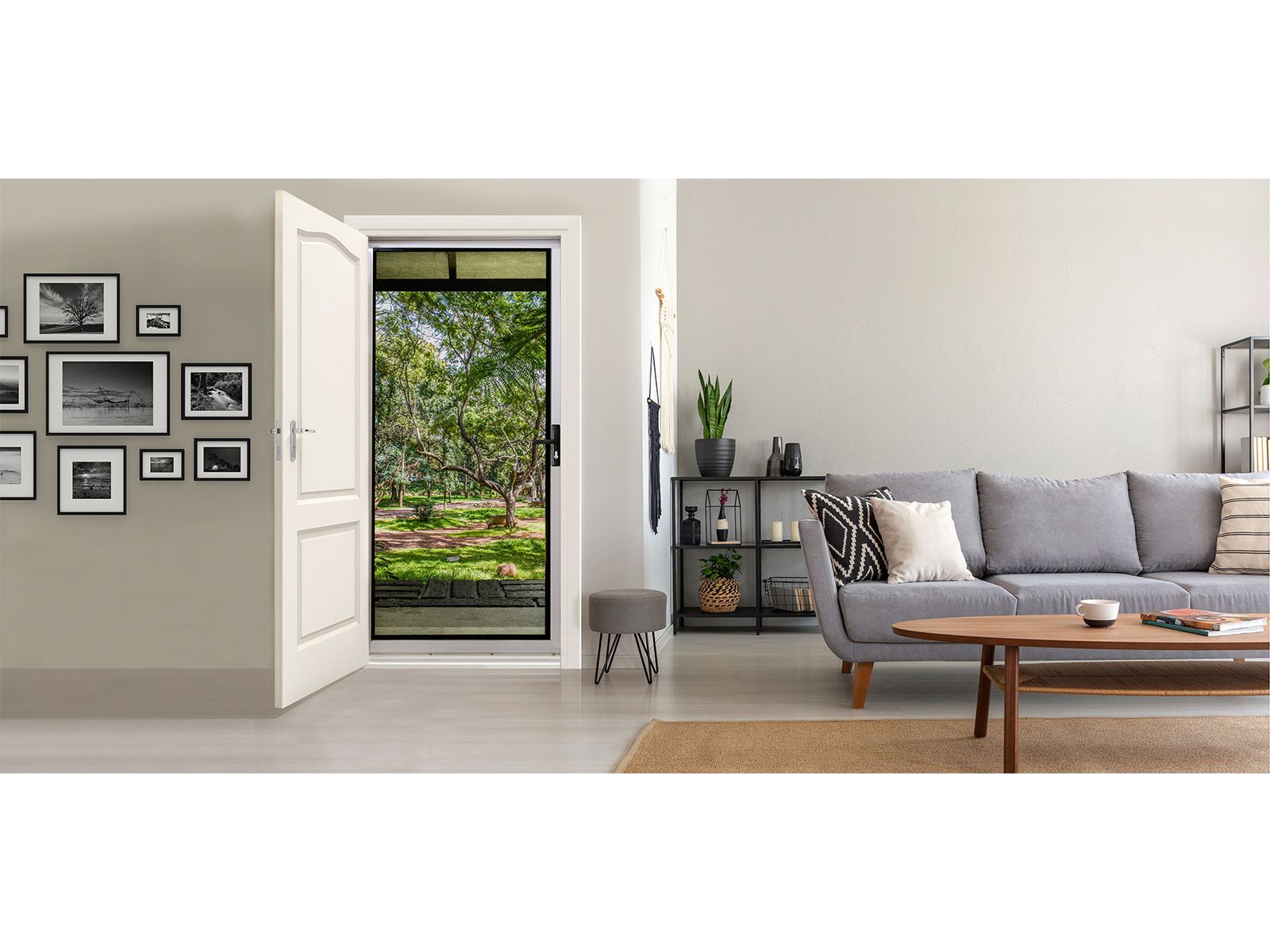
The rising tension between safety and wellness has birthed a thriving market for high-tensile stainless-steel mesh. Architects are now specifying these systems across various configurations, from bi-fold and French security doors to patio and window systems. Unlike traditional bars, this mesh preserves uninterrupted views of the sky and greenery while being anchored in corrosion-resistant aluminium frames.
The "biophilic dividend" of these systems extends into public health. In a tropical country where vector-borne diseases like dengue and malaria are persistent challenges, security mesh allows residents to keep windows and doors safely ajar. This enables genuine cross-ventilation and the "Passive Cooling" required by IGBC 2026 Green Building standards, which can lower indoor temperatures by 3°C to 5°C naturally, significantly reducing the energy loads of air conditioning.
The Shift toward Standardized Performance (AS 5039)
To distinguish genuine protection from simple insect screening, architects at national seminars have emphasized the need for standardized mechanical proof. The industry is moving away from subjective "sturdiness" toward the Australian Standard (AS 5039), the global benchmark for security screens.
Under this rigorous standard, a security screen must be tested as a single, integrated system comprising the mesh, frame, and locks to demonstrate measurable resistance against three specific intrusion methods: the Knife Shear Test, where the mesh must withstand a heavy-duty blade drawn across its surface three times to prevent "stealth slicing"; the Dynamic Impact Test, which requires the system to remain intact after five consecutive strikes from a 40kg lead-filled bag to ensure the mesh does not "pop" out under the force of a human kick; and the Jemmy Test, where the frame and multi-point locks must resist standardized prying forces from tools like crowbars to ensure the perimeter cannot be bypassed at its edges.
A Collaborative Future for Indian Housing
This evolution requires a new level of collaboration between security hardware manufacturers, architects, and developers at the planning stage. As project specifications move from "optional upgrades" to "inevitable considerations," consumer education remains key. Whether securing a luxury penthouse or a private villa, homebuyers must learn to evaluate security not on price alone, but on its contribution to certified performance, health outcomes, and long-term asset value.
As Indian cities grow, the homes being built today will define the liveability standards for the next generation. With regulatory bodies like the Bureau of Indian Standards tightening safety norms and green certifications like IGBC rewarding passive design, the industry is proving that security and biophilic living are no longer competing priorities. We are entering an era where our homes can finally be as open as they are secure.
(ADVERTORIAL DISCLAIMER: The above press release has been provided by NewsVoir. ANI will not be responsible in any way for the content of the same.)