Imtiaz Ali calls 'Main Vaapas Aaunga' "a film of today's times", reveals personal connection behind movie title
May 21, 2026
Mumbai (Maharashtra) [India], May 21 : In the run-up to the release of 'Main Vaapas Aaunga', filmmaker Imtiaz Ali has opened up about the emotional core of the film, describing it as a story where "love is more and tragedy is less" despite being rooted in the painful memories of partition.
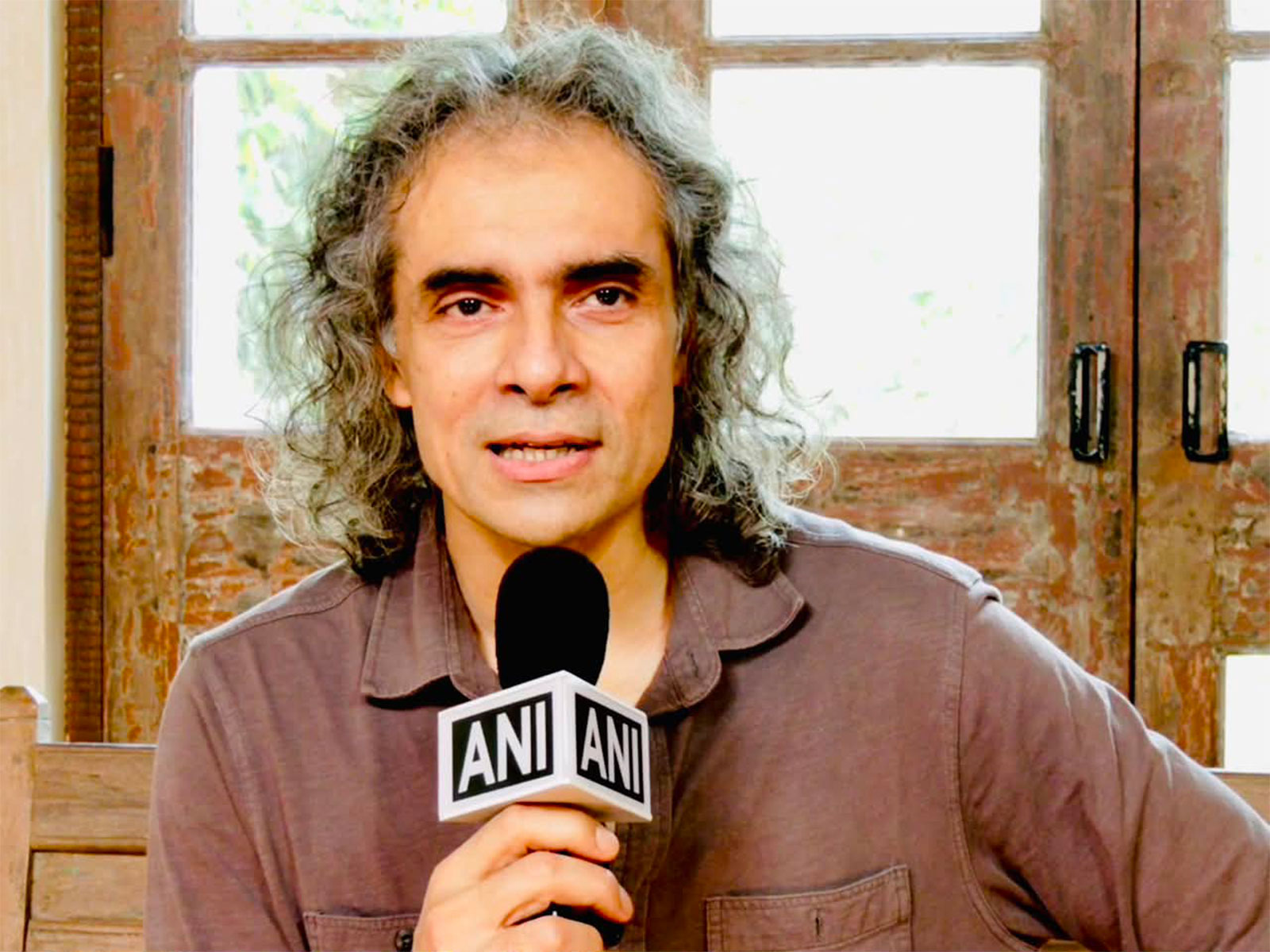
Speaking in an interview with ANI, the director reflected on how the film draws from deeply personal emotions, collective memories, and stories shared by people who lived through the partition of India.
"I think that any tragedy has the power to be tolerated with love. Love is necessary for us to live this life," Ali said.
The filmmaker explained that while 'Main Vaapas Aaunga' revisits the trauma of partition, the narrative focuses more on human connection and emotional remembrance than on violence or hatred.
"So, I think that when I talked to those people who have seen partition in their lives, they often found that today, after so many years of partition, people remember things of love. My doll, my childhood home, my friend, the girl who used to come to the balcony. So, they remembered things of love," he added.
Calling the project "a film of today's times," Ali said the story revisits the idea of division through contemporary emotions and relationships.
"My film is a film of today's times, which remembers partition. Love is more and tragedy is less (shown in the movie)," he said.
The director also spoke about the process of capturing the film's emotional depth on screen. According to him, portraying the core emotion was not difficult because the stories that inspired the film already carried strong emotional truths.
"Actually, it was very easy to bring the core emotion in this film. Because in all the stories on which this film is based, the core emotion of love was very much there," he said.
Ali further revealed that many conversations and real-life accounts directly influenced the screenplay.
"So, actually, I have written less than myself. I have brought more people's talks in this film," he said.
Known for crafting emotionally layered characters in films such as 'Jab We Met', 'Rockstar', 'Tamasha', and 'Highway', Ali also reflected on why many of his protagonists appear emotionally adrift and searching for unanswered questions.
"Surely, the reason for this would be that I am a little lost myself. And more than being lost, I keep looking for something," he admitted.
The filmmaker said that the search for identity and emotional connection is universal, which is why audiences often relate to his cinema.
"And I am not a lonely person. I feel that every person, every girl or boy, is definitely looking for something. And maybe that's why I make films. Because I am looking for something through the medium of making those films," he said.
Ali also spoke at length about his evolving understanding of love, saying that the more films he makes, the more complex the emotion appears to him.
"As much as I am making films, and people say that they are based on love, and I am looking for what love is, I feel that I am going away from this answer as to what love actually is," he said.
Recalling how his earlier understanding of romance was simpler, Ali compared conventional love stories with more layered emotional bonds depicted in his own films.
"My earlier understanding was a little simple. That this is love. Love is what Raj had with Simran. Or love is what Aamir Khan had with Juhi Chawla's character," he said.
"But then I feel that this is also love. What Veera had for Mahabir is also love. Then everything seems to be love. So the confusion increases."
Ali also explained the emotional inspiration behind the title 'Main Vaapas Aaunga.'
"I have felt this myself when I went to my childhood home. It was not possible to come back at that time. Because you can never go back to the age you lost. Time is something you can never go back to," he said.
The filmmaker shared that the idea of "coming back" stayed with him through poetry, music, and personal memory.
"After that, I read a poem in which a highwayman promises that he will come back. And there is a song, that I will come back even if I die," he said.
Ali recalled that the title itself emerged during filming.
"We had not decided on the title of the film. When I was shooting, there was a shot in the train where Keenu says that he will come back. He screams and says to the land that he is leaving. He is saying to the people that he is leaving. During that shot, I felt that this should be the title of the film," he revealed.
The director also discussed the role of music in his storytelling process, describing songs as emotional devices that communicate what dialogue often cannot.
"Songs are a medium to move the story forward," Ali said, adding that they capture "the change of heart" and the emotional dimension of a character's inner world.
"Those songs do what scenes cannot do. They tell what is in the mind," he said.
The upcoming film marks another collaboration between Ali, music composer A R Rahman and lyricist Irshad Kamil, a trio known for delivering several acclaimed soundtracks in Hindi cinema.
Meanwhile, the trailer of 'Main Vaapas Aaunga' was unveiled on May 19, offering audiences a glimpse into a layered narrative set against the backdrop of Partition and its generational impact.
The film stars Diljit Dosanjh, Sharvari, Naseeruddin Shah and Vedang Raina.
The trailer opens with light-hearted exchanges between the characters played by Shah and Dosanjh before transitioning into a romance involving Sharvari and Raina, eventually unfolding the emotional consequences of Partition across generations.
Produced by Applause Entertainment, Birla Studios, and Window Seat Films, Main Vaapas Aaunga is scheduled to release in theatres on June 12.











![AAP national convenor Arvind Kejriwal (File Photo/ANI]](https://aniportalimages.s3.amazonaws.com/media/details/ANI-20260706102642.jpg)