In face of “unacceptable attacks” on shipping, India and Liberia launch group to advocate maritime safety
Sep 25, 2026
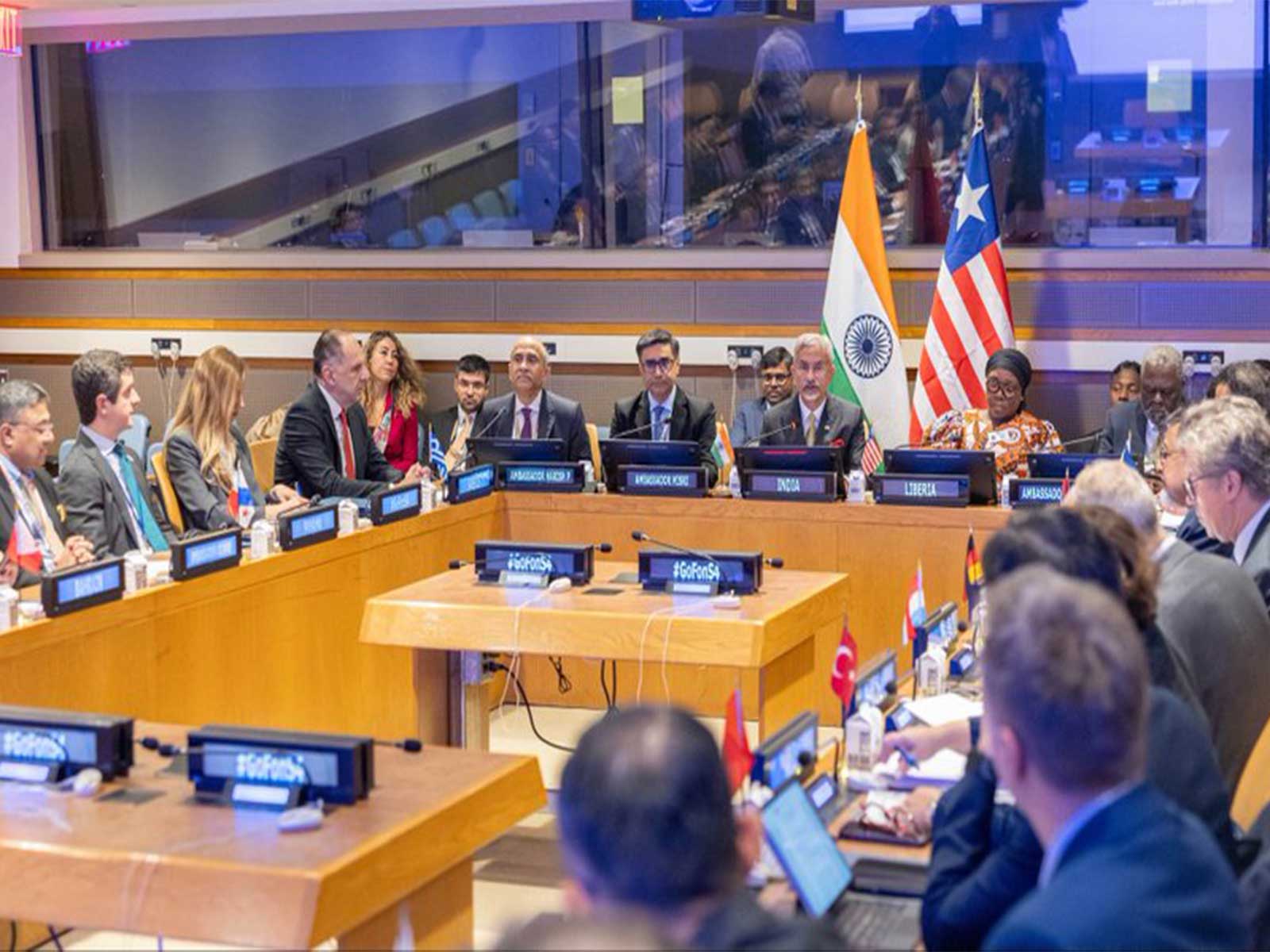
New York [US], September 25 : External Affairs Minister S Jaishankar announced on Friday that India and Liberia have launched an international coalition to champion maritime safety in response to "unacceptable attacks on commercial shipping and merchant marines".
Speaking at a joint press conference with Liberian Foreign Minister Sara Beysolow Nyanti, Jaishankar stated, “As a major source country for seafarers, India has joined hands with Liberia, which hosts the largest shipping registry by tonnage on this planet.”
Highlighting the urgency of the initiative, Jaishankar noted, “In recent months, the world has seen unacceptable attacks on commercial shipping and merchant marines. They are legally and morally indefensible.” He firmly added, “Put simply, these attacks must stop.”
The minister pointed out that these hostile incidents have spanned from the Strait of Hormuz and the Gulf to the Red Sea and the Black Sea, emphasising that there is no justification for them.
Echoing these sentiments, Foreign Minister Nyanti stated, “India and Liberia, together, we are the picture of what goes across our waters every day and night. When Liberia's regulatory reach meets India's maritime workforce, our shared responsibility to the global commons becomes undeniable.”
Emphasising the coalition's purpose, Nyanti stated, “The Group of Friends is not a symbolic gesture,” adding, “It's an action-driven multilateral coalition within the framework of the International Maritime Organization and International Labor Organization.”
She further noted, “We intend to use our collective weight to shape maritime policy, raise operational standards, and safeguard the men and women at sea.”
EAM Jaishankar noted that maritime shipping accounts for four-fifths of global trade, surpassing USD 35 trillion last year, with two million individuals employed in the maritime sector.
He warned that these attacks on shipping are “threatening the basic needs of the international community, including food, fuel, fertiliser, and financial services – four Fs”.
“Our initiative is meant to add to the factors of stability and confidence in what is otherwise an uncertain and perilous world,” Jaishankar stated.
Outlining the core objectives of the newly formed coalition, Nyanti stated that the group pursues three “non-negotiable goals”: demanding uncompromising technical standards, stringent vessel compliance, and coordinating environmental stewardship; defending commercial sea lanes against piracy, armed attacks, regional instability, and asymmetric threats; and centring the human beings who keep our world running.
Stressing the human cost, she stated, “Seafarers must never be treated as expendable cargo that can just be dumped over the dock over the sea and thrown into unforgetfulness.”
Earlier during the meeting of the 25 nations comprising the Friends Group, EAM Jaishankar detailed recent casualties, noting that two days prior, an Antigua and Barbuda-flagged bulk carrier, MV Cape Dove, was targeted in the Gulf of Oman, resulting in the death of an Indian sailor.
He added that 10 days before that incident, a Panama-flagged oil tanker, El Gaya, was struck in the Strait of Hormuz, leaving an Indian crew member missing.
“These, regrettably, are no longer exceptional occurrences,” Jaishankar remarked.
He also referenced two separate attacks in the Black Sea, stating that the chief officer of the MV Omorfi, an Indian national, was killed when the vessel was hit within Russian territorial waters on 18 July.
The following day, four Indian seafarers lost their lives after the MV Golden Leo was struck upon departing from Odessa.
Highlighting the broader regional impact, Jaishankar noted that casualties extended beyond Indian nationals, with sailors from various other countries falling victim to attacks throughout the year.
Pointing out that a vessel's flag and its crew members' nationalities frequently differ, Jaishankar stressed that a unified governmental response is imperative.
He explained that the newly established body will function as a collaborative platform for nations engaged in shipping, registration, and crewing, uniting major ship-owning countries, prominent registry holders, and leading suppliers of the global maritime workforce.