India now "top-tier defence and security partner for Australia": Aussie High Commissioner Philip Green
Jul 28, 2026
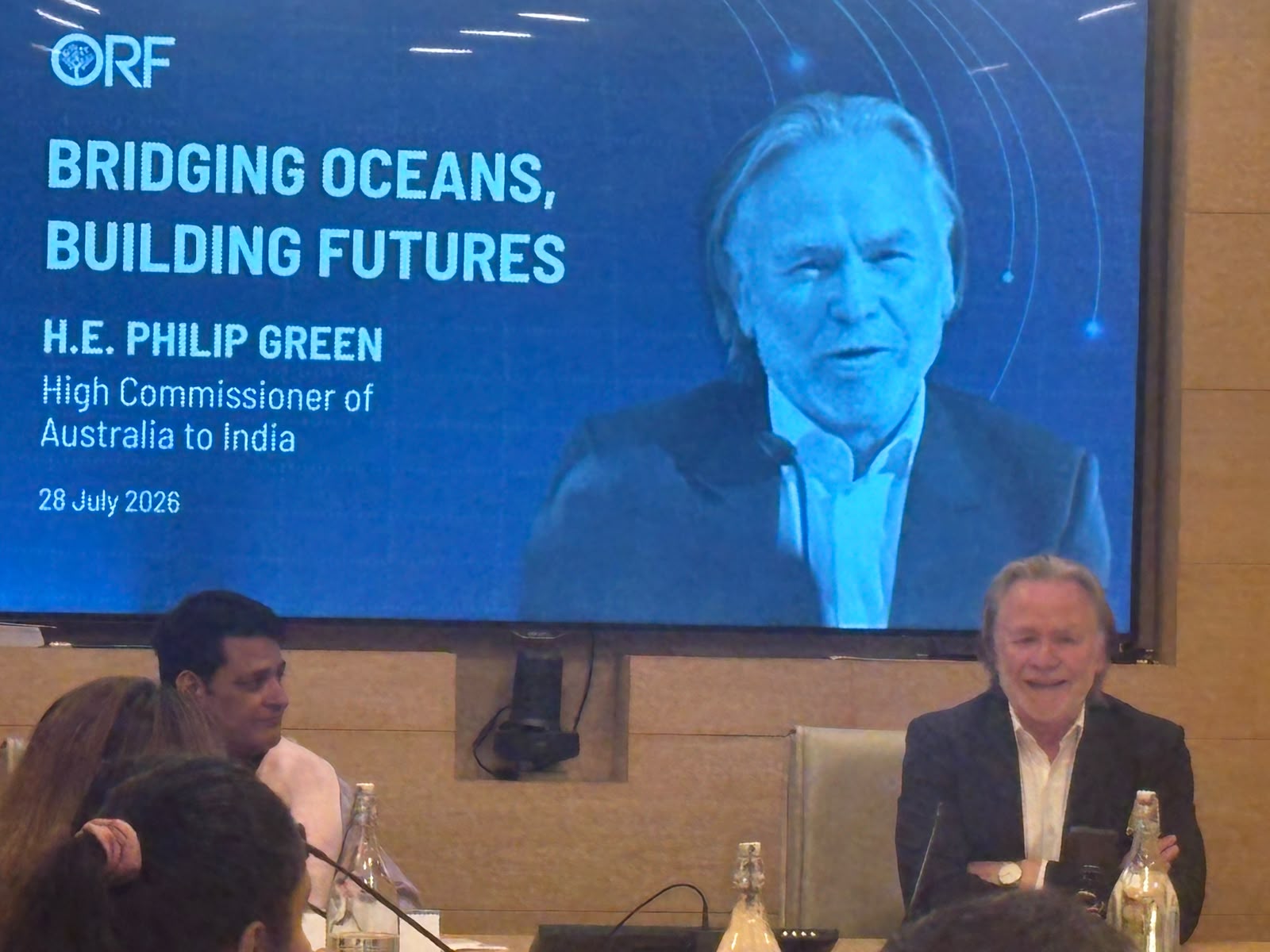
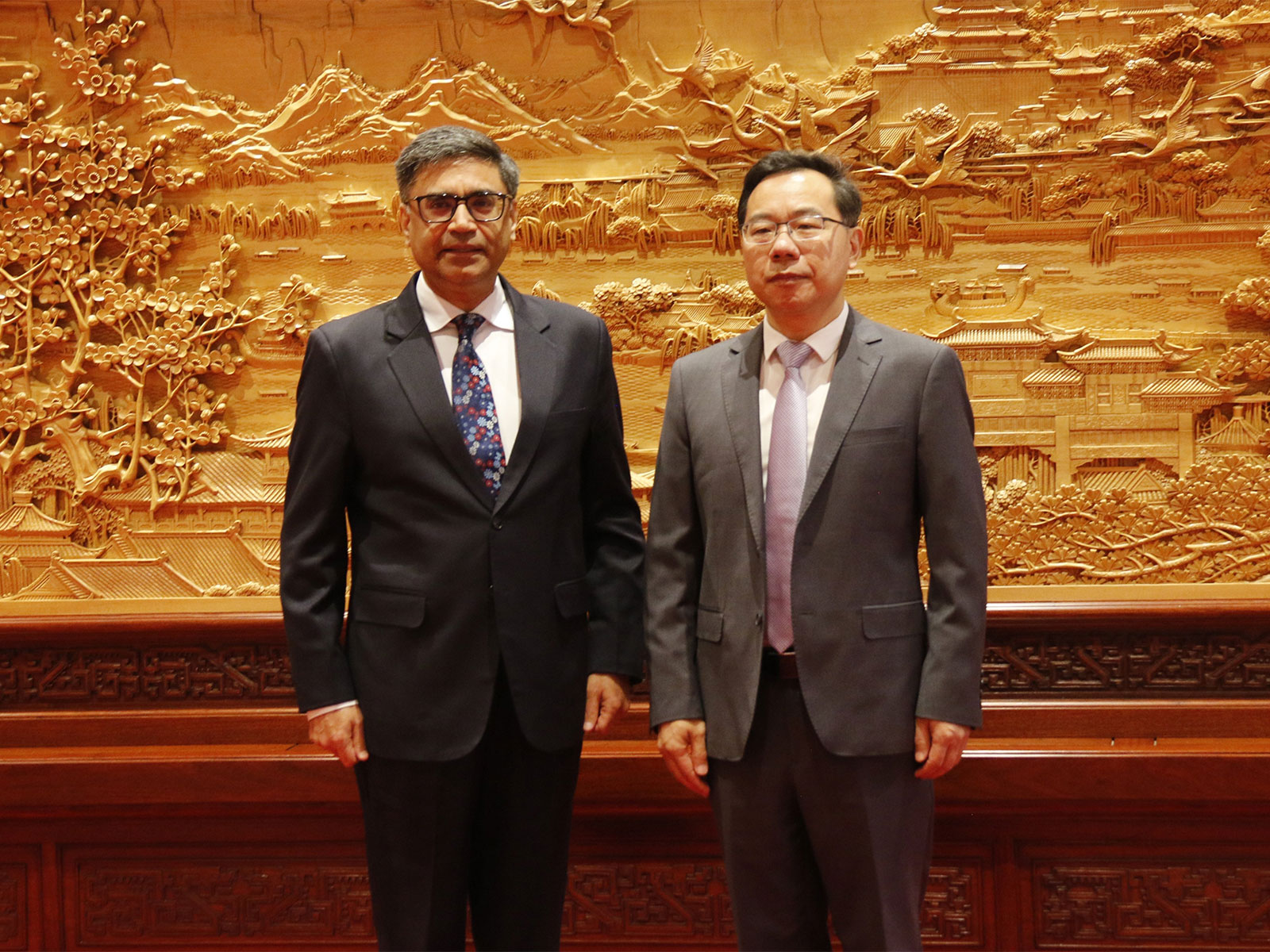
New Delhi [India], July 28 : Australian High Commissioner to India Philip Green on Tuesday said that India has become a "top-tier defence and security partner" for Australia, underscoring the growing strategic convergence between the two countries following Prime Minister Narendra Modi's visit to Australia from July 8-10 for the third India-Australia Annual Summit.
Addressing an event hosted by the Observer Research Foundation (ORF), Green said the joint declaration adopted during the summit reflected the depth and breadth of the bilateral relationship, spanning defence, maritime security, technology, energy, trade and people-to-people ties.
"The joint declaration brings it all together on the security side, and demonstrates that, as we would say, India is now a top-tier defence and security partner for Australia," Green said.
He emphasised the maritime domain as the most significant area of defence cooperation between the two countries, citing their strategic locations in the Indo-Pacific.
"I've been saying the maritime domain is perhaps the most important between Australia and India in the defence and security sphere," he said.
"The maritime domain is perhaps the most important in the defence and security sphere. Australia and India can do a lot, but where it makes the biggest difference is the geographical strategic positioning of our two countries. Neither India nor Australia alone can map the Indian Ocean. That is the importance of our partnership," he added.
Green said the two countries would also expand cooperation in emerging technologies through the 'Partnership on Cyber, Critical Technologies and Supply Chains' (PACTS) initiative.
"PACTS will allow us to focus on more cutting-edge technology like AI," he said.
Highlighting energy cooperation, Green said leaders had reaffirmed their commitment to energy security during the summit.
"Leaders underlined their interest in energy security. Australia is a reliable supplier of energy to India and vice versa," he said.
He added that the summit also marked the completion of the administrative framework needed to operationalise uranium exports from Australia to India. "Underneath that energy security domain there was that outcome on the readiness of the sale of uranium. It brings to a close the 12-year period where we had the safeguards agreement but not the administrative framework for the sale of uranium," he said.
Responding to an ANI question on the uranium agreement, Green said the completion of the administrative arrangements paves the way for commercial sales.
"Australia signed a nuclear safeguards agreement. Since then, we had not settled the underlying framework for the deal. What has occurred now is that those administrative frameworks are signed and done. The actual sales of uranium will be a matter for our commercial sector. The government framework is now done," he said.
Green said three key drivers were underpinning the expanding India-Australia partnership.
"The first being strategic alignment, and that has become even more important in a world that is more turbulent and unsettled. The reliability that we hope India sees in us is, I think, a key calling card," he said.
"The second strategic driver is economic complementarity. India is the fastest-growing large economy in the world," he added.
"The third one is what we call the human component--the fact that there's now more than a million people of Indian origin in Australia--that was celebrated during the visit," he added.
On the Quad, Green said the grouping remained in "extremely good shape" and pointed to the strong alignment among the four member countries.
"A meeting was held just a couple of days ago in Manila of the foreign ministers. That followed two meetings last year and the meeting that I was privileged to attend three months ago here in Delhi. I think the sense of alignment between those four foreign ministers is very strong, and if I read the room right in Delhi, the sense of trust between them is very strong," he said.
"I think you should anticipate more meetings of foreign ministers this year of the Quad. I think those four want to get together at least once between now and the end of the year," he added.
On China, Green said Australia's approach remained consistent. "Australia's policy on China is pretty clear, very clear, and is not changing. We will operate with China where we can, we will disagree when we must, and we'll always act in our own interests," he said.
He said China remained an important partner despite differences. "China is an important player in global affairs and an important player for Australia bilaterally. In a large trading relationship, there are important aspects of global interests, including climate change, that can't be resolved without China's help. We also have areas where we differ with China, and we have stabilised our relationship so that we can discuss our differences, and occasionally reflect those differences in the public domain in a way that is constructive and dignified," he said.
Green also emphasised India as central to Australia's future economic security, particularly in building resilient supply chains.
"India is a very important player for Australia's economic security future," he said, adding that the recent tensions surrounding the Strait of Hormuz had reinforced India's importance as a trusted partner for energy security and as a source of diversification in sectors such as electric vehicles, legacy chips and solar panels.
On defence cooperation, Green said Australia was upgrading infrastructure on the Cocos (Keeling) Islands to strengthen maritime domain awareness. "The use of offshore equipment will give us greater range for maritime domain awareness and other activities. This is the first time we have identified the ambition to use those. We are in the process of upgrading the airfield in the Cocos (Keeling) Islands to accommodate larger aircraft," he said.
Green also said Australia and India continue to engage through Track 1.5 dialogues and are working together to strengthen regional institutions. "There's a proliferation of Indian Ocean conclaves. The one that matters the most is IORA. We are working with India to make the organisation more effective as we go forward," he said.
Responding to another ANI question on cooperation between Australia, Canada and India in critical technologies, Green said the three countries were preparing to deepen collaboration in key strategic sectors.
"We will work more closely on fields like critical minerals and critical technologies. We are now ready to go forward with the three countries in those fields. India is becoming more consequential amongst a range of players. We are very pleased to bring the three of our countries together," he said.