NCC Mount Deo Tibba expedition team rescues critically injured British cinematographer in daring high-altitude operation
Jun 23, 2026
Kullu (Himachal Pradesh) [India], June 24 : In an extraordinary display of courage, leadership, professionalism, and seamless inter-agency coordination, the National Cadet Corps (NCC) Mount Deo Tibba Expedition Team, in close cooperation with the Indian Air Force (IAF), successfully rescued and evacuated a critically injured British national from a remote high-altitude region of the Himalayas.
The casualty, George Richmond, an internationally acclaimed British cinematographer and film director associated with several Hollywood productions, sustained severe head, neck, and spinal injuries following a paragliding accident in the rugged mountains near Tenta Base Camp in Kullu district, Himachal Pradesh. Richmond was accompanied by a professional documentary film crew and was in the region alongside renowned British actor Dominic West when the accident occurred.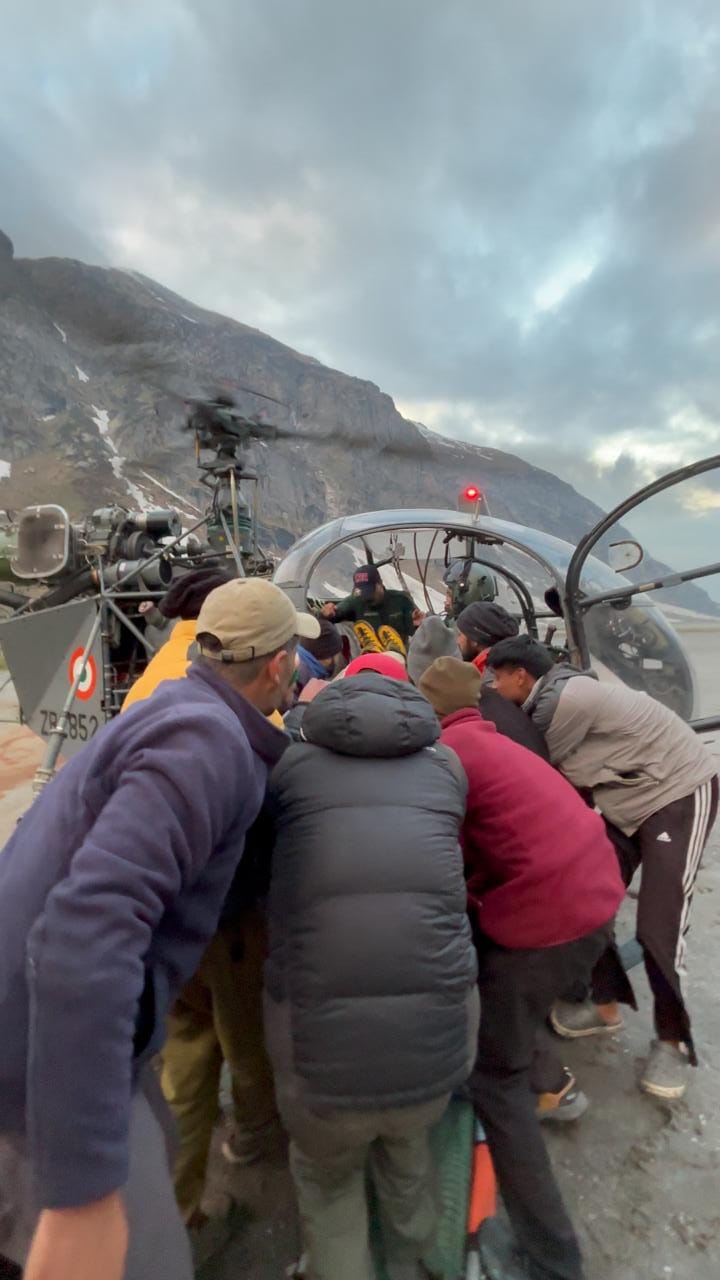
At the time of the incident, the NCC Mount Deo Tibba Expedition Team was undertaking the 'All India NCC Mount Deo Tibba Expedition 2026'. After an arduous climb through challenging terrain, the team had just reached Advance Base Camp and was preparing to rest before commencing the next phase of the expedition. Having spent the entire day navigating steep mountain slopes while carrying expedition loads, the team members were physically exhausted.
Shortly thereafter, information regarding a critically injured foreign paraglider was received through a Motorola radio set from climbers operating in the area. Appreciating the seriousness of the situation and recognising that immediate intervention could mean the difference between life and death, the expedition team instantly abandoned its recovery plans and launched a rescue mission.
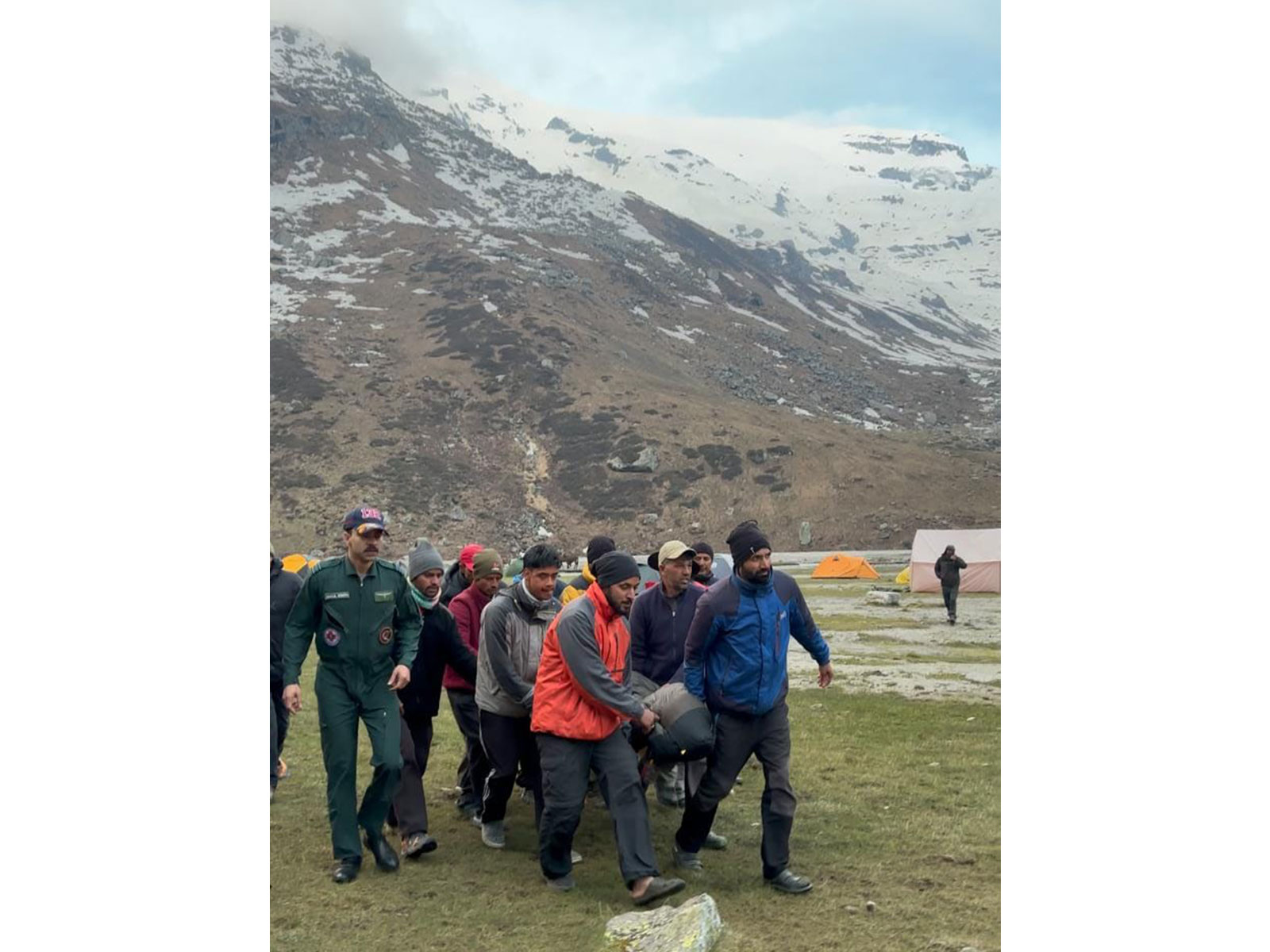
Under the leadership of Wing Commander Kunal Sharma, Expedition Leader, a rescue team comprising Cadet Jitendra, Cadet Vibhor, Chaman (Medical Attendant), and ABVIMAS instructors Deshraj and Gimnar rapidly descended from Advance Base Camp carrying medical supplies, oxygen cylinders, and communication equipment.
Despite accumulated fatigue, rapidly changing weather, steep gradients, glaciated terrain, loose rock sections, and multiple water crossings, the team pressed forward without hesitation. Upon reaching the casualty, immediate medical assistance was rendered, and the injured paraglider was stabilised. Continuous communication was maintained with medical officers Capt Geetanjali and Capt Sonali at Advance Base Camp through VHF radio sets, enabling real-time medical guidance and casualty management under demanding field conditions.
Recognising the critical nature of the injuries, simultaneous efforts were initiated to arrange an emergency air evacuation. However, the operation soon encountered a major obstacle. Deteriorating weather, marginal visibility, increasing fog in the valley, and the requirement to complete flying operations before sunset severely restricted aviation options.
Several private helicopter operators assessed the situation but expressed their inability to undertake the rescue sortie under the prevailing conditions, indicating that evacuation would have to wait until the following morning. Given the casualty's serious condition, any delay posed a significant risk to his survival and recovery.
Simultaneously, the NCC team ensured that a requisition through the District Disaster Management Authority (DDMA) was raised and conveyed to the concerned Indian Air Force authorities at the earliest opportunity.
At this critical juncture, the Indian Air Force stepped forward and accepted the challenging mission. Despite stringent Visual Flight Rules (VFR) limitations, narrowing daylight margins, and rapidly deteriorating mountain weather, the IAF demonstrated exceptional professionalism, determination, and operational capability by launching the rescue operation.
A key factor contributing to the mission's success was the extensive preparatory work already undertaken by the NCC expedition. Prior to the expedition, an aerial reconnaissance of the route had been conducted, providing valuable familiarity with the terrain and identifying potential landing areas. This prior planning proved invaluable during the rescue.
Throughout the operation, Wing Commander Kunal Sharma maintained continuous communication with Air Force Station Sarsawa through a satellite phone. Simultaneously, a communication relay was established through the expedition's Advance Base Camp using loop sets and walkie-talkies. This enabled accurate transmission of ground information, weather updates, and navigational guidance between the rescue team and the helicopter crew operating in extremely challenging mountain conditions.
On the ground, the NCC rescue team displayed outstanding initiative and leadership by identifying and preparing a suitable landing zone, establishing communication with the aircrew, and guiding the helicopter safely to the extraction point. The seamless coordination between NCC personnel on the ground and the Indian Air Force aircrew proved decisive in the success of the operation.
Working against time, weather, and terrain, the helicopter successfully evacuated the casualty and flew him to Kullu before daylight and visibility conditions deteriorated further. The swift response ensured that the injured British national received advanced medical treatment without delay.
Following the successful evacuation, the NCC rescue team undertook a demanding return journey through the mountains after nightfall. Despite complete physical exhaustion after a full day of climbing followed by the rescue effort, the team returned safely, having accomplished a life-saving mission under exceptionally challenging circumstances.
The operation stands as a shining example of the highest traditions of the National Cadet Corps and the Indian Air Force. It highlighted the effectiveness of training, preparedness, leadership, teamwork, and inter-agency cooperation in responding to real-world emergencies in one of the most demanding mountain environments in the country.
For the NCC Mount Deo Tibba Expedition Team, what began as a mountaineering expedition transformed into a humanitarian mission that embodied the NCC ideals of Unity and Discipline, courage, selfless service, and unwavering commitment to saving lives.
The successful rescue of George Richmond will remain a proud chapter in the history of NCC adventure activities and a testament to the extraordinary dedication of the NCC expedition team and the Indian Air Force, whose combined efforts transformed a potentially tragic incident into a remarkable life-saving success.