"No Saint is without a past, no sinner without a future": Delhi HC cites Rig Veda, Oscar Wilde while ordering release of life convict
Aug 31, 2026
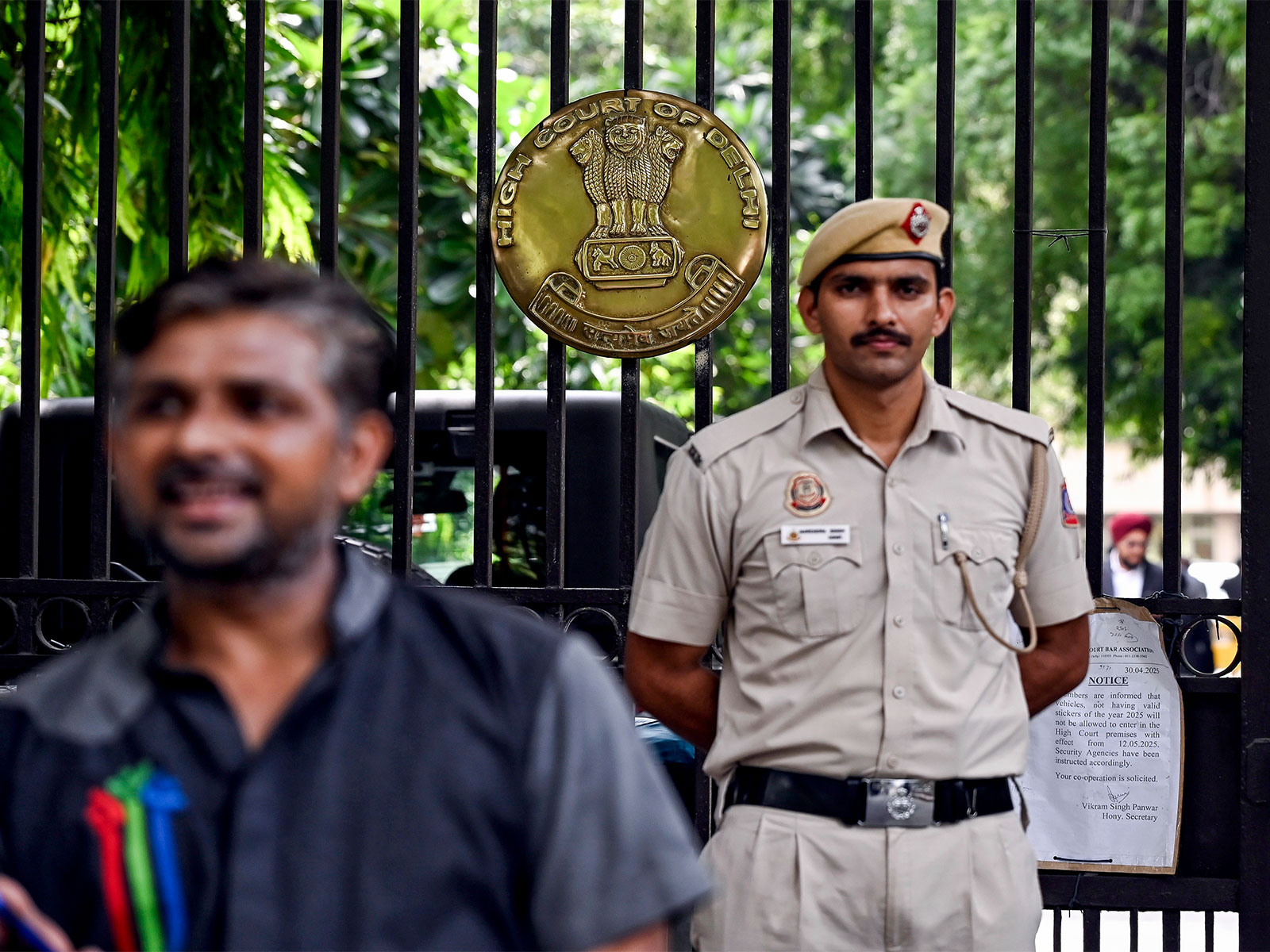
New Delhi [India], August 31 : Beginning its judgment with a prayer from the Rig Veda seeking forgiveness for past mistakes committed out of ignorance and thoughtlessness, the Delhi High Court on Monday invoked the words of Oscar Wilde, "No saint is without a past, no sinner is without a future" while emphasising that a person should not be defined by his worst mistakes but by his next choices.
The court, relying on the reformative philosophy of punishment, ordered the immediate release of a life convict who had spent more than 20 years in actual imprisonment after finding that authorities had mechanically rejected his plea for premature release.
Justice Girish Kathpalia said every darkness carries in it a hope for light and every light holds a memory of darkness, describing the course connecting the two as the "track" of reformative sentencing. The court observed that while every wrong deserves a consequence, "every consequence must have a limit lest it became wrong in itself."
The court was dealing with a plea filed by Moti alias Mohit, who was convicted in a 2004 Defence Colony police station case involving the murder of two persons and theft. He was sentenced to life imprisonment by the trial court in 2010. His conviction and sentence were subsequently upheld by the Delhi High Court and the Supreme Court, and therefore attained finality.
Moti had approached the High Court challenging the fifth rejection of his plea for premature release by the Sentence Review Board (SRB). He had already undergone more than 20 years of actual imprisonment and more than 24 years including remission when his case was considered by the SRB.
The petitioner was represented by advocates Vrinda Bhandari and Vanshita Gupta, while the State was represented by Additional Standing Counsel Amol Sinha, assisted by advocate Kshitiz Garg.
The High Court noted that the rejection was not an isolated decision. Moti's request for premature release had earlier been rejected on four occasions in 2021, 2023, February 2024 and December 2024.
The fourth rejection was challenged before the High Court and was set aside by a coordinate bench on July 25, 2025, which directed the SRB to reconsider his case in accordance with the guidelines laid down in an earlier judgment concerning premature release.
Despite this direction, the SRB again rejected Moti's plea at its October 16, 2025 meeting. The Board cited the nature and gravity of the double murder and theft, his alleged propensity to commit crime again and a jail punishment imposed on him in 2018 for possession of two grams of tobacco.
Justice Kathpalia, however, found that the latest SRB decision was virtually a repetition of its earlier decisions and did not demonstrate any fresh application of mind. The court particularly took exception to the manner in which the police verification report had been dealt with.
It noted that the police verification report dated August 28, 2025 was, in fact, favourable to Moti. The report stated that his only criminal involvement was in the present case, that he did not belong to any criminal gang or syndicate and that there was no indication of a propensity to commit crime again if released.
The report also recorded that there had been no act of indiscipline, aggression or violence against him during periods when he was released on bail, parole or furlough. Despite these observations, the concerned DCP, in a covering communication, stated that premature release was not recommended.
The High Court found this discrepancy significant. During the proceedings, the concerned DCP was asked to explain why the covering communication contradicted the contents of the police verification report.
The court said the explanation offered by the DCP did not satisfactorily explain the discrepancy. Instead, the DCP introduced additional observations which were not part of the original police verification report.
Justice Kathpalia held that the non-recommendation by the DCP, which became one of the bases for the SRB's decision, was affected by "total non-application of mind" and that this defect consequently "percolated" into the SRB's decision.
The court also found that the SRB's October 2025 minutes were "virtually copy-paste" of its earlier decisions and that there was nothing on record to show that the Board had applied its mind afresh.
The High Court also examined Moti's individual circumstances and found several factors in his favour.
It noted that he was a first-time offender with no objectionable criminal antecedents. During his incarceration, he completed his graduation and worked in several capacities inside jail, including as a store assistant, plumber, control room assistant, office attendant and VC attendant.
A Social Investigation Report prepared by the Probation Officer recorded that Moti had availed himself of parole and furlough on several occasions and had not committed any crime during those periods. He had also worked as a restaurant attendant in Noida when released and had earned money to support his family.
The report recorded that he intended to continue working in a restaurant after release and was determined to reintegrate with his family and community.
The court also considered the fact that Moti's daughter has been suffering from a congenital medical condition since the age of three months. While the State argued that the medical records had not been placed before the SRB, the court said the petitioner could not be penalised for that omission because it was the duty of the Probation Officer to collect the relevant records and place them before the Board.
The court rejected the State's reliance on Moti's 2018 jail punishment for possessing two grams of tobacco as a continuing reason to deny his premature release.
Justice Kathpalia observed that the punishment had already resulted in his transfer from a semi-open prison to a closed prison. Apart from that incident, there was no other jail punishment alleged against him during more than two decades of incarceration.
The court said that using the same incident to deny premature release years later would amount to a disproportionate response and noted that Moti had subsequently been repeatedly released on furlough.
"For possession of two grams tobacco while being in semi-open jail, the petitioner cannot be penalized till eternity," the court observed.
The State had also relied upon the fact that Moti was arrested near the Indo-Nepal border while allegedly attempting to flee. The High Court held that the manner and place of his arrest had no relevance to the question of premature release in view of the overall factual and legal circumstances.
On the seriousness of the original offence, the court acknowledged that the double murder followed by theft was undoubtedly a grave crime. However, it emphasised that the offence had occurred way back in 2004, and the trial court had consciously awarded life imprisonment rather than the death penalty.
The court observed that after more than two decades of incarceration, the crime's perversity, while not erased, must be viewed in the context of the passage of time and the purpose of reformative sentencing.
In a striking observation, the court said the wounds suffered by the relatives of the deceased in 2004 would, with the passage of time, have "reduced to scab", adding: "Time heals all wounds." It said this approach was necessary to give meaningful effect to the reformative purpose of premature release; otherwise, no convict would ever get an opportunity to reform.
The court further held that the mere fact that Moti was around 40 years old could not be used to presume that he retained a propensity to commit crime.
It said propensity to commit crime has to be assessed on the basis of the prisoner's reformative progress and cogent material. In Moti's case, his education, work inside jail, conduct during parole and furlough and his plans for employment after release were all relevant indicators of rehabilitation.
The High Court observed that leaving him in prison until his last breath could serve the theories of deterrence, retribution or prevention, but would completely undermine the reformative idea of punishment and the principle of purposive sentencing.
The court also criticised the broader functioning of the Sentence Review Board.
Referring to its earlier judgment in Vikram Yadav, Justice Kathpalia reiterated that the SRB should not function as a routine disposal mechanism dominated by statistics. It deals with human beings whose liberty has been taken away for long periods, and its approach must therefore be oriented towards reformation.
The court suggested that the composition of the SRB should be reconsidered and could include the judicial officer who sentenced the prisoner or his/her successor, an eminent sociologist, a criminologist and the concerned Jail Superintendent, who would have the opportunity to closely observe the prisoner's conduct and reform.
The court also suggested moving away from the binary approach of simply granting or denying premature release. Depending on the level of reform, a prisoner could initially be shifted to a semi-open prison and then an open prison. The Board could also consider conditional release accompanied by measures such as periodic reporting to the local police.
The High Court was particularly critical of the fact that these concerns had already been highlighted in its earlier judgment, but the authorities had not meaningfully altered the working or composition of the SRB.
It noted that even the coordinate bench's July 25, 2025 order directing reconsideration of Moti's case and specifically referring to the applicable guidelines had not resulted in a genuine reconsideration.
Justice Kathpalia said repeatedly sending Moti back to the same SRB for another round of consideration would not be a meaningful judicial response. The court said this would effectively reduce the prisoner to a "ping-pong ball" between the court and the executive.