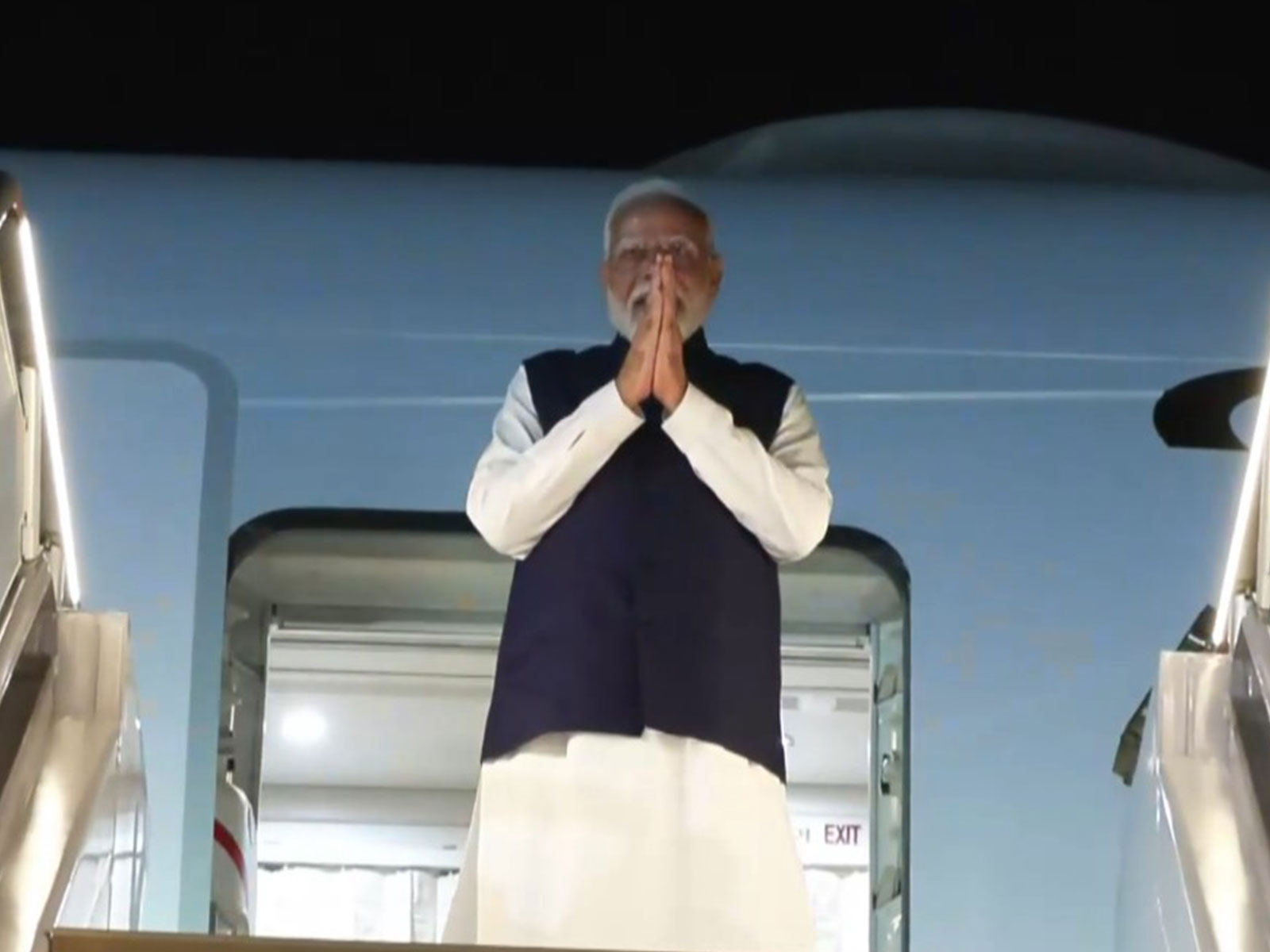
PM Modi emplanes for New Delhi after attending key ASEAN-India, East Asia and QUAD leaders' Summits in Manila
Nov 17, 2026
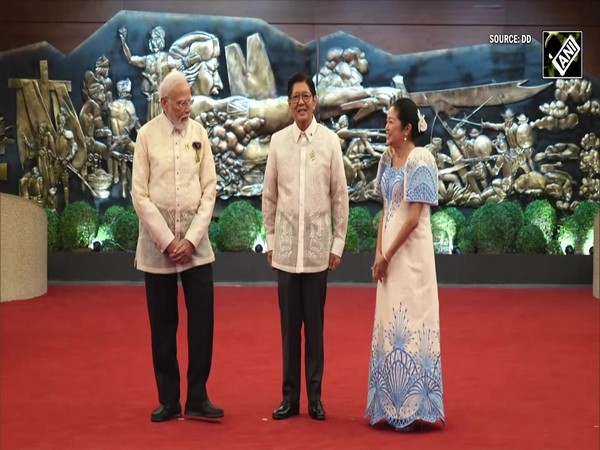
Manila [Philippines], November 17 : Prime Minister Narendra Modi has departed for New Delhi after concluding a high-level diplomatic visit to Manila, Philippines, during the 49th ASEAN Summit in Manila
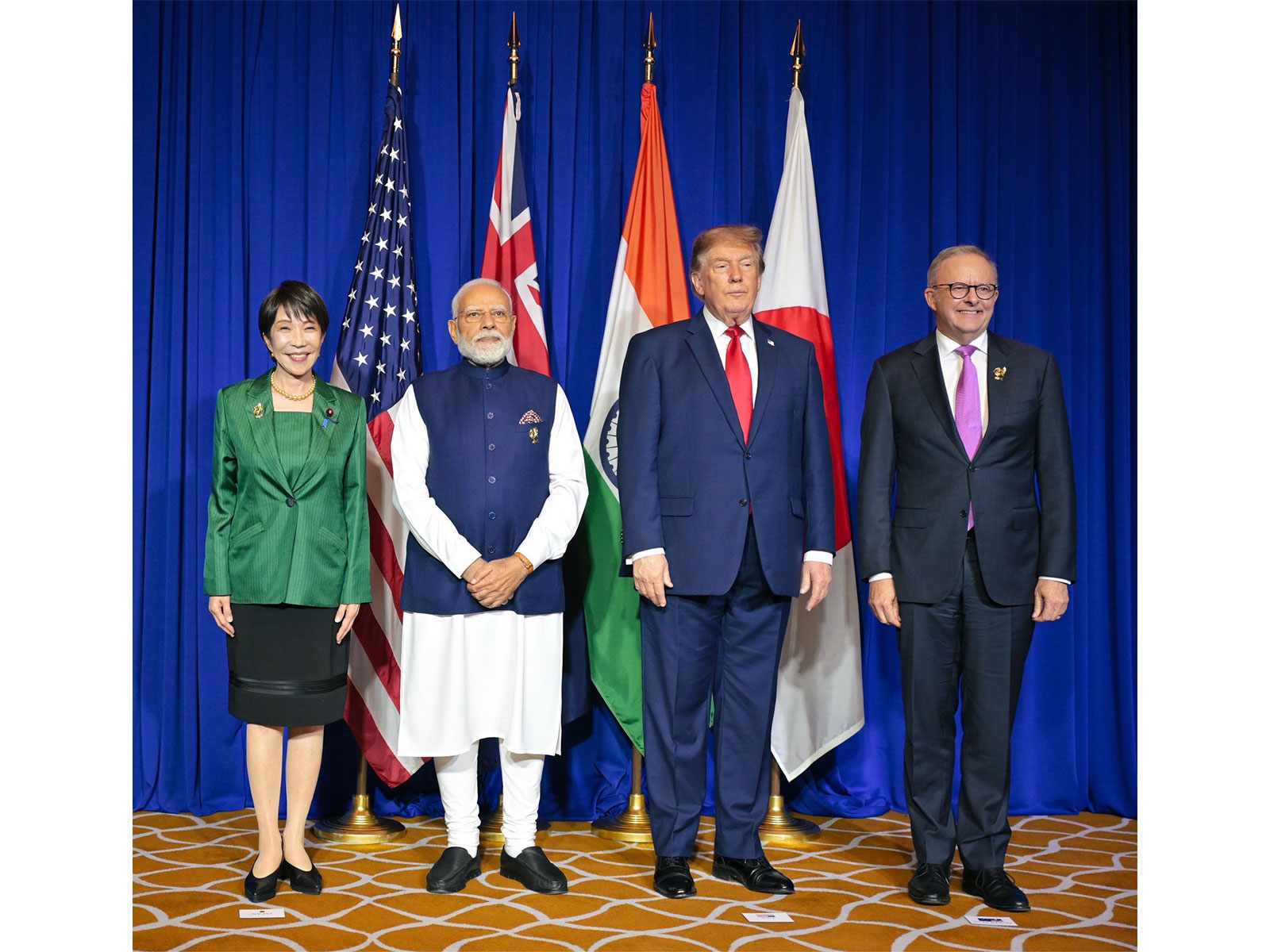
During his visit to the Philippines, PM Modi attended the 23rd ASEAN-India Summit and the 21st East Asia Summit (EAS). Additionally, he participated in the QUAD leaders' summit on the sidelines of the ASEAN summit alongside US President Donald Trump, Japanese PM Sanae Takaichi and Australian PM Anthony Albanese.
Prime Minister Narendra Modi anchored India’s Indo-Pacific outreach around peace, prosperity, and predictability across the 23rd ASEAN-India Summit and the 21st East Asia Summit (EAS).
Released by the Ministry of External Affairs, the official outcomes of Prime Minister Narendra Modi’s visit from November 16 to 17, 2026, highlighted major multilateral adoptions alongside a comprehensive series of national announcements aimed at deepening regional integration.
At the 23rd India-ASEAN Summit, leaders formally adopted the ASEAN-India Joint Statement on Cooperation in Disaster Management. Building on this framework, India and the regional grouping agreed to bolster early warning systems, share satellite data, conduct joint simulation drills, and promote ethical artificial intelligence applications for disaster risk assessment and response coordination under the 2026–2030 Plan of Action.
To expand bilateral engagement across strategic, economic, and cultural domains during the 23rd India-ASEAN Summit, Prime Minister Modi put forward a series of major announcements. These include a long-term ASEAN-India Maritime Cooperation Plan covering connectivity, scientific research, disaster management, Coast Guard cooperation, maritime domain awareness, and seafarers’ security, alongside a Joint Cyber Forensics Training Program for regional capacity building.
Furthermore, New Delhi announced ASEAN-India Nuclear Energy Technical Exchanges, an ASEAN-India Space Hackathon, and cooperation on mining and critical minerals. People-to-people ties were further reinforced through an ASEAN-India Youth Connect initiative featuring a Youth Summit, Young Parliamentarian Exchanges, and Start-up Hackathons, enhanced scholarships for ASEAN students at Nalanda University, an ASEAN-India Creative Partnership Pavilion at WAVES 2027, and free e-visas for tourists from ASEAN countries.
At the 21st East Asia Summit, leaders adopted two landmark documents, namely the East Asia Summit Leaders' Statement on Strengthening Cooperation Against Online Scams and Related Offences and the East Asia Summit Declaration on Navigating our Future, Together: Stability and Renewal.
Complementing these adoptions, Prime Minister Modi unveiled four key national initiatives during the EAS. These featured the Seafarers’ Safety Initiative for cooperation in joint training and emergency response, an EAS Cyber Crime conference hosted at the National Forensic Sciences University to address new-age threats from cross-border crimes such as online frauds and cybercrimes, an EAS Maritime Heritage Festival in Lothal, and an EAS University Conclave in Nalanda to foster greater academic cooperation with EAS countries.
Later, PM Modi met US President Donald Trump, Australian Prime Minister Anthony Albanese and Japanese Prime Minister Takaichi Sanae for the Quad Leaders’ Summit, marking nearly a decade since the grouping's revival and the tenth anniversary of the vision of a Free and Open Indo-Pacific first articulated by the late Japanese Prime Minister Abe Shinzo in 2016.
Declaring that the Quad has proven to be "a force for good and a partnership of action," the leaders issued a joint statement emphasising their commitment to peace, stability, and prosperity across the region.
"We strongly oppose any destabilizing or unilateral actions that seek to change the status quo, including by force or coercion, which escalate tensions and undermine regional peace and stability," the leaders stated, expressing grave concern over economic coercion, including arbitrary export restrictions. They reiterated unwavering support for ASEAN centrality and unity while committing to secure critical supply chains, protect freedom of navigation and overflight, drive future growth through trusted Artificial Intelligence (AI), and ensure open, safe, and resilient maritime transit corridors.
To institutionalise these goals, the summit yielded several major announcements. The leaders announced the inaugural Quad Business Leaders’ Forum, scheduled for early 2027, to bring together business leaders, government officials, and policy experts to foster private sector ties and promote commercial partnerships critical to regional prosperity. Additionally, the leaders affirmed the importance of the AI Accelerator previously announced by their Foreign Ministers in Atlanta, which will coordinate and fund efforts to support trusted AI access, deployment, and technical assistance across the Indo-Pacific.
Welcoming the new Indo-Pacific Maritime Surveillance Collaboration to enhance information sharing and maritime domain awareness, the leaders announced that respective P-8 and P-3C patrol aircraft are scheduled to fly in a joint maritime exercise for the first time in a Quad context in 2027.
Building on progress under the Quad Partnership for Cable Connectivity and Resilience, the leaders welcomed an expansion of Australia’s contribution to focus on electricity cables to bolster energy security, alongside upcoming undersea cable projects in the Indian Ocean.
Acknowledging the rise in cyber incidents, the grouping announced enhanced Quad Cybersecurity Cooperation to achieve an open and secure cyberspace, while also unequivocally condemning terrorism and violent extremism in all forms, including cross-border terrorism, and committing to strengthen joint counterterrorism cooperation.