'Raksha Shakti' to soft power: PM Modi lays out 'Sapta Dhara' vision to build Viksit Bharat by 2047; Opposition says Govt "crushing the poor"
Aug 15, 2026
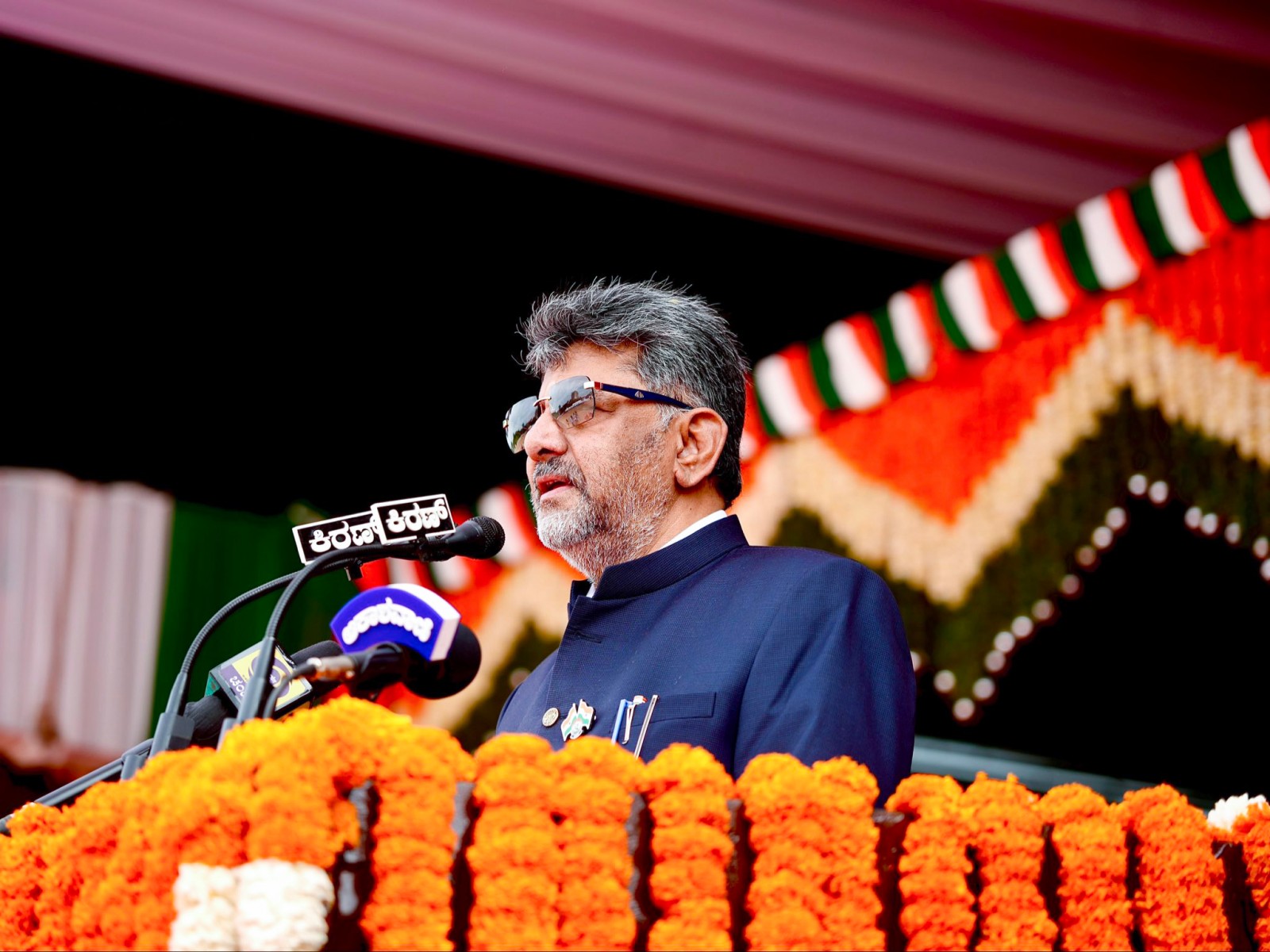
New Delhi [India], August 15 : Prime Minister Narendra Modi on Saturday outlined a seven-stream 'Sapta Dhara' vision spanning 'Raksha Shakti' to soft power as a roadmap for building a Viksit Bharat by 2047, placing defence self-reliance, manufacturing, technology, connectivity, sustainable growth and India's cultural influence at the centre of the country's development.
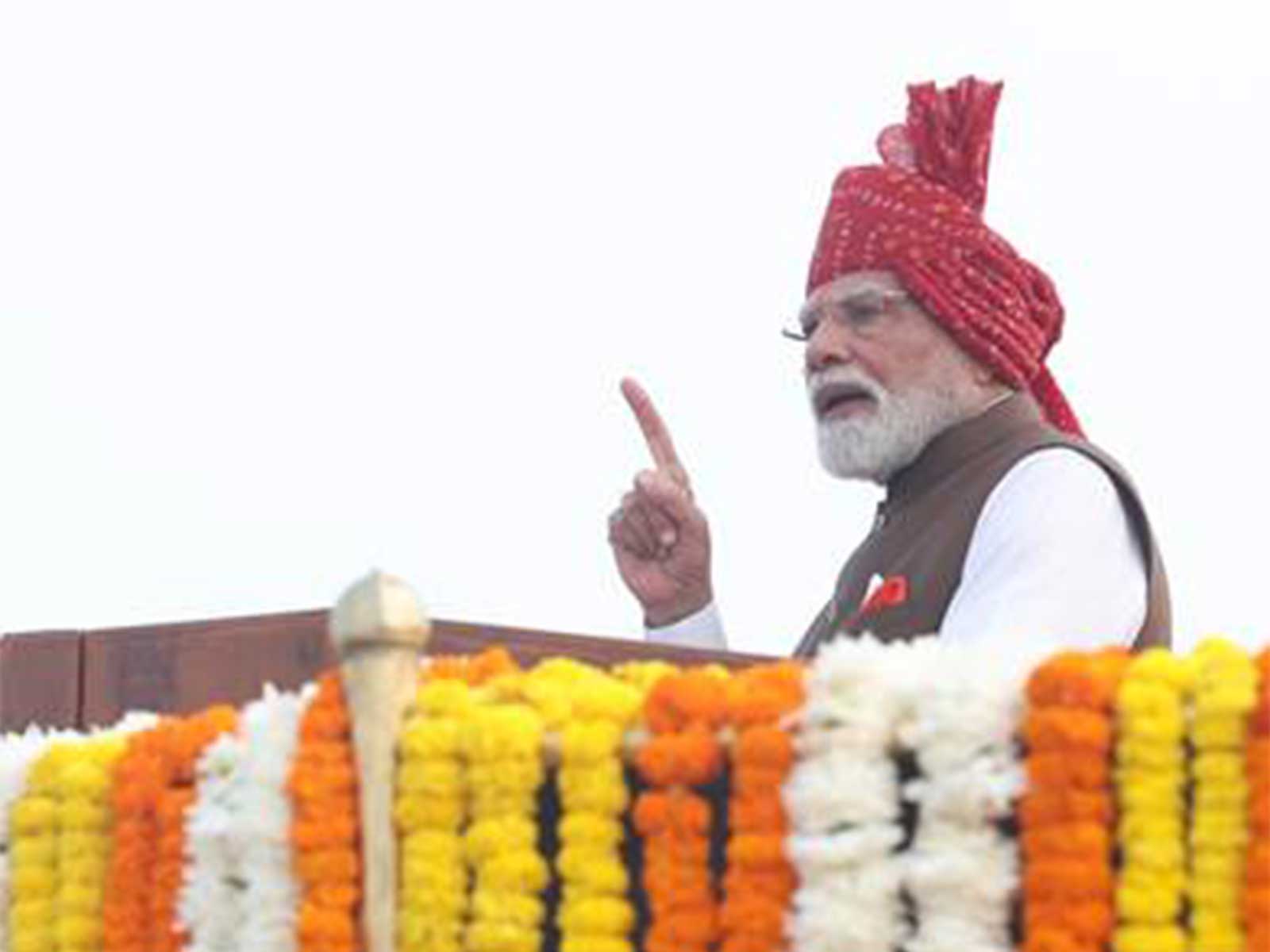
Addressing the nation from the ramparts of the Red Fort on the occasion of the 80th Independence Day, PM Modi said the seven streams would give India "new heights, new momentum and the ability to achieve new goals" over the coming five to seven years, with the full potential of the country's youth harnessed for nation-building.
The first stream of 'Sapta Dhara' is manufacturing power, with PM Modi calling for India to develop complete value chains, from small components to finished products, and emerge as a trusted global supply-chain hub. He stressed the need to compete internationally on cost, quality and scale and make "zero-defect precision manufacturing" a hallmark of Indian industry.
The second stream is agriculture and food production. The Prime Minister called for a stronger push towards food processing and exports, saying traditional Indian foods, millets, spices, fruits and flowers could become global brands. He also urged farmers to promote chemical-free farming and ensure agricultural products meet global standards.
Technology and innovation constitute the third stream. PM Modi said India must move beyond being a market for emerging technologies and instead become a global hub of innovation in artificial intelligence, quantum technology, space, robotics, data centres and other frontier sectors.
He also called for India-made 6G technology to reach every corner of the world and stressed the need to accelerate work in next-generation communications.
The fourth stream, Gati Shakti, focuses on seamless connectivity and infrastructure. The Prime Minister called for the integration of high-speed rail, modern highways, inland waterways, airports and multimodal logistics, while urging India to transform its ports into engines of port-led development.
The fifth stream, 'Raksha Shakti', was presented as a crucial pillar of India's strategic strength. "Bharat has now experienced this, and the world has experienced it as well: there is no alternative to being self-reliant in defence," PM Modi said.
He stressed that India could not remain merely a market for global defence manufacturers and must instead develop next-generation defence technologies and emerge as a global supplier.
"We must develop drones and counter-drone systems, and we must take leadership in hypersonic defence technologies," he said.
PM Modi also expanded the scope of national defence to cybersecurity, saying the capabilities of Indian youth could be harnessed to protect the country and the world from growing cyber threats.
The emphasis on 'Raksha Shakti' came alongside a broader push for Aatmanirbharta. PM Modi said India should no longer live by depending on other countries and argued that self-reliance was necessary to strengthen domestic capabilities and protect national interests.
"Therefore, we must strengthen our own capacities and protect our own interests ourselves," he said, while highlighting the public connect with Make in India, Swadeshi and Vocal for Local.
The sixth stream is the green and blue economy. PM Modi called for India to achieve global scale in green hydrogen, renewable energy, energy storage, green mobility and green manufacturing, while simultaneously tapping opportunities in fisheries, coastal tourism and ocean technology.
He said these sectors could create substantial green employment while enabling India to contribute solutions to global environmental challenges.
The seventh stream is India's soft power, which PM Modi linked to yoga, Ayurveda, culture, handicrafts, films and the creative economy.
"Today, yoga has connected the entire world with Bharat," he said, describing India's civilisational and cultural strengths as assets that could be converted into global capabilities.
PM Modi highlighted VFX, animation, gaming and digital content, as well as the WAVES Summit, as platforms through which India could expand its influence in the global creative economy. PM Modi also pointed to tourism, wildlife, national parks, international sporting events and the growing concert economy as opportunities to attract the world to India.
The Prime Minister said the seven streams should not be viewed as isolated areas of progress but as part of a holistic strategy to raise India's overall scale and global standing.
He linked the framework to the larger goal of transforming India into a developed country by 2047, citing the country's progress over the last 12 years as evidence of its growing capabilities. He highlighted increases in defence production, electronics manufacturing, mobile phone production, internet usage, patent grants and digital transactions.
PM Modi also challenged Indian companies and institutions to aim for global leadership, asking why India should not have 50 companies among the Fortune 500, an Indian bank among the world's top five, and Indian pharmaceutical, consulting, accounting, law and technology companies occupying leading positions globally.
The Prime Minister placed India's youth at the centre of the Viksit Bharat journey, describing them as the biggest force behind the transformation as well as its greatest beneficiaries.
He cited more than 2.5 lakh registered startups and the Rs 1 lakh crore Research and Innovation Fund as examples of the ecosystem being built for young entrepreneurs and researchers. He also announced that one crore young people would be trained in AI skills over the next year to strengthen their ability to compete globally.
Defence and civil preparedness also featured prominently in the wider security agenda of the speech. PM Modi said modern warfare was no longer necessarily confined to borders and could target refineries, banking systems, data centres and other critical infrastructure.
Referring to 'Mission Sudarshan Chakra', he said work on the initiative was progressing rapidly and noted that defence exports had increased almost 50 times, with Indian weapons reaching about 100 countries.
He also announced plans to create a vibrant modern civil defence network and a large voluntary civil defence force to prepare citizens for emerging threats, arguing that systems developed in response to 20th-century warfare had become outdated.
Nari Shakti formed another important strand of the address. PM Modi highlighted women's growing participation in aviation, STEM and the armed forces, including women graduates of the National Defence Academy.
He also cited the success of the Lakhpati Didi initiative, saying the target of three crore financially empowered rural women had already been crossed and that the next goal was six crore.
The Prime Minister further appealed to political parties to implement one-third reservation for women in the Lok Sabha and state legislative assemblies at the earliest.
The broader architecture of 'Sapta Dhara', therefore, brought together what PM Modi described as India's economic strength, strategic security, technological capability, physical infrastructure, environmental potential and cultural influence.
From 'Raksha Shakti' and next-generation defence technologies to soft power through yoga, Ayurveda, tourism and the creative economy, the Prime Minister's framework sought to position India's diverse capabilities as interconnected drivers of national power.
Earlier in his address, PM Modi had said India's ambition must be backed by big dreams, firm resolutions and stronger capabilities, announcing the national goal of building a Viksit Bharat by the 100th year of independence in 2047.
He concluded with a call for citizens to convert dreams into resolve, resolve into capability and capability into success, urging the country to move collectively towards the goal of a developed India.
While PM Modi's speech focused on the government's development roadmap, Congress President Mallikarjun Kharge, who hoisted the Tricolour at the Congress headquarters in Delhi in the presence of Congress Parliamentary Party chairperson Sonia Gandhi and Lok Sabha Leader of Opposition Rahul Gandhi, accused the BJP-led government of claiming credit for programmes and institutions built during previous Congress-led governments.
Kharge targeted PM Modi's Red Fort address and said, "From the Red Fort, the PM claims credit for everything; it is a mercy he doesn't claim that the world survives only because of him."
He credited Sonia Gandhi and the UPA government with institutionalising rights-based welfare measures, including the Right to Food, Right to Education and Right to Work through MGNREGA.
"The entire credit goes to our CPP leader, Sonia Gandhi, who worked hard, formed a team, asked them to make policies, and all these things that we have received today as fundamental rights, which the poor have received, are her gift. We should not forget this," Kharge said.
"The current government hasn't done even one such thing. The current government has not given anyone any 'Right to'... We gave the right to food, we gave the right to education, we gave the right to work - we did all these things," he added.
Kharge also claimed that Congress had contributed 90 per cent to the development India had witnessed.
"The development you see in the country today is because of Congress. Congress has a 90% contribution to the development you witnessed in the country today. We improved people's financial condition, not changed names. But these people just take credit. This will not go on for long," he said.
Recalling the Congress-era legacy, Kharge credited former Prime Minister Jawaharlal Nehru with establishing IITs, IIMs and public sector undertakings, former Prime Minister Lal Bahadur Shastri with strengthening the Green and White Revolutions and former Prime Minister Indira Gandhi with expanding India's military and strategic capabilities and playing a role in the creation of Bangladesh and the integration of Sikkim.
"Today, the country is moving towards modernity. Nehru laid the foundation of a modern, and democratic and secular India. He established IITs, IIMs, PSUs. Nehru ji did a lot for the country, but he did not possess arrogance," Kharge said.
"Shastri strengthened the foundations of white and Green Revolutions in the country. Indira Gandhi strengthened India's military and strategic capabilities, and also played a major role in the creation of Bangladesh. We also integrated Sikkim with India. All these were done by Congress party leaders," he added.
Kharge also attacked the Prime Minister and Union Home Minister Amit Shah over parliamentary accountability, claiming that both avoided answering questions in the House.
"The PM did not answer questions in the House; the Home Minister (Amit Shah) and the PM were listening while hiding in their chambers," Kharge said. "The Home Minister said he was listening from his room because the House was not in session. Well, my friend, had you come into the House, your lifespan wouldn't have been shortened; it is simply their habit to lie."
He also accused the government of politicising religion and alleged that even temple offerings had become unsafe.
"They didn't even give up worship and religion. These are bigoted people. Even the 50 rupees offered in the temple are not safe. Gold and silver were also looted," Kharge said.
The Congress chief argued that the party's understanding of freedom went beyond political power.
"For us, freedom is not power. Freedom will come when every child goes to school, when the voice of the poor is heard and when the youth progress," he said.
Kharge further accused the BJP and RSS of running hate campaigns against protesters and said the government was "crushing the poor".
"Today, the country's youth are agitating, and we, along with our Leader of the Opposition, are supporting them. The Constitution grants everyone the right to fight for their cause; they are not traitors," he said.
"Yet, hate campaigns are run against those who protest. Our Leader of the Opposition declared years ago not just today that we would not spread hate but would open a 'shop of love' (spread a message of love), whereas the BJP and RSS oppose this," he added.
He alleged that the BJP and RSS had historically worked to divide Hindus and Muslims and said, "the current government is crushing the poor."
Senior Congress leader Jairam Ramesh also attacked PM Modi's reference to "dimagi naxals" in his Independence Day speech, questioning the definition of the term and comparing it with the earlier "urban naxal" discourse.
"Two or three years ago, he (PM Modi) called his political opponents 'Urban Naxals'; at that time, the question arose in Parliament as to what the definition of 'Urban Naxal' was. The Home Minister replied that there is no such thing as an 'Urban Naxal,' nor is there any definition for it. Today, the Prime Minister is using the term 'Dimagi Naxal' for his political opponents from the Red Fort," Ramesh said.
He alleged that the government eventually adopted demands earlier made by those it criticised.
"The reality is that he eventually accepts the issues and demands raised by the very people he labels as 'Urban Naxals.' He had dismissed the idea of a caste census as 'Urban Naxal' thinking, yet a year ago, he announced a caste-based census," Ramesh said.
"First, you make derogatory remarks--calling them 'Urban Naxals' or 'Mental Naxals'--but later, you accept the very demands your political opponents were making... Even after 12 years, there was nothing new in his political speech," he added.
Ramesh also criticised PM Modi's appeal for women's reservation, calling it a "dishonest pitch" and arguing that the Nari Shakti Vandan Adhiniyam had been unanimously passed in Parliament in September 2023.
"The PM made a dishonest pitch for women's reservation in his address at the Red Fort today. He should know that the Parliament unanimously passed the Nari Shakti Vandan Adhiniyam in September 2023 - but it was the double-faced hypocrisy of the Modi Government that made sure it won't come into effect from the 2024 elections itself," Ramesh said in a post on X.
He said the legislation had been notified later and claimed that the idea of women's reservation had its constitutional roots in the 73rd and 74th Amendments passed in 1993.
"The Prime Minister should remember that women's reservation was introduced in the Constitution by the 73rd and 74th amendments passed in 1993, and that it was the vision and determination of Shri Rajiv Gandhi that made it happen," he said.
Congress leader Pawan Khera took a sarcastic swipe at PM Modi over the tricolour pocket square worn during the Red Fort address.
"Lagta hai sahib ne Urdu mein Tiranga pehna hai. Ya phir Bharat India ki jagah Ireland ka Independence Day mana rahay hain," Khera said in a post on X.
Aam Aadmi Party president and former Delhi Chief Minister Arvind Kejriwal also targeted Modi, calling him an "under-confident, nervous and shaky Prime Minister" in a post accompanying a video excerpt from the Red Fort speech.
Congress leader Supriya Shrinate questioned the economic assumptions behind the Viksit Bharat target.
"To achieve Viksit Bharat, Modi ji will need 12% annual growth for the next 20 years. But the growth rate is less than 6%," Shrinate said.
She also questioned the Prime Minister's AI announcement and criticised the government's education and foreign policy.
"Modi ji says 1 crore people will be taught AI. So, they should teach AI in schools. Instead, they are changing the curriculum in schools," she said.
Shrinate further alleged, "It is a failure of the country's foreign policy that the US is riding on our head and China has entered India."
She also noted that PM Modi had referred to Nehru in his Independence Day speech and said, "Today, PM Modi also gave a message to his followers not to say anything wrong about Nehru ji. He also named Nehru ji in the list of great men of the nation."