SC seeks CBSE's response on fresh pleas against three-language policy implementation
Jul 14, 2026
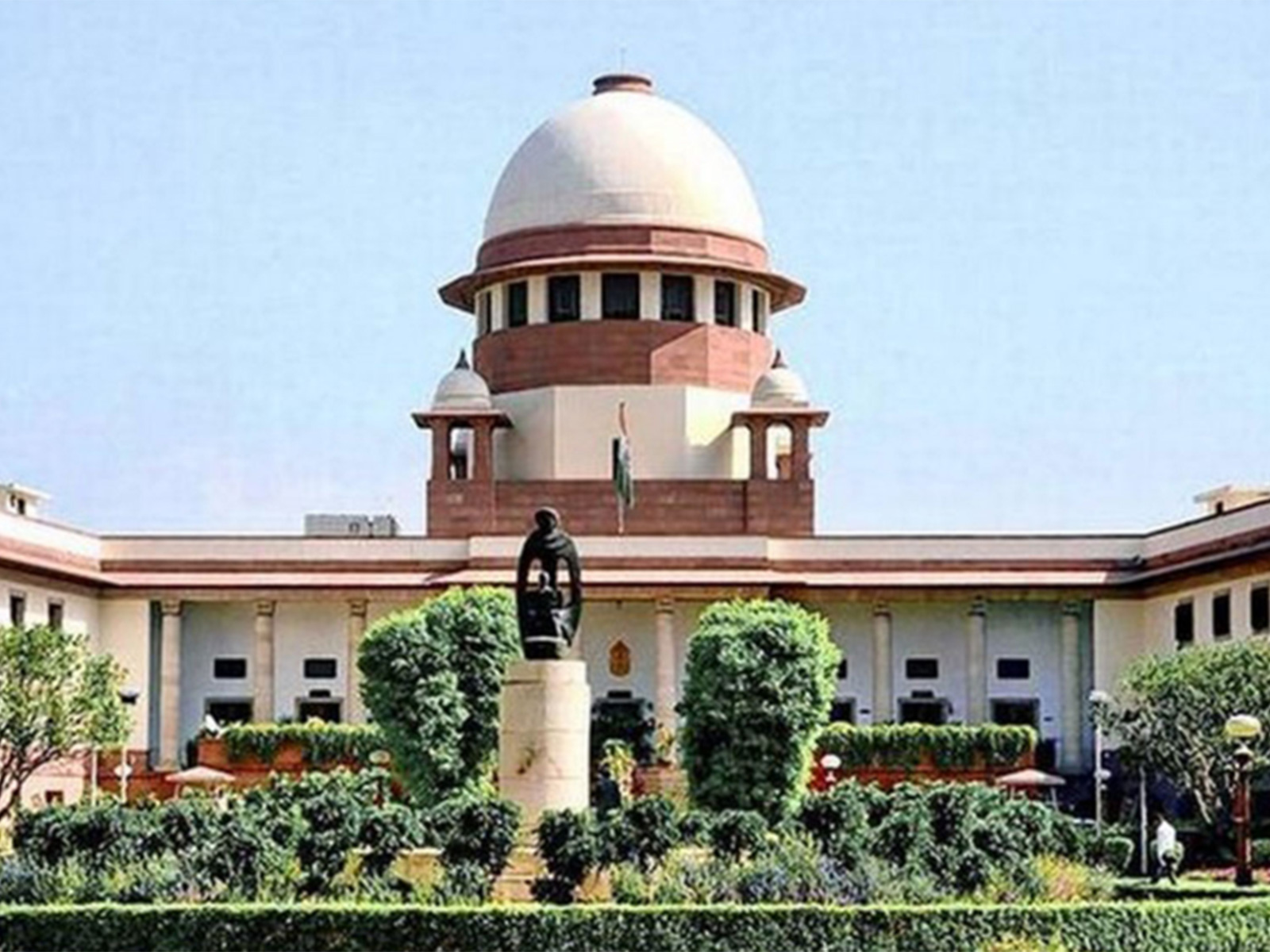
New Delhi [India], July 14 : The Supreme Court on Tuesday sought responses from the Central Board of Secondary Education (CBSE) and the Union government on a batch of petitions challenging the implementation of the Board's three-language policy.
The petitioners argued that the policy has been enforced without adequate preparation, leaving schools without sufficient teachers, textbooks and supporting infrastructure.
A bench of Chief Justice of India Surya Kant, Justice Joymalya Bagchi and Justice V Mohana issued notice to the national education body on the fresh petitions and listed the matter for further hearing next week. The Court, however, declined to stay the operation of the circulars at this stage and directed the Union government to file its reply within ten days.
The challenge arises from CBSE's decision to revise its language curriculum in line with the National Education Policy, 2020 and the National Curriculum Framework for School Education, 2023. Beginning with the current academic session, students in Classes VI to IX are required to study three languages, of which two must be Indian languages.
Senior Advocate Anand Grover, representing the petitioners, argued that the CBSE circulars lacked statutory authority and imposed language choices without providing students any meaningful option. He also submitted that schools lacked teachers and textbooks for several language combinations.
Appearing in another batch of petitions, Senior Advocate Gopal Sankaranarayanan contended that the revised framework had been introduced without the necessary academic infrastructure. He submitted that textbooks were available only for a handful of languages while schools were expected to offer instruction across several Indian languages. He also argued that the policy effectively treated English as a non-native language and sought a stay on its implementation.
Senior Advocate Shyam Divan argued that despite the modifications introduced through the June 29 circular, the core concerns remained unresolved. He submitted that while the NEP envisaged a phased implementation over a longer period, the CBSE had advanced the timeline to the current academic year.
Senior Advocate Mukul Rohatgi contended that the mandate has posed practical difficulties for students already studying foreign languages. He submitted that schools lacked the faculty to immediately introduce instruction in multiple Indian languages and that students would face serious academic disruption if compelled to switch languages midway through their schooling.
The petitioners also argued that the sudden rollout has increased the academic burden on students, disrupted preparation for board examinations and created uncertainty regarding evaluation. They further submitted that an abrupt restructuring of language offerings could adversely affect teachers employed to teach existing language courses.
The Union government sought two weeks to file its response. The Court, however, directed that the reply be filed within ten days. An intervenor applicant also submitted that the policy had adversely affected students, particularly those from economically weaker sections, because of the uncertainty surrounding its implementation.