"Straws in wind": Shashi Tharoor on secret UNSC straw poll triggering Veto drama for next UN chief
Jul 31, 2026
New Delhi [India], July 31 : The secret, closed-door corridors of the UN Security Council have yielded their first intriguing signals in the race for the world's top diplomatic job.
The 15-member council completed its initial informal "straw poll" to select the next United Nations Secretary-General; United Nations Conference on Trade and Development (UNCTAD) chief Rebeca Grynspan emerged as an early front-runner--yet her lead immediately slammed into the opaque reality of Big Power geopolitics.
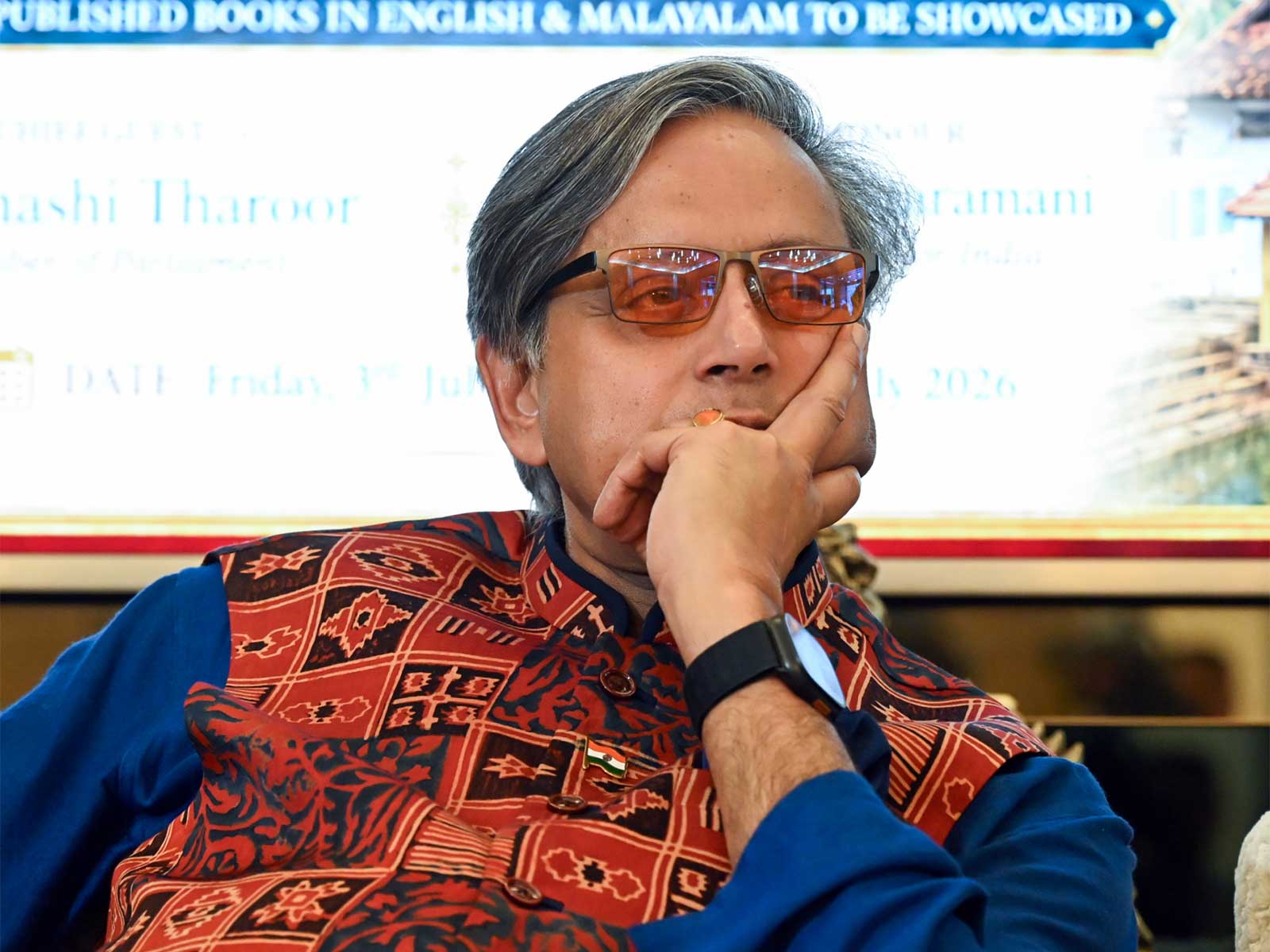
Commenting on the high-stakes global race to choose the next United Nations Secretary-General, Congress leader and former UN diplomat Shashi Tharoor, in a post on X, questioned hanging over New York is whether that sole negative vote was cast by one of the Permanent Five (P-5)--the United States, China, Russia, France, or the United Kingdom. If cast by a P-5 member, a single "discourage" ballot functions as a lethal de facto veto.
"Fascinating straws in the wind from the first ballot of the @un Security Council on the next Secretary-General. @UNCTAD chief @RGrynspan seems to be the front-runner, but a lot depends on whether the sole "discourage" vote was from a Permanent Member, in which case it would be a veto. Assuming that it was (because of her alleged "third worldism"), the question would be whether the negative vote would persist in future rounds, even if the developing countries and China rallied behind her," he said.
Rebeca Grynspan, former Vice President of Costa Rica, is leading the race to become the next UN Secretary-General after topping the Security Council's initial informal straw poll to replace Antonio Guterres, the first woman and possibly a Latin American Secretary-General.
The informal voting process relies on colour-coded secret ballots where council members mark candidates as "encourage," "discourage," or "no opinion." While Grynspan garnered strong support across developing nations and key regional blocs, her tally contained a single critical red flag: one "discourage" vote.
"The same question arises on the "discourage" votes for the two other leading candidates. If one P-5 member or the other insists on blocking each of the three leaders, we could have a stalemate, requiring intense negotiations and possibly opening the door to a compromise candidate. Much to watch out for!" added Tharoor.
https://x.com/ShashiTharoor/status/2083094078858932512
The winning candidate must secure nine votes from the 15-member Security Council and avoid a veto from any of the five permanent members (P5).
NHK reported that the Security Council narrows down contenders through secret ballots before a final recommendation goes to the UN General Assembly. With incumbent Antonio Guterres set to complete his second five-year term at the end of the year, seven candidates are vying to succeed him.
During the first round of informal voting held on Thursday, the council's 15 members selected one of three options for each candidate: "encourage," "discourage," or "no opinion". Sources cited by NHK indicated that Grynspan received 10 "encourage" votes, followed by Guyana's Ambassador to the UN Carolyn Rodrigues Birkett with nine, and International Atomic Energy Agency Director General Rafael Mariano Grossi with seven. However, every candidate received at least one "discourage" vote.
NHK noted that multiple rounds of voting are expected, with Thursday's results likely driving more intensive negotiations among member states. Speaking to reporters following the vote, US Ambassador to the UN Mike Waltz indicated that it could take several months for the council to reach a conclusion, emphasising, "We need a secretary general that is going to reform this institution, that is going to make it leaner and more fit for purpose, more relevant on the international stage."
Historically, when P-5 rivalries paralyse the front-runners in early rounds, the race shifts toward intense behind-the-scenes bargaining. Continued stalemates often force the Council to bypass early favourites in search of a non-threatening, dark-horse consensus figure who can navigate the geopolitical divide without triggering a veto from any side.
With subsequent rounds of straw polling scheduled in the coming weeks, delegations in New York are gearing up for hard-nosed diplomacy. As the vetoes begin to solidify--or dissolve under peer pressure--the path to selecting the 10th UN Secretary-General remains wide open.
The current United Nations Secretary-General is Antonio Guterres of Portugal. He took office on 1 January 2017, as the ninth Secretary-General. He is currently serving his second five-year term, which concludes on 31 December 2026.