Union Health Ministry launches JANANI platform to strengthen maternal and child healthcare
May 07, 2026
New Delhi [India], May 7 : In a significant step towards strengthening maternal and child healthcare services in the country, the Ministry of Health and Family Welfare launched JANANI (Journey of Antenatal, Natal and Neonatal Integrated Care) at the recently concluded National Summit on Innovation and Inclusivity - Best Practices Shaping India's Health Future.
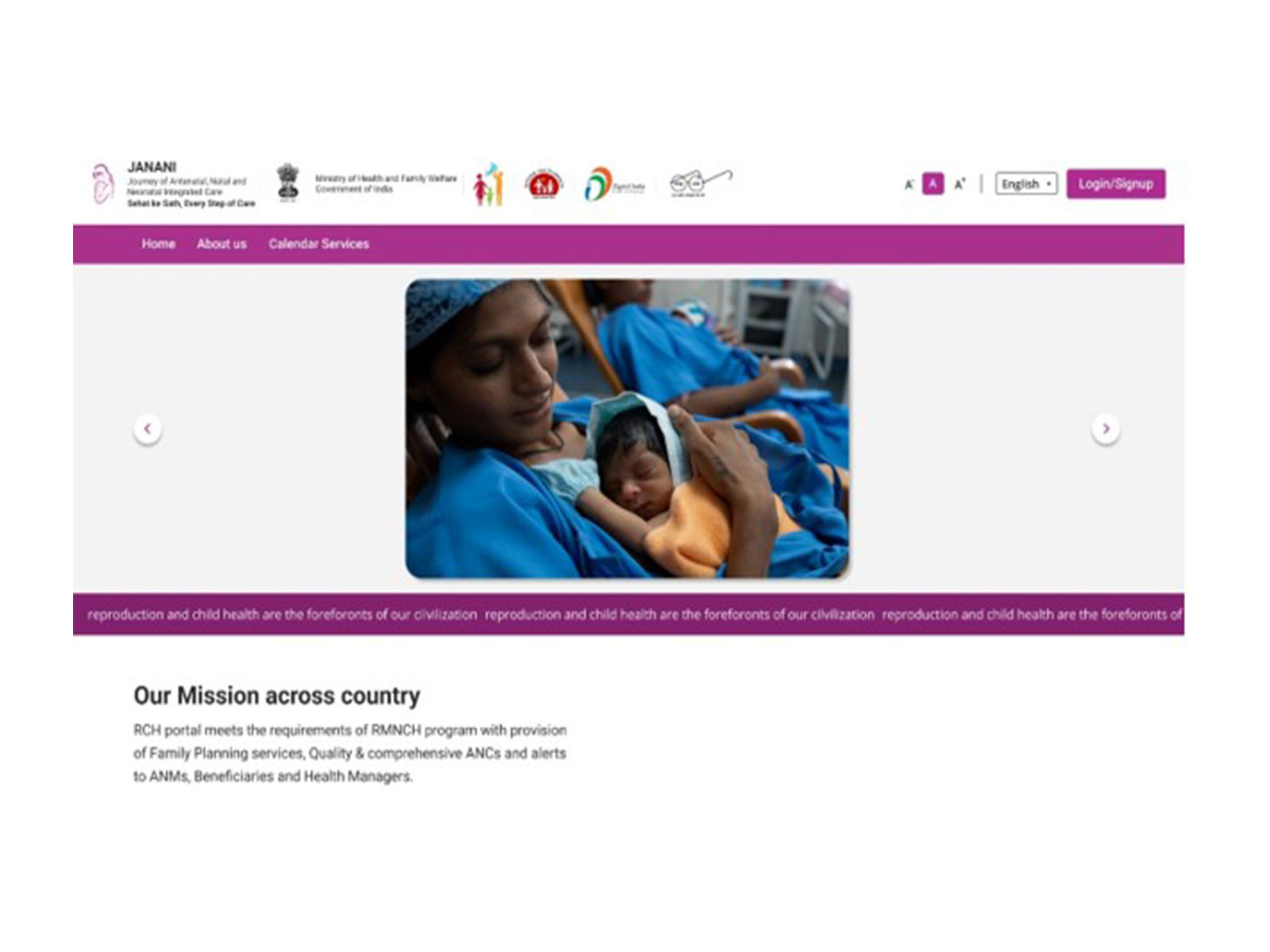
JANANI is a service-oriented digital platform designed to comprehensively monitor and maintain digital health records of women during their reproductive age. Developed as an upgraded version of the existing RCH portal, the platform creates a longitudinal health record by capturing key service delivery events across the continuum of care.
According to the Government of India, the platform aims to ensure seamless tracking of maternal and child health services, covering antenatal care, delivery preparedness, delivery, postnatal care, newborn care, home-based newborn and young child care, and family planning. By enabling continuous monitoring and timely interventions, JANANI strengthens service delivery and ensures continuity of care at every stage.
A key feature of JANANI is the introduction of QR-enabled digital Mother and Child Health (MCH) Cards, enabling portability and easy access to health records. The platform also incorporates automated alerts for high-risk pregnancies, real-time dashboards for supervisory review, and due-list generation, enabling timely tracking, monitoring, and targeted interventions.
JANANI is designed with strong interoperability features, enabling integration with national platforms such as U-WIN and POSHAN, thereby facilitating seamless data exchange, improved coordination across programmes, and comprehensive monitoring of beneficiaries across sectors.
The platform enables registration of beneficiaries using unique identifiers such as ABHA, Aadhaar (OTP and biometric), and mobile number, along with pan-India search functionality. This ensures continuity of care for migratory populations and prevents duplication of records. It also provides self-registration facilities through web and mobile platforms, empowering beneficiaries to actively engage with their healthcare journey.