US suspends Permanent labour certification program for Infosys, Wipro, Tata, Microsoft and others, cites abuse of H1B program
Oct 08, 2026
Washington DC [US], October 8 : In a far reaching move US Labour Secretary Keith Sonderling has announced that the US Government is suspending from the Permanent Labor Certification Program some of the largest IT outsourcing firms in the world which include Cognizant, Infosys, Tata, Wipro, HCL, and Capgemini . The US Labour department attributed the suspension to multiple active federal investigations even as it also suspended US tech majors Microsoft and Adobe from the program.
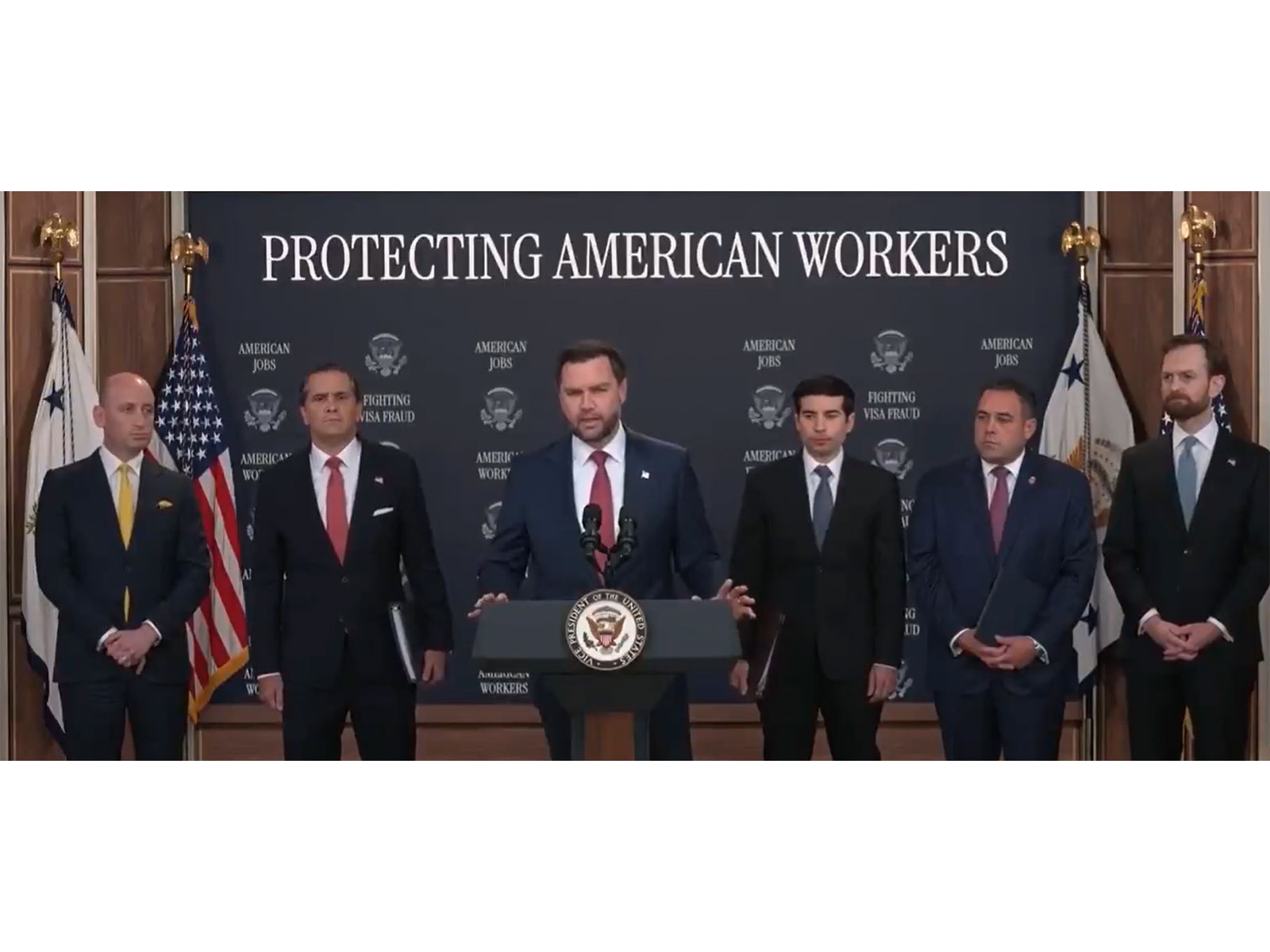
Speaking at a press conference on fighting visa fraud, US Vice President targeted the tech giants for alleged abuse of the H1B program
"The H1-B visa program is meant to allow companies to bring in really the best of the best from outside the United States of America for positions that are completely impossible to fill with American workers. Unfortunately, the program has become rife with fraud," he said
Attorney General Todd Blanche said, "This announcement today should send and does send a strong signal to every single employer in the United States that the Trump Administration will not tolerate discrimination against American workers."
Vance further targeted tech giant Microsoft, alleging that the company had laid off American workers while benefiting from thousands of H-1B visas and green cards.
Vance said Microsoft had laid off 6,000 American workers last year while benefiting from 6,300 H-1B visas and nearly 3,000 green cards.
"Microsoft laid off last year, 6000 American workers at the same time the company benefited from 6300 H-1B visas and almost 3000 green cards. If you do the math for every worker that Microsoft laid off they replace that worker with one and a half foreign indentured servants," he said.
Vance said the administration's ongoing investigation had led to Microsoft's suspension from the programme.
"That's a scandalous system we've allowed in this country for far too long but thanks to the work of this task force and the empowerment of the President of the United States we are going to stop because thanks to an ongoing investigation we suspend the program for Microsoft which means they will no longer able to take those visas and apply for permanent status," he added
He also said the Trump administration wanted companies operating in the US to expand while prioritising American workers.
"Our message to Microsoft in any other foreign or domestic corporation is simple. We want you to thrive in the United States of America. We want people to invest in the united states of America particularly the American technology sector, we are the biggest boosters of your industry. We want you to be able to grow and employ a lot of people but we want you to employ American workers. You are a great American company but you have to hire great American workers. You cannot lay off American workers and replace them with foreign indentured service," the US VP said.
The US Labour secretary further said the department would not accept new applications or process pending permanent labor certification applications involving the companies.
"We will not accept any new or process any pending permanent labor certification applications involving these companies," Sonderling said.
Sonderling said the companies named had collectively sought millions of foreign workers and received hundreds of thousands of H-1B visa approvals and permanent labor certifications.
"Since 2009, just these companies alone have requested almost 3 million foreign workers. They received over 230,000 H1B Visa approvals and over 100,000 permanent labor certifications that's hundred and thousands of jobs that were taken from a American workers," the Labor Secretary said.
The announcement comes a day after the US Department of Homeland Security proposed new fees for F-1 nonimmigrant students seeking to participate in Optional Practical Training (OPT), describing the measure as an effort to protect American workers and strengthen the integrity of the immigration system.
Under the proposed rule announced on October 7, DHS would establish a USD 70,000 fee per F-1 nonimmigrant student for initial OPT and a USD 30,000 fee for any subsequent OPT.
According to DHS, the proposal is aimed at reducing the flow of cheap labour into the United States, combating fraud and abuse, and making it easier for American citizens to compete in the job market.
"Optional Practical Training was never meant to be a back door into the American workforce, a subsidy for cheap labor, or a prize for those who game the system," a DHS spokesperson said. "DHS is upskilling OPT to require foreign students to justify their worth to employers. American workers should not have to compete against a program that has been turned into a pipeline for cheap foreign labor."
Under existing federal regulations, eligible F-1 students can participate in OPT when the employment is directly related to their major area of study. Students require a recommendation from their designated school official and must apply for employment authorisation with US Citizenship and Immigration Services.
Eligible students can receive up to 12 months of OPT at each education level, while those who earn degrees in science, technology, engineering or mathematics fields may qualify for an additional 24-month extension.
DHS said the proposed changes followed fraud and abuse identified by the Student and Exchange Visitor Program, including schemes involving problematic worksites and "pay-to-stay" visa arrangements.
The proposed fees would be paid by SEVP-certified schools before designated school officials recommend students for OPT in the Student and Exchange Visitor Information System and before students apply for employment authorisation with USCIS.
DHS said the proposed fee would apply when schools recommend an F-1 student for any type of OPT and would not be tied to a particular employer. Collected fees would be deposited in the US Treasury.
The department will accept public comments on the proposed rule from October 8 through November 9, while the Paperwork Reduction Act section will have a separate 60-day public comment period.