Review of Sony BRAVIA Theatre Bar 7, Sub 8, Rear 8
Oct 03, 2026
By Himank Tripathi
New Delhi [India], October 3 : I want to start by saying that you can actually enjoy movies best at the cinema, but you cannot easily replicate that experience or have it when it comes to shows/series at home. This is where having a good sound system adds a lot of stuff. It completely redefines the viewing experience. Entertainment cannot be just visuals only.
Sound adds the real depth, the feel, the essence, and without it, you are only receiving half the artistic intent of a scene.
To truly understand the value of what sound is all about, I want you to look beyond the basic acoustic limitations of modern televisions.
Today’s displays are remarkably thin, which leaves absolutely no physical cabinet space for speaker drivers to move air. The result is a flat, lifeless acoustic signature. I have been testing a modular trio from Sony for quite some time, claiming to solve this problem.
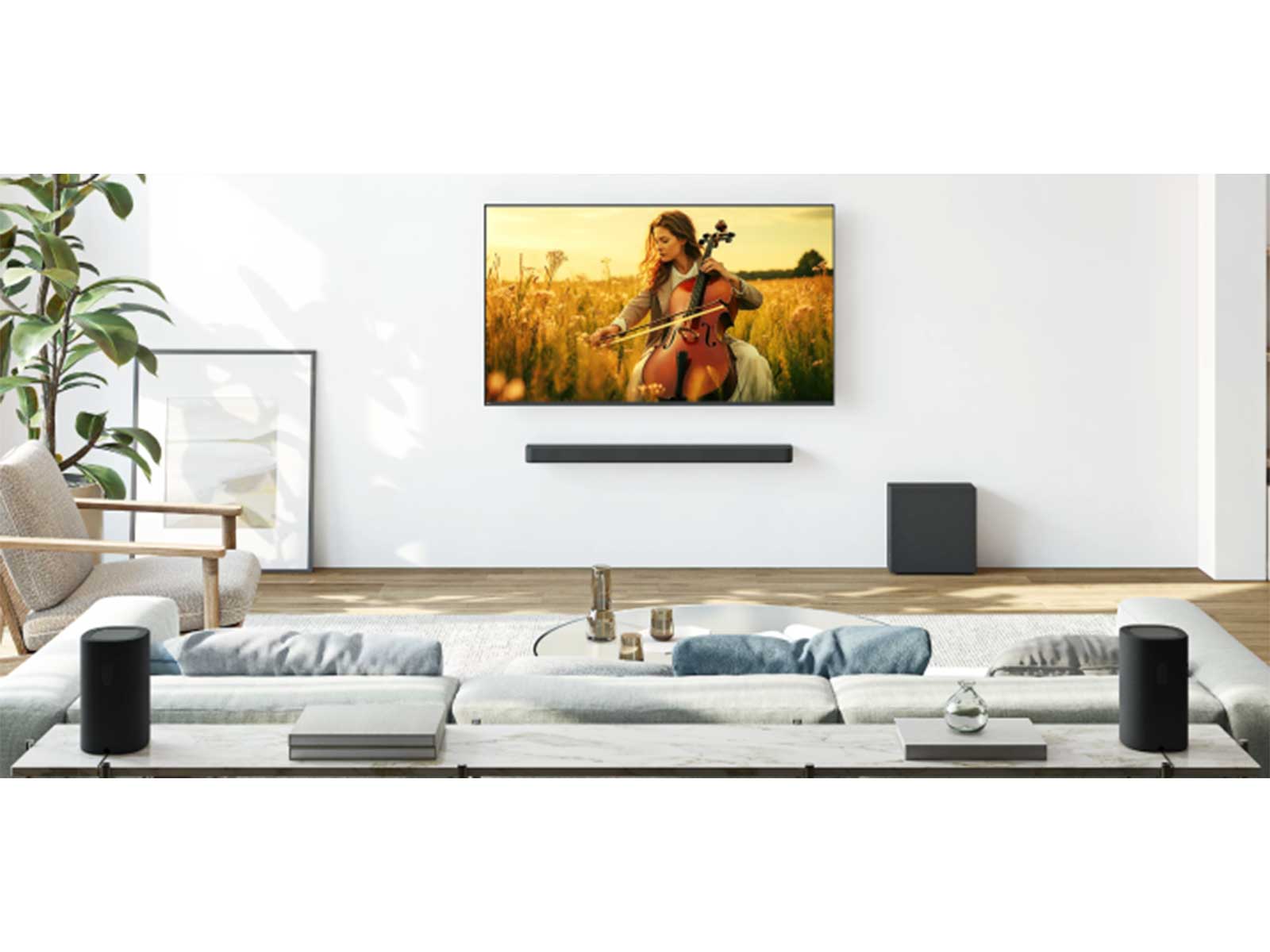
This trio system consists of the BRAVIA Theatre Bar 7 (Rs 99,990) handling the front and height channels, the BRAVIA Theatre Sub 8 (Rs 42,990) delivering the low-frequency rumble, and the BRAVIA Theatre Rear 8 wireless speakers (Rs 42,990) wrapping the room in immersive surround sound. Let me tell you all about my experience when I combined them to find out if this trio system is the best home theater setup that you can have.
BRAVIA Theatre Bar 7:
The centerpiece of this entire system is the BRAVIA Theatre Bar 7. Visually, it is a sleek, low-profile soundbar wrapped in an acoustic fabric that slips seamlessly under your television. But inside the chassis, it is an engineered powerhouse. The Bar 7 packs nine dedicated speaker units, including side-firing drivers and up-firing units designed to physically bounce height channels off your ceiling.
From an audiophile standpoint, what the Bar 7 does flawlessly is anchor the vocal clarity. Credit to its dedicated center channel processing, dialogues are crisp and well-separated from the chaotic background noise of an action sequence. It supports the heavy-hitting spatial formats like Dolby Atmos and DTS:X, and is even IMAX Enhanced.
However, if there is one caveat to the Bar 7 as a standalone unit, it is the lower frequency response. It delivers crystal-clear mids and highs, but because of its compact volume, it simply does not get low or loud enough on its own to provide a truly cinematic punch. I guess that’s exactly why it requires the rest of the trio.
BRAVIA Theatre Sub 8:
This is where the BRAVIA Theatre Sub 8 comes into play, and it completely transforms the acoustic signature of the system. A soundbar handles the intricate directional details, but a dedicated subwoofer is what gives the audio its physical weight and presence.
Armed with a 300W amplifier and a large 200mm driver unit, the Sub 8 handles the heavy lifting for the low-end frequencies. In the audio world, a good sub doesn't just make noise; it moves air.
You stop just hearing an explosion on screen and start actually feeling the shockwave reverberate through the floorboards. What impressed me the most is how well the crossover is managed. The Sub 8 delivers propulsive, controlled bass that grounds the action sequences without ever muddying the mid-range or overpowering the vocals coming from the Bar 7.
BRAVIA Theatre Rear 8:
As pristine as the front stage and bass are, the system achieves true immersiveness when you add the BRAVIA Theatre Rear 8 wireless speakers. These two speakers add the 5.1 kind of depth that you absolutely need. When you install them and set them up behind the backside of where you sit, that placement makes things profoundly immersive.
It is here that Sony’s 360 ‘Spatial Sound Mapping’ goes into overdrive. The system does not just passively push sound to the back of the room; it mathematically generates multiple ‘phantom speakers’ in a dome around and above you.
When a helicopter flies past on the screen, you genuinely hear the rotors move seamlessly from the front Bar 7, across the ceiling, and fade into the Rear 8s behind you. All of a sudden, I started to feel as if I am genuinely watching a movie in a premium commercial theater. They elevate the soundstage from a flat, two-dimensional plane to a living, breathing environment.
The Setup Experience:
This Sony trio is easily the easiest setup I have ever experienced. You simply place the units in their respective spots, plug them into a power outlet, and open the smartphone app.
The BRAVIA Connect app takes care of everything. There is no complicated calibration microphone to wave around the room. The system uses ‘Sound Field Optimization’, sending out a quick pulse of sound to digitally map your specific room’s acoustic characteristics. Within seconds, it calibrates the sound field height and optimizes the spatial mapping for your exact seating position. And if you are an enthusiast who wants to tinker, the app allows for pro-level customizations, letting you adjust the sound field, voice modes, and individual rear speaker levels to perfectly match your preferences.
Non-5.1 Content:
At times, if the content is not natively 5.1 or Dolby Atmos ready, the system can struggle slightly with the upmixing. When you are watching standard stereo broadcasts or compressed streaming video, the audio can become very heavy when the sound goes up. Because Sony’s upmixing algorithm is aggressive in trying to utilize all the physical and phantom speakers, standard flat audio is pushed hard into the surround channels.
This can make the background score or ambient noise feel dense and overwhelming in the lower frequencies. Thankfully, it is quite normal when the vocals are active; dialogue never gets lost. But the balance you hear on a 4K Blu-ray can occasionally feel a bit artificially inflated on basic content.
In The End:
If you are planning to invest in this setup, here is my practical take on getting the best out of it. First, running the Sound Field Optimization in the BRAVIA Connect app is non-negotiable; skipping it leaves the spatial audio flat, whereas running it properly maps the phantom speakers to your ceiling height and room dimensions.
Second, definitely make use of the app's ‘Voice Mode’ for poorly mixed movies where action effects tend to drown out dialogues, it isolates speech cleanly without distorting the rest of the mix. I think, buying the Bar 7 without the Sub 8 is an incomplete experience, so go for the trio to bring in a sense of authority that true home cinema demands.
For a few of you, I do not expect this trio to double as a dedicated audiophile Hi-Fi setup for stereo music streaming. And the reason is simple. In my opinion, this trio is tuned specifically for cinematic theatricality, where standard music tracks can occasionally feel a bit clinical or bass-heavy. If you’re an enthusiast then do note that there are no manual multiband EQ controls (you rely on Sony’s automated Sound Field profiles).
Then there is no alphanumeric LED display on the front grille, so you have to glance at the TV or phone app just to check volume levels and active codecs. Last but not least, there are occasional momentary audio dropouts over HDMI during dead-silent scenes where the bar momentarily sleeps and clips the very first syllable when audio resumes.
Despite that minor quirk with standard audio, Sony has proved their mettle in terms of what they have done with this ecosystem. The combination of the Bar 7, Sub 8, and Rear 8 delivers an expansive, surreal soundstage that redefines home entertainment. So yes, it is simply one of the best.
My Rating: 4/5
(Disclaimer: Himank Tripathi is an expert in the fields of consumer technology, lifestyle and automotive. Views shared are personal.)