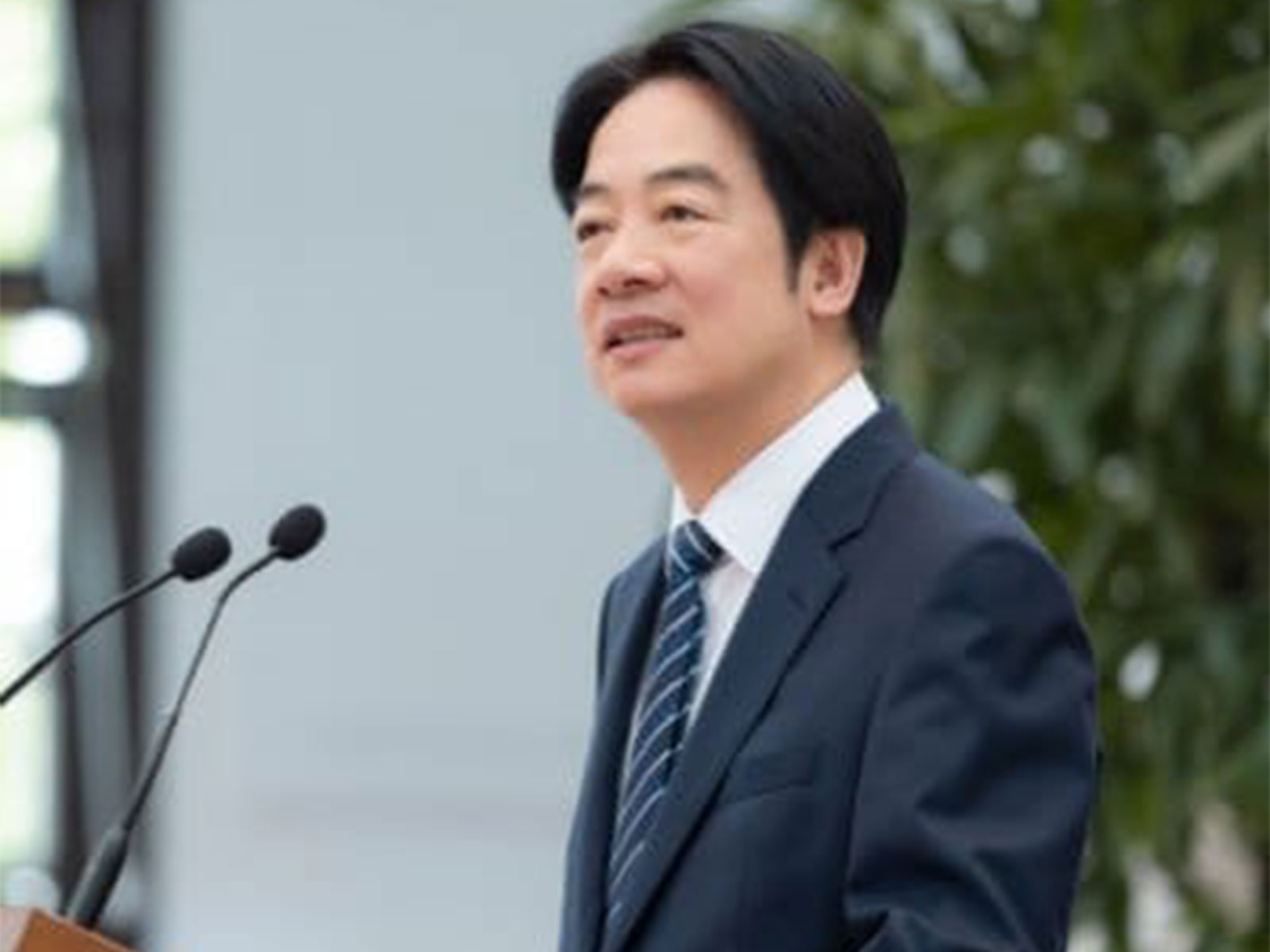
Taiwan President Lai welcomes US-China dialogue, warns against distorting WWII history
Oct 11, 2026
Taipei [Taiwan], October 11 ( ANI): Taiwan President William Lai has welcomed efforts by the United States and China to ease tensions through dialogue, while stressing that regional peace must be based on historical facts and respect for Taiwan’s right to exist, according to a report published by Taipei Times.
Addressing Taiwan’s Double Ten National Day celebrations on October 10, Lai said Taipei supports initiatives aimed at reducing the risk of military confrontation between Washington and Beijing. However, he warned against attempts to distort the history of World War II and emphasised that Taiwan would not accept subordination.
According to Taipei Times, Lai said maintaining peace and stability in the region requires an accurate understanding of historical developments and respect for the Taiwanese people’s right to exist.
The Taiwanese president also defended the island’s increased defence spending and efforts to strengthen its overall resilience against what he described as sustained Chinese “grey zone” pressure. He said cooperation between government institutions and civilians was intended to improve Taiwan’s ability to protect itself, rather than provoke Beijing.
Lai argued that these measures would help create conditions for meaningful dialogue conducted on the basis of dignity and equality.
As reported by Taipei Times, Lai also highlighted Taiwan’s diplomatic outreach despite Chinese efforts to restrict its international engagement. He cited his May visit to Eswatini, Taiwan’s only diplomatic ally in Africa, which faced delays after China reportedly pressured three African countries to deny his chartered flight access to their airspace.
He also referred to Vice President Hsiao Bi-khim’s June visit to Palau and her address last month at the European Conference of Ventotene for Freedom and Democracy in Italy.
According to Taipei Times, Lai said Taiwan has expanded cooperation with international partners in healthcare, agriculture, energy, technology, education and sustainable development.
He described the island’s “Taiwan Can Help” initiative as a commitment to share expertise and assume international responsibilities.
The president concluded that Taiwan remains open to international exchanges but would not compromise its dignity or accept political subordination, reinforcing his administration’s position on security, sovereignty and international engagement.