From the lanes of Etikoppaka to Raisina Hill: Andhra's 400-year-old art honours President Murmu
Jun 30, 2026
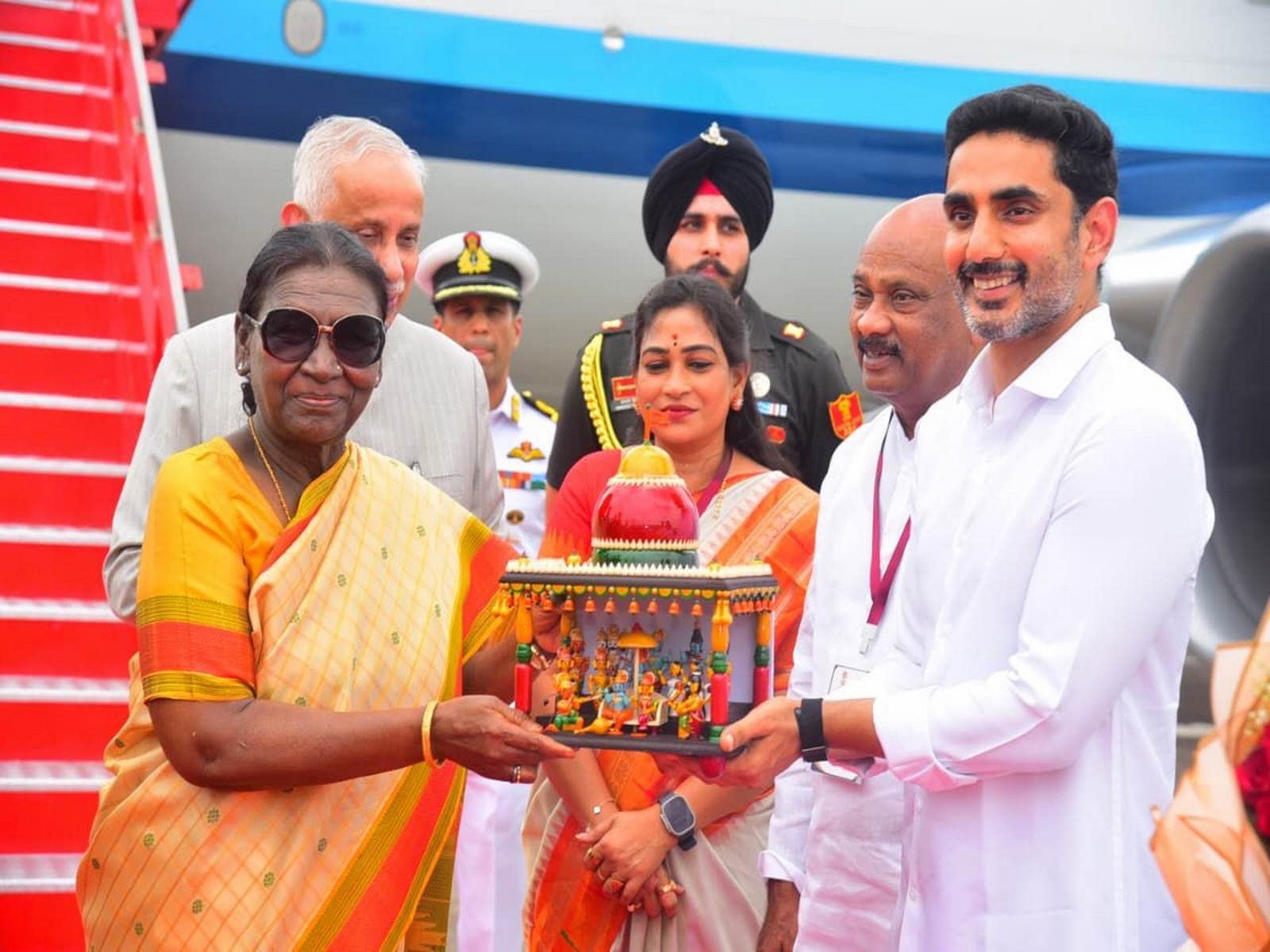
Visakhapatnam (Andhra pradesh) [India], June 30 : A piece of Andhra Pradesh's centuries-old artisanal heritage found its way to the nation's highest constitutional office as President Droupadi Murmu, India's first tribal President, was presented with a handcrafted "Sri Rama Pattabhishekam" created in the 400-year-old Etikoppaka lacquer-turnery tradition.
President Murumu was welcomed with a Sri Rama Pattabhishekam handcrafted in Etikoppaka, the nearly four-century-old lacquer-turnery tradition of Visakhapatnam district.
Carved from soft Ankudu wood and coloured entirely with natural lac dyes by the artisans of Etikoppaka village on the banks of the Varaha, the GI-tagged piece drew admiration for the fineness of its detailing.
A folk art of Andhra's own soil, four centuries of Andhra's living craft was given to the nation's highest office and India's first tribal President.
Meanwhile, President Murmu attended the first convocation ceremony of the Central Tribal University of Andhra Pradesh at Vizianagaram on Tuesday.
Addressing the gathering, the President said, "The Central Tribal University of Andhra Pradesh bears several special responsibilities. It is expected to become a hub for fostering self-confidence, leadership and policy-making capabilities within tribal society. Institutions established with the objective of social justice also have a duty to work at the grassroots level for the education, health, skill development, livelihoods and forest rights of the tribal communities in their region. She expressed confidence that in the coming years, this university will make meaningful efforts towards the holistic development of youth from marginalised and tribal communities, as well as the overall development of the region."
The President further said that all universities, particularly tribal universities, should adopt innovative systems to enhance the livelihoods of tribal communities by promoting productive work in areas such as forest produce, handicrafts, millets, medicinal plants, eco-tourism and local entrepreneurship.
Describing the convocation as a significant milestone in every student's life, President Murmu said it was not only a day of celebration but also an occasion for students to make a commitment towards their future. She advised students to focus on emerging areas of skill development to remain relevant in a rapidly changing world and encouraged them to go beyond textbook learning by drawing practical knowledge from their surrounding ecosystem.
The President also urged students to contribute towards the future of society and the nation while remaining connected to their communities, culture and traditions.