WUC weekly brief highlights Uyghur youth advocacy, Doppa Day celebrations and global forced labour concerns
May 08, 2026
Munich [Germany], May 8 : Uyghur advocacy efforts, cultural initiatives, and international human rights discussions continued this week amid ongoing concerns over repression, forced labour, and the protection of Uyghur identity and heritage, according to the latest weekly brief issued by the World Uyghur Congress (WUC).
The WUC said that beginning April 29, 2026, WUC Vice President Zumretay Arkin participated in a workshop organized by the Uyghur Youth Initiative (UYI) for Uyghur youth. According to the WUC weekly brief, Arkin also conducted a session focused on United Nations advocacy and public speaking, where she shared practical strategies for effective advocacy and explained how young advocates can better identify and engage audiences while conducting human rights work.
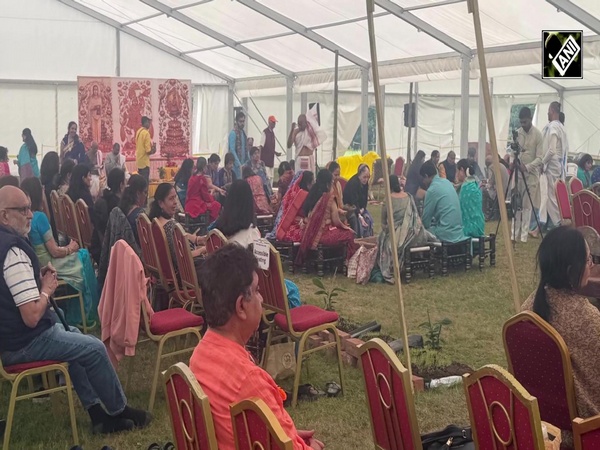
As cited by the WUC brief, the program included a simulated session of the United Nations Human Rights Council, providing participants with hands-on advocacy experience. The event reportedly brought together Uyghur youth from various countries and featured a cultural program celebrating Uyghur identity and heritage.
The WUC weekly brief also highlighted global celebrations of Uyghur Doppa Day on May 5, 2026. According to the organization, the occasion honors the Doppa, one of the most recognizable symbols of Uyghur culture and identity. The WUC stated that at a time when Uyghur language, traditions, and cultural heritage face increasing repression, wearing the traditional cap has become both a celebration of heritage and what it described as a quiet act of resistance against assimilation policies.
According to the WUC, Uyghur Doppa Day was first conceived in 2009 by Tahir Imin, who had previously been imprisoned for religious activities. The organization noted that although the celebration was initially supported and broadcast by Chinese state media, official observance reportedly ceased following the launch of China's Strike Hard Campaign Against Violent Terrorism in 2014 amid escalating repression against Uyghurs in East Turkistan.
The weekly brief further noted that on May 6, 2026, researcher Adrian Zenz published a new article titled Architecture of Coercion examining what he described as modern forms of state-imposed forced labour. According to the WUC, the paper argues that governments increasingly impose labour through surveillance systems, political pressure, economic dependency, and restrictions on freedom rather than solely through detention camps.
The WUC said the article introduces concepts such as "structural coercion" and "structurally engineered involuntariness," describing how states create conditions in which individuals appear to accept work voluntarily while lacking meaningful ability to refuse. According to the weekly brief, the paper identifies East Turkistan as one of the clearest examples of such systems, citing labour transfers, agricultural mobilization, surveillance, and coercive state planning as elements of what it called an integrated architecture of repression. The report also highlighted implications for global supply-chain investigations, sanctions, and forced labour legislation.
The WUC weekly brief additionally reported that on May 7, 2026, the organization issued a press release urging U.S. President Donald Trump to prioritize Uyghur human rights during his upcoming visit to China scheduled for May 15. According to the WUC, the organization expressed concern over potential expansion of U.S.-China cooperation in sectors such as rare earth materials and electric vehicles, industries that it said have been linked to Uyghur forced labour in global supply chains.
The WUC called on President Trump and the U.S. government to raise concerns over what it described as the ongoing Uyghur genocide and press Beijing to end forced labour practices, mass detention, family separation, transnational repression, and cultural destruction in East Turkistan. As cited by the WUC brief, WUC President Turgunjan Alawdun stated that international condemnation must be accompanied by concrete action and urged the United States to continue global accountability efforts through enforcement of the Uyghur Forced Labor Prevention Act and stronger protections for Uyghur diaspora communities.