"Could this be very important historical moment? Answer is obviously yes": JD Vance outlines US leverage, goals for Iran denuclearisation
Jun 30, 2026
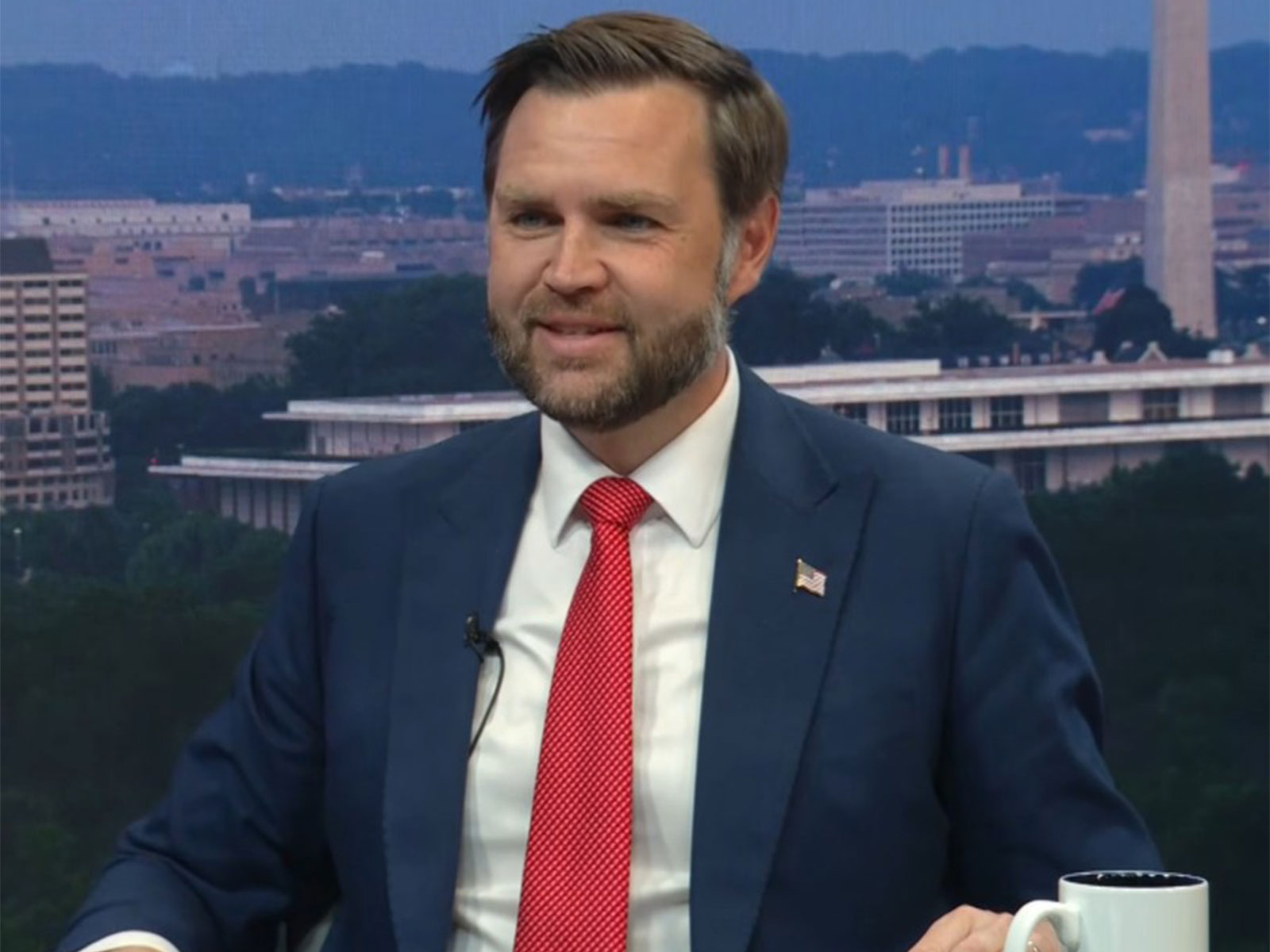
Washington DC [US], July 1 : Vice President JD Vance stated that the coming weeks could prove to be a defining turning point in US-Iran relations, emphasising that the outcome rests heavily on how Tehran navigates the economic and diplomatic "leverage" wielded by President Donald Trump.
Appearing on The Michael Knowles Show on Tuesday, Vance outlined the administration's core objectives for West Asia, making it clear that Washington is seeking nothing short of full, verified denuclearisation alongside a revamped regional security framework.
"Could this be a very important historical moment? The answer is obviously yes," Vance said. "But again, how exactly this plays out is very much contingent on the way that the Iranians respond to the leverage the president has put on them."
Vance struck a tone of cautious pragmatism, acknowledging his own deep-seated scepticism regarding Iran's willingness to comply, while underscoring that the US holds the upper hand regardless of Tehran's next move.
He added, "If they respond well, I think we're gonna look back at this and say we turned over a new leaf. Now, a lot of people are sceptical, including me, that it will ultimately happen. And if the Iranians perform or behave poorly, then I think that we still have a lot of leverage points to ensure that this ends up in a place that is good for America's objective."
Quoting Secretary of State Marco Rubio, Vance urged observers not to jump to premature conclusions about current diplomatic manoeuvres, warning that "this is the end of the beginning" and that "there is a lot more game to play."
Urging caution against premature conclusions, Vance said, "I would be highly sceptical of what everybody says right now. I think Marco (US Secretary of State, Marco Rubio) said this the other day; he said, 'this is the end of the beginning'. There is a lot more game to play, and there are a lot more cards that we're going to see."
The Vice President made it clear that Washington is looking beyond a bilateral deal, aiming instead to integrate any potential agreement into a broader, multilateral regional pact. The administration intends to assess security dynamics across a wide spectrum of regional actors to establish a more stable equilibrium.
Expressing confidence in the Trump administration's approach, Vance said, "The good thing about it is that we're served by an administration, we're served by a president of the United States, who is constantly trying to figure out how to gain an edge for the American people. I ultimately strongly believe we will look back on this moment and say we got to a good place. It's going to take a lot of work, not just in the negotiation arena but in the other arenas too."
Outlining Washington's priorities, Vance said, "We want durable commitments that are verifiable and backed up by inspections that Iran will denuclearize their entire country. Okay, we're gonna see how we get there."
Addressing vital economic concerns, Vance provided a highly positive update on global energy markets and shipping through the strategic Strait of Hormuz, a crucial maritime chokepoint often threatened during regional escalations.
"We want to see what kind of an arrangement actually exists in the Middle East between not just Iran and the United States, but the GCC (Gulf Cooperation Council), Israel, Lebanon. We're gonna play that situation out," he said.
"The Strait is open in the sense that to oil traffic. We're seeing more oil come out of the Strait of Hormuz, and some days, actually more oil coming out of the Strait than came out before the war even started. That's gonna take a little bit of time, but you've already seen the prices come way down," he added.